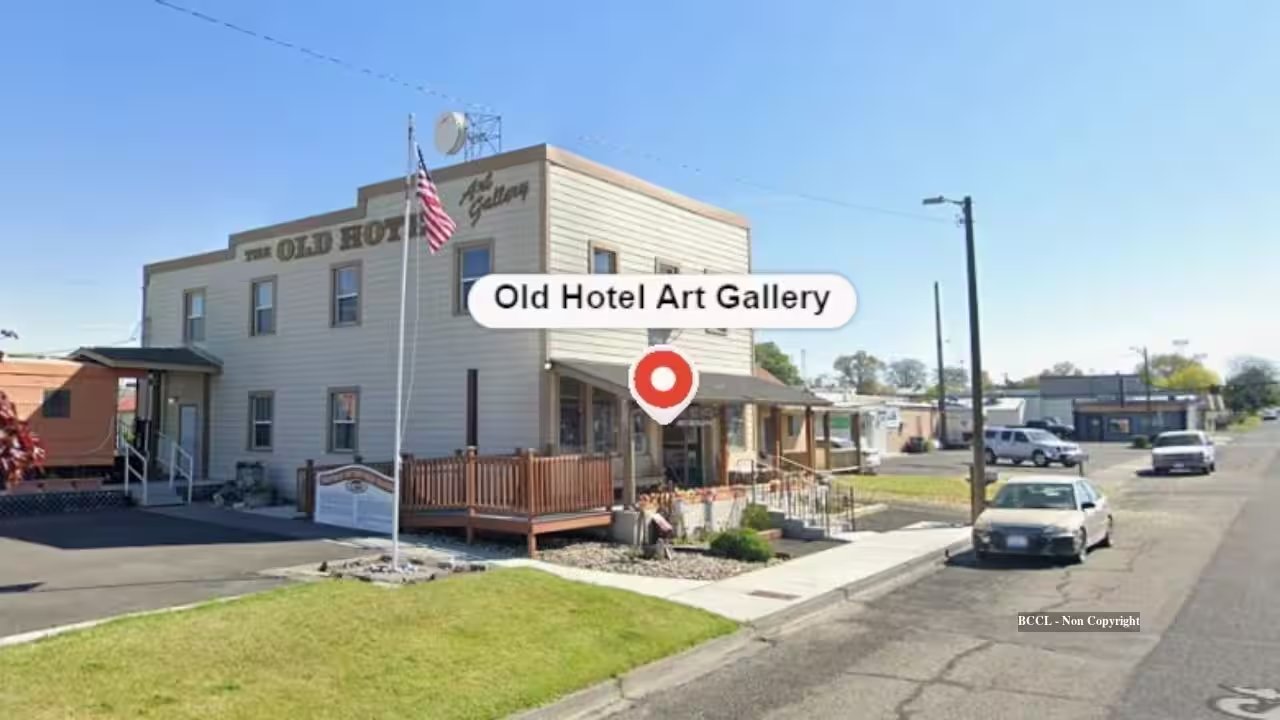
OTHELLO, Washington — A historic railroad-era hotel turned community art space in rural Adams County will keep its lights burning this year after securing its third straight $25,000 cash injection from the philanthropic arm built by late Microsoft cofounder Paul Allen.
Cash arrived when margins ran thinnest. The Old Hotel Art Gallery in Othello survived a bruising 2025 stretch only because unrestricted private capital stepped in before payroll bounced. Now, a fresh $25,000 allocation cements its operations through 2026 as part of a sweeping $10 million statewide dispersal administered by Seattle-based arts advocate ArtsFund and backed by Allen Family Philanthropies.
The money carries no red tape. Small cultural organizations can deploy the funds directly toward overdue rent, staff compensation, building maintenance, or day-to-day exhibits without submitting bureaucratic grant audits.
Such flexibility altered the trajectory of the Othello venue, a gathering spot that anchors exhibitions in an agricultural pocket often bypassed by metropolitan donors. Consistent awards in 2024, 2025, and 2026 allowed administrators to sketch multi-year plans instead of scrambling month-to-month.
The 2025 award truly kept our doors open.
Samantha Copas, Director, Old Hotel Art Gallery
That emergency capital did more than dodge eviction. Copas directed funds toward structural repairs on the aging building, establishing a rental venue that now supplies recurring earned revenue. For fragile institutions, three months of negative cash flow often dictates whether a cultural space endures or shutters permanently.
The broader 2026 Community Accelerator Grant injected capital into 745 nonprofits spread across 37 of Washington’s 39 counties. Awards ranged from $2,500 to the maximum $25,000 cap.
Yet the underlying mechanics shifted sharply this cycle. Philanthropic directors capped applicant eligibility exclusively to cultural nonprofits with operating budgets below $1 million.
Big institutions missed the cut. Small operators benefited immediately. By narrowing the applicant pool to sub-$1 million entities, administrators pushed the average award size up 25 percent, rising from $10,753 in 2025 to $13,423 in 2026.
| Grant Parameter | 2025 Funding Cycle | 2026 Funding Cycle | Change |
|---|---|---|---|
| Total Statewide Disbursement | $10,000,000 | $10,000,000 | Maintained |
| Recipient Organizations | Variable | 745 Nonprofits | Broad-based |
| Average Grant Allocation | $10,753 | $13,423 | +25% |
| Maximum Grant Size |
Behind that policy pivot lies an uneven labour crisis. ArtsFund operational surveys revealed that cultural groups operating below the $1 million mark shed an average of one staff position between 2023 and 2024. In contrast, well-funded institutions operating with large endowments expanded their payrolls by an average of five workers over the same window.
Rural organizations accounted for more than 22 percent of the 2026 grantee registry. The distribution roster also incorporated 12 of Washington state’s 29 federally recognized Native American tribes, steering money into reservations where commercial funding rarely lands.
Participating organizations reported three primary spending targets on their filings: direct public programming, payroll, and physical occupancy expenses spanning rent and mortgage payments.
None will have to file lengthy paperwork to prove how they spent the cash. ArtsFund structured the program with zero formal post-grant compliance filings, stripping away the administrative accounting burden that typically drains understaffed charities.
Organizers confirmed the relief campaign will continue uninterrupted. ArtsFund and Allen Family Philanthropies have already renewed the Community Accelerator Grant for 2027, locking in an additional $10 million pool scheduled to open applications later this year.
| $25,000 |
| $25,000 |
| Steady |
| Budget Eligibility Cap | Open/Mixed | Under $1 Million | Targeted Focus |
| Geographic Reach | Washington State | 37 of 39 Counties | Rural Expansion |