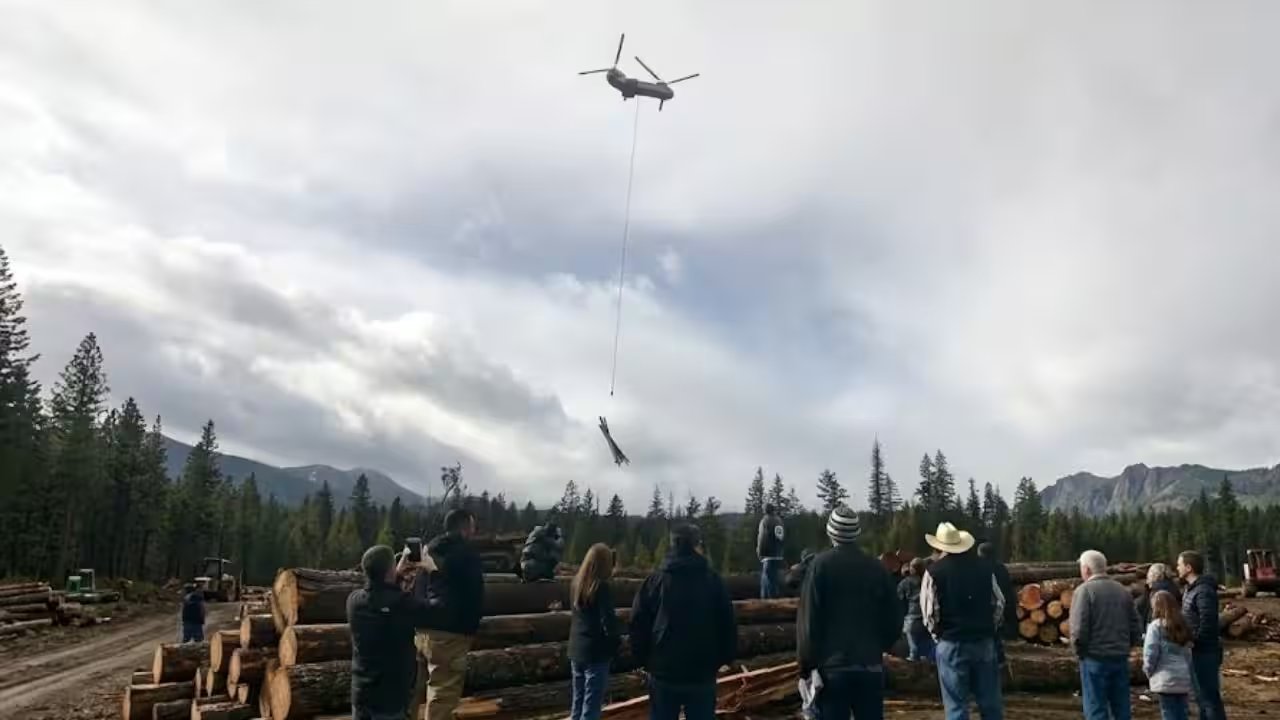
Washington state agencies dropped 6,000 logs into 24 miles of remote streams on the Yakama Reservation this week, using helicopters to reach areas inaccessible by road. The timber, a mix of Douglas fir, grand fir and cedar, was sourced from a forest‑thinning program run by The Nature Conservancy.
The initiative, the largest river restoration effort in the Northwest, aims to recreate pools and gravel traps that salmon and bull trout need for spawning. By slowing the current, the logs allow water to spill onto floodplains, seep into the ground and return to the streams, keeping creeks cooler as temperatures rise.
Reese Lolley, the Nature Conservancy’s director of forest restoration, explained that removing selected trees also reduces the risk of large fires. He added that the timber choice supports a broader landscape‑level restoration strategy.
Yakama habitat biologists guide the pilots with pink and blue flagging tape. Kelly Clayton, a biologist with the Yakama Nation, said the work will help keep creeks from running dry as climate change intensifies.
Phil Rigdon, director of the Yakama Nation Department of Natural Resources, noted that the project learns from past mistakes and seeks to reconnect waterways with surrounding floodplains.
The first assessment of habitat recovery is scheduled for the upcoming fishing season, with a full report expected by September.