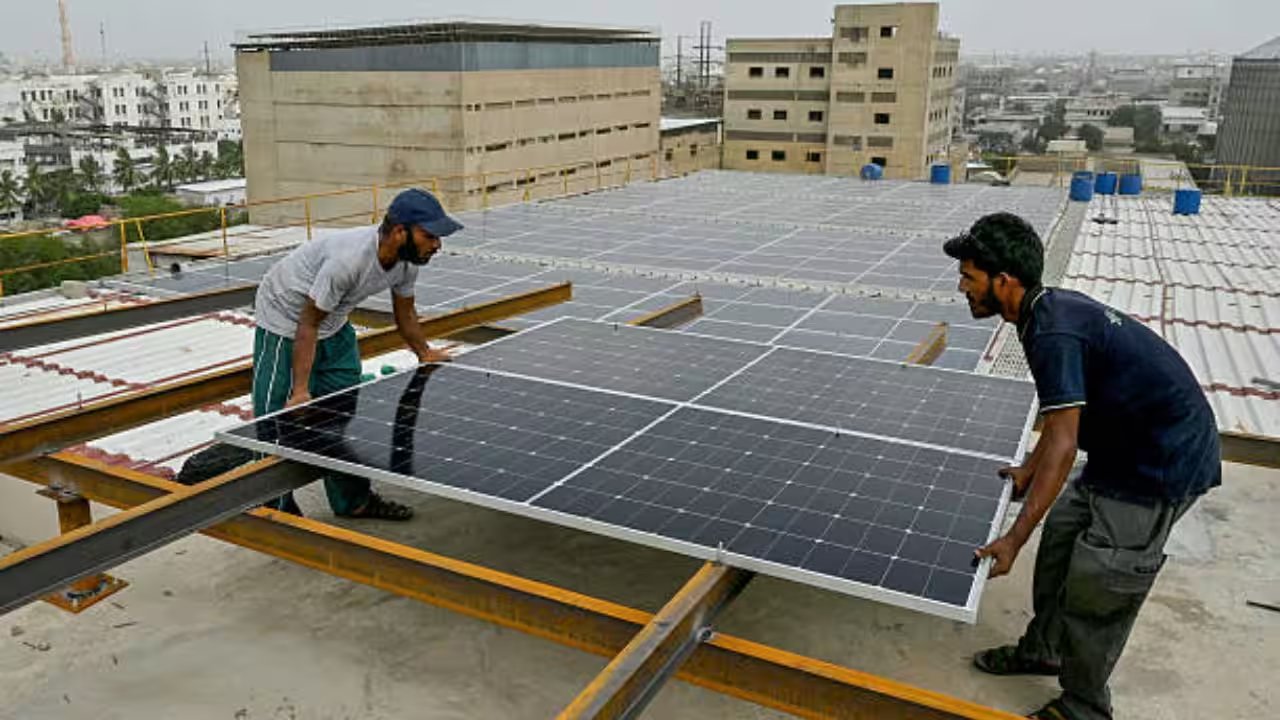
Pakistan’s rooftop solar boom in 2025 has saved the country $12 billion in fuel imports, a Renewables First analysis shows.
51 gigawatts of solar panels were imported last year, enough to power more than the entire national grid, and the domestic grid now draws roughly 10% from solar sources. Rabia Babar, an energy market analyst at Renewables First, said the surge in solar spurred a 155% jump in electricity bills since 2021, pushing households to seek home‑based alternatives.
The shift began when Ukraine’s war cut liquefied natural gas supplies, forcing Pakistan to hike power prices and import more oil from the Middle East, where Iranian sanctions had pushed crude past $150 a barrel. Jigar Shah, former U.S. Department of Energy Loans Program officer, noted that Chinese panels came in oversupply at 60% lower prices, enabling DIY installations that spread quickly through WhatsApp groups and local forums.
Farmers switched from diesel pumps to solar‑powered irrigation, businesses added battery storage, and many rural homes that had been off‑grid gained reliable power. The grassroots movement illustrates a people‑led energy shift rather than a top‑down policy drive, according to the World Resources Institute.
Renewables First warns that if Pakistan doubles its rooftop solar capacity by 2027, it could avoid an additional $6.3 billion in fossil fuel imports as crude prices rise, potentially freeing up resources for other development priorities.