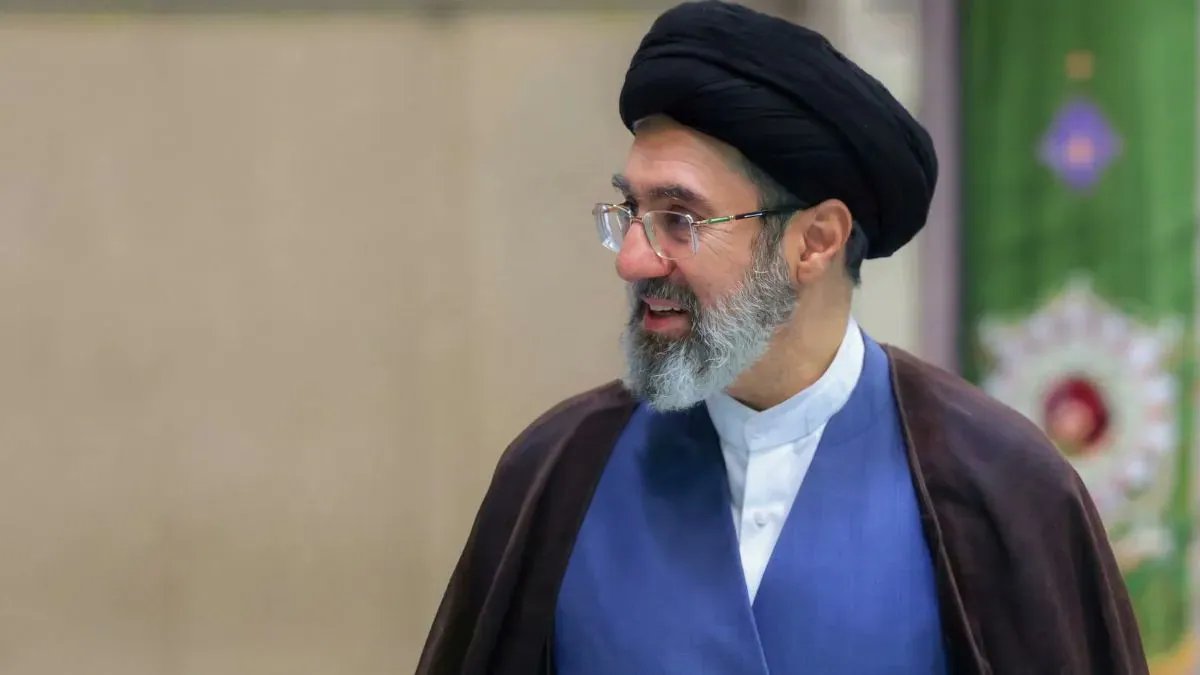
Mojtaba Khamenei didn’t just survive the war. He survived the war twice. An Iranian cleric revealed to Qatari television this week that the 56-year-old Supreme Leader was pulled from the rubble of a Tehran hospital after US and Israeli forces bombed the facility where he was being treated for injuries sustained in the February 28 strikes.
The attacks that day obliterated the compound of Ayatollah Ali Khamenei, killing the 86-year-old leader and several aides. In the chaos that followed, US and Israeli forces targeted three different hospitals in the capital. Alekasir, a member of Iran’s Assembly of Experts, confirmed that Mojtaba was in the third facility to come under fire. He was alive when they pulled him out.
But the cleric’s interview went further than just survival. Alekasir claimed that Mojtaba had no idea he was the successor until the state TV announcement on March 8. “Legally and religiously obligated” to accept, he described the transition. The Assembly of Experts, itself a target of US and Israeli bombing, moved fast. Alekasir said he was the first to propose Mojtaba’s name after confirming he was healthy enough to lead.
The vote was decisive. Khamenei secured 50 of the 59 votes cast. Eight members backed Ayatollah Alireza Arafi, and one abstained. “Given the enemy’s position, we will choose and elect no one as leader... except Ayatollah Mojtaba Khamenei,” Alekasir said. Since the March 8 announcement, Khamenei has not appeared in public, even on camera. A New York Post report says he was moved to an unknown location after the hospital bombing.
President Masoud Pezeshkian told Fox News last week that Khamenei is “completely healthy.” The leader’s absence from the public eye, however, tells a different story. With the Assembly of Experts’ Qom Secretariat also bombed, the succession process was conducted under active threat. The next move rests with the hidden leader. How long can he stay out of sight before the pressure becomes unmanageable? The answer will shape Iran’s next chapter.