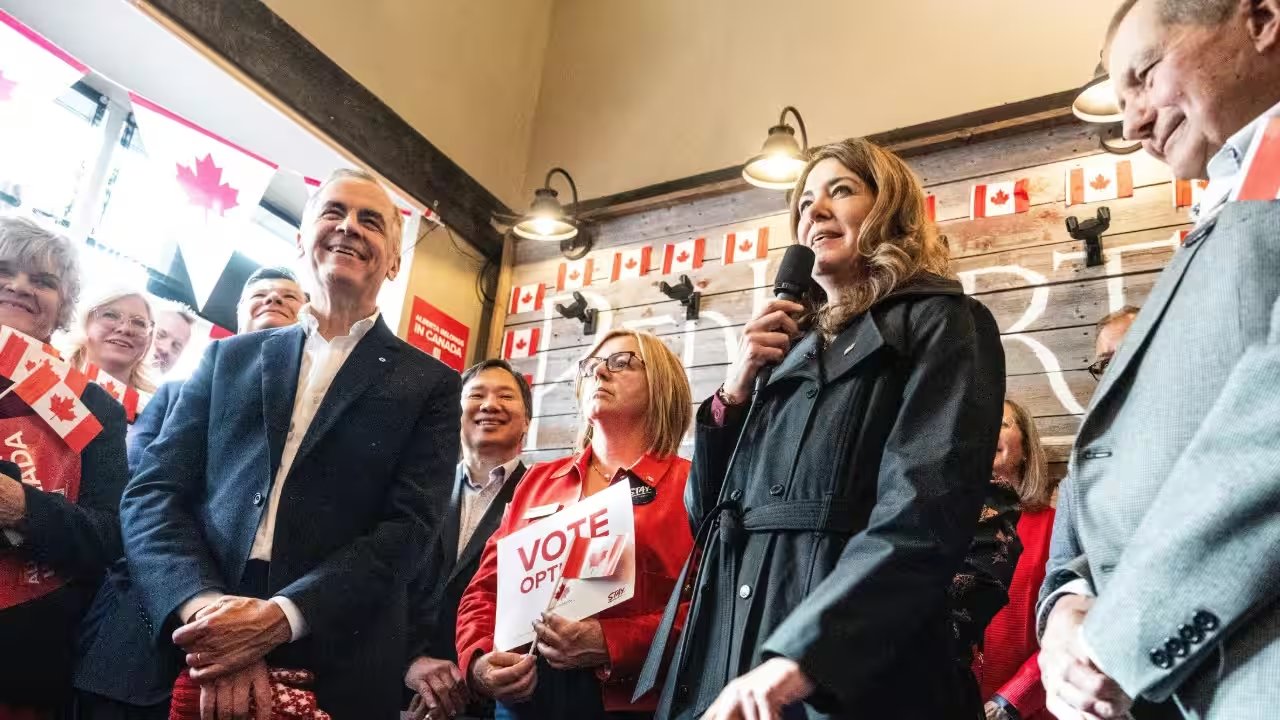
Alberta’s political experiment ended in a landslide defeat for separatists on Tuesday, as 76 percent of voters chose to stay within Canada. With over 1.5 million ballots counted, the non-binding referendum results—released by Elections Alberta—showed nearly 24 percent support for initiating a formal separation process, a figure that falls short of the decisive mandate sought by independence advocates. Prime Minister Mark Carney seized the moment immediately, declaring that Albertans had “chosen unity, to build together, and to take care of each other.”
The outcome lands hard in the context of President Donald Trump’s ongoing trade war and his public threats to make Canada the 51st US state. Carney, who campaigned in Edmonton—where he grew up—urged voters to treat the vote as a matter of national survival. “Vote like Canada’s future depends on it, because it does,” he told a Friday rally. The result allows Ottawa to pivot away from defensive posture toward offensive economic strategy, with Carney calling for faster efforts to diversify trade and establish Alberta as the center of Canada’s global energy dominance.
Premier Danielle Smith, who called the referendum despite her own opposition to independence, welcomed the early returns on social media, stating that Albertans voted for “a stronger Alberta in a united Canada.” Smith is scheduled to address the province on Tuesday evening to outline the next steps. The delay in final results, caused by more than 100 polling stations extending voting hours on Monday, only added to the tension of a night that saw supporters of both sides brace for a close call.
Separatist leaders refused to accept the night as a final verdict. Keith Wilson, a key figure in the movement, noted that while the numbers fluctuate, “at least a quarter of Albertans feel that Alberta needs to be treated better.” Jeff Rath of the Alberta Prosperity Project, who had hoped for 30 percent support, told a gathering in an Edmonton restaurant that the campaign had succeeded in dominating public discourse for a year. He warned that the United Conservative Party could split, potentially giving rise to a new pro-independence faction, and called for Smith’s removal as party leader.
The vote exposed deep-seated grievances that have long simmered in the oil-rich province. Dustin Degenhardt, a voter in Wainwright, argued that Alberta has been treated as “a colony” by Ottawa, which “wants to take and take and take from us, and not return anything.” Yet, Dave Malka, 59, of Edmonton, questioned the wisdom of spending public funds on what he called a “referendum on a referendum” instead of addressing healthcare costs. With Trump’s threats looming, Malka argued, “It seems to be happening at the absolute worst time when we should be united; instead we're fighting among ourselves.”
The political landscape in Alberta, a conservative stronghold with cultural ties closer to the American West than much of Canada, remains volatile. Former Premier Jason Kenney noted that separatist parties historically attracted only 1 to 2 percent of the vote, but anger over pandemic restrictions and current trade tensions has mobilized a new coalition. As Smith prepares to announce her government’s response, the focus shifts to whether Ottawa can translate this political win into tangible economic benefits for Albertans, or if the resentment will fester into a new political movement.