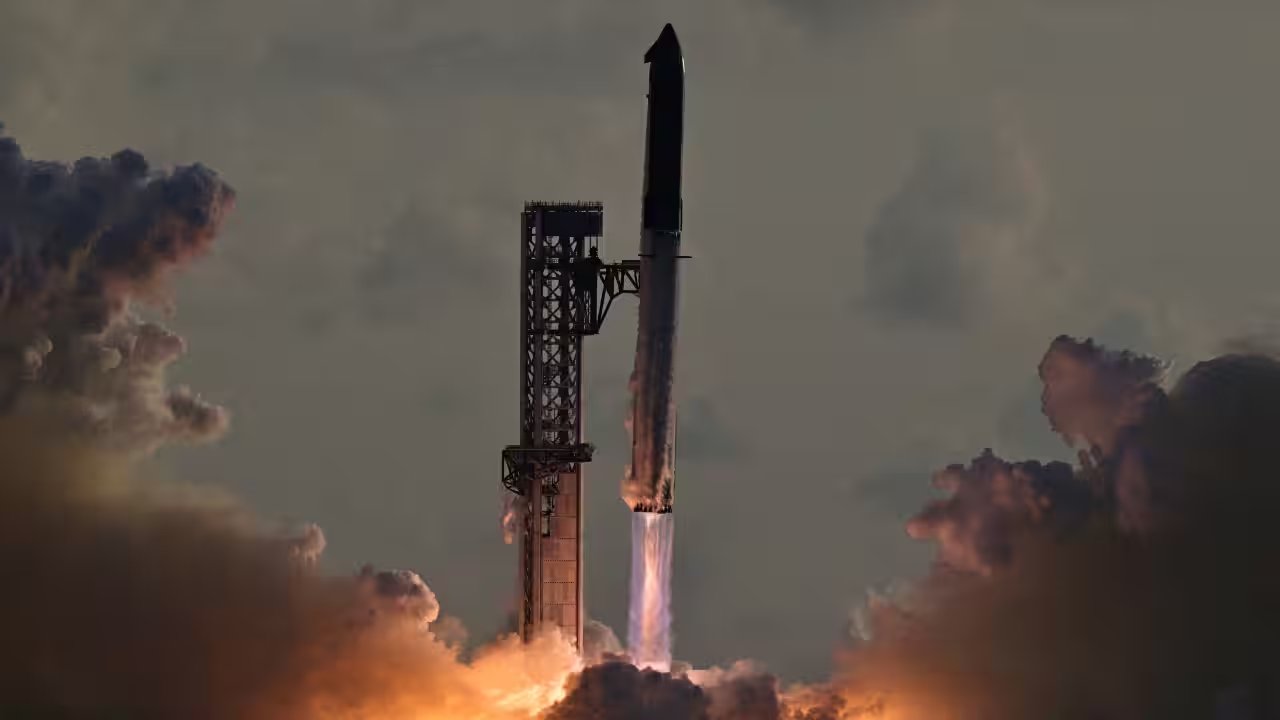
SpaceX’s 407‑foot Starship lifted off from Launch Complex 39A in southern Texas on Monday, climbing to an altitude of 170 miles before completing six orbits over nearly 10 hours. The flight ended with a planned splashdown in the Pacific Ocean close to Chile, a maneuver the company has tested only once before. The rocket’s trajectory also included a series of engine burns that demonstrated the vehicle’s ability to perform complex orbital maneuvers.
NewPARA The test followed a series of earlier flights that saw the Starship prototype tumbling, a 2022 April attempt that failed to leave the pad, and a 2024 May flight that reached orbit but missed splashdown. Each iteration has refined the heat‑shield design and the wing‑tip airflow control, key for re‑entry survivability.
NewPARA Alongside the orbital test, 26 new Starlink satellites were launched, bringing the constellation to over 11,000 active nodes. The addition expands broadband coverage to remote regions and supports SpaceX’s plan to offer global internet service. The satellites were deployed into a 275‑km orbit, a step toward the company’s vision of a fully integrated space‑to‑Earth network.
NewPARA SpaceX officials said in a statement that the launch proved the Starship’s reliability for future crewed missions. The company plans to conduct a splashdown test later this year, followed by a crewed orbital flight in 2027. The next milestone will involve a fully reusable Starship landing on the company’s Texas test range.
NewPARA For the local launch crew, the successful flight was a relief after months of weather‑related delays and technical setbacks. A launch team member, who requested anonymity, said the crew felt a renewed sense of confidence in the vehicle’s design.
NewPARA SpaceX will now focus on refining the landing system and preparing for a crewed mission to low Earth orbit, marking the next step in its long‑term vision for interplanetary travel.