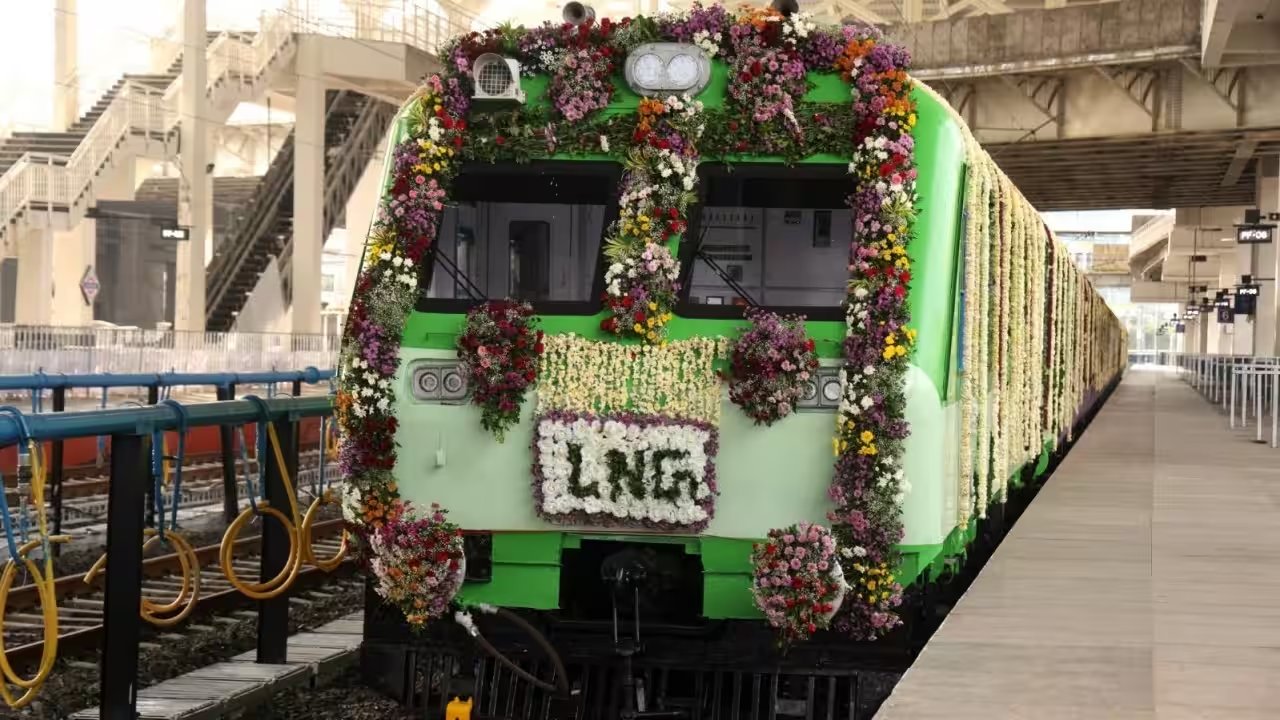
Amit Shah’s flag‑off ceremony marked the second green milestone for Indian Railways after the hydrogen train launched earlier this year. The new LNG train is a dual‑fuel DPC, each with a 1,400‑HP engine that can switch between diesel and LNG.
The locomotives carry a 2,200‑litre LNG tank, capable of holding 850‑900 kg of usable fuel, giving a single full tank a range of about 1,600 km.
In more than 2,000 km of field trials, the dual‑fuel system achieved a 40% reduction in diesel consumption while slashing CO₂, NOₓ and particulate emissions.
Alongside the LNG train, the ceremony unveiled a WAG‑12 electric locomotive and dedicated Rs 1,500 crore worth of projects, including line‑doubling, the Kavach protection system and automated signalling.
Shah said the move would help India meet its target of zero diesel use by 2030, after cutting consumption from 293 crore litres in 2015‑16 to 108 crore litres in 2024‑25.
The electric locomotive launch coincided with the completion of 99.6% electrification, a 70% increase in electrified track, and the installation of 97% bio‑toilets across the network.
"The dual‑fuel technology gives us flexibility and a clear path to lower fuel costs and emissions," Shah added. "We plan to roll out 10 LNG locomotives by 2028, expanding the fleet across major routes.", he said.
For passengers, the cleaner air means a healthier commute for a family of five who live along the route, turning the tracks into a safer corridor.
Railways officials expect the first batch of LNG trains to start regular service by the end of 2026, setting a precedent for future sustainable freight operations.