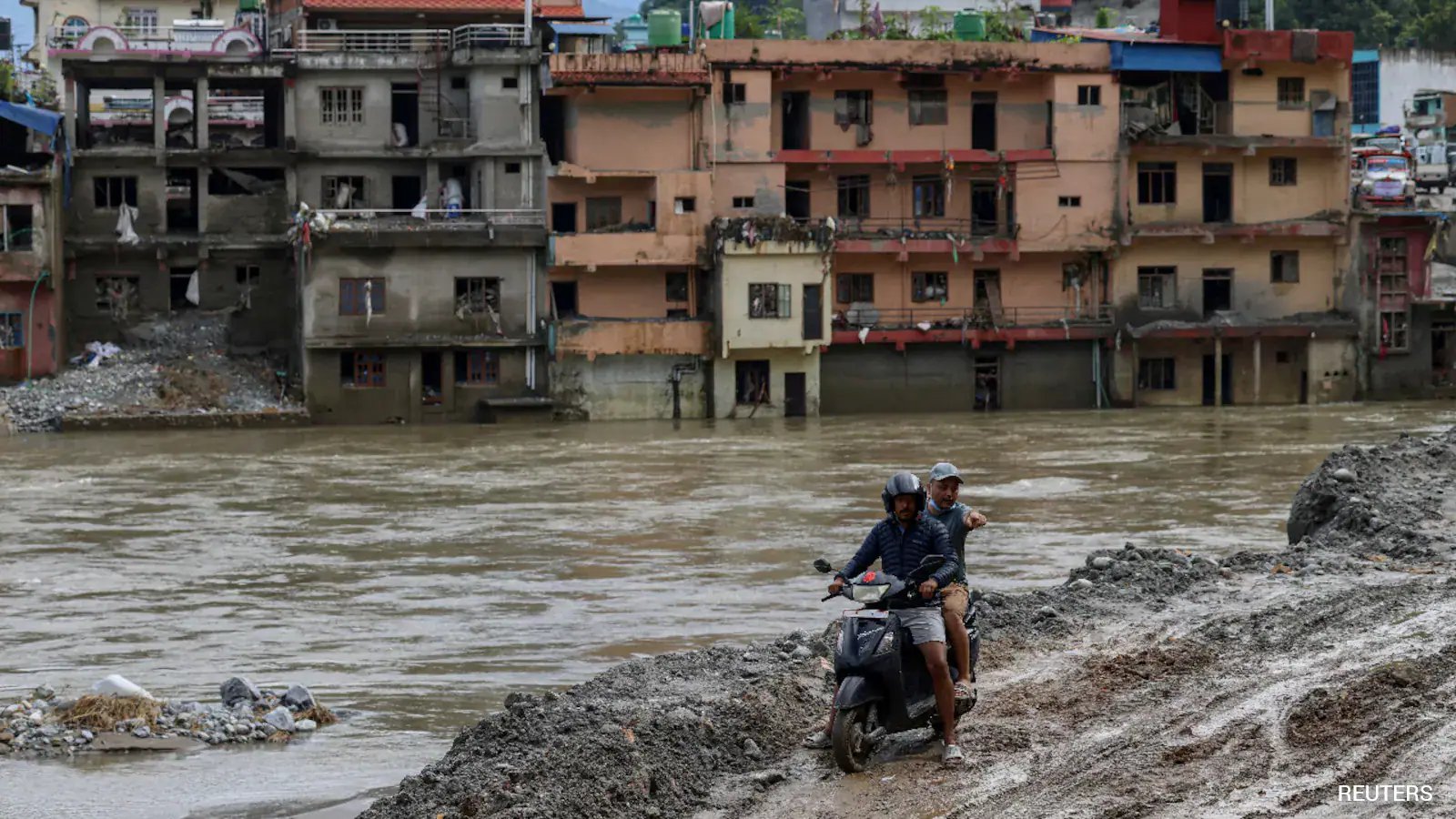
A 2‑sq‑km slab of rock and glacier ice on Langtang Lirung broke loose on Aug. 25, unleashing a torrent that swept villages downstream and left thousands missing.
WWA researchers measured mean temperatures 5 °C above normal in the Himalayan region in August, with 1.5 °C attributable to anthropogenic warming, they said. “There’s absolutely no doubt that human‐induced climate change played a role here,” Friederike Otto, a climatologist at Imperial College London, noted.
The study links permafrost thaw, the 2015 earthquake that had weakened the bedrock, and unusually heavy snowfall in Oct. – Nov. last year to the instability of the slope. “We conclude that this was a geologically vulnerable slope, potentially weakened by the 2015 earthquake, but it was destabilised further by glacier and permafrost retreat and by the excessive meltwater and exceptional warmth in the final period before the collapse,” said Walter Immerzeel, a mountain hydrologist from Utrecht University.
WWA applies peer‑reviewed statistical attribution methods to isolate the climate signal in extreme events, the group explained on its website.
The researchers will brief the UN Climate Action Committee in Geneva next month, urging stronger mitigation measures to prevent future Himalayan disasters.