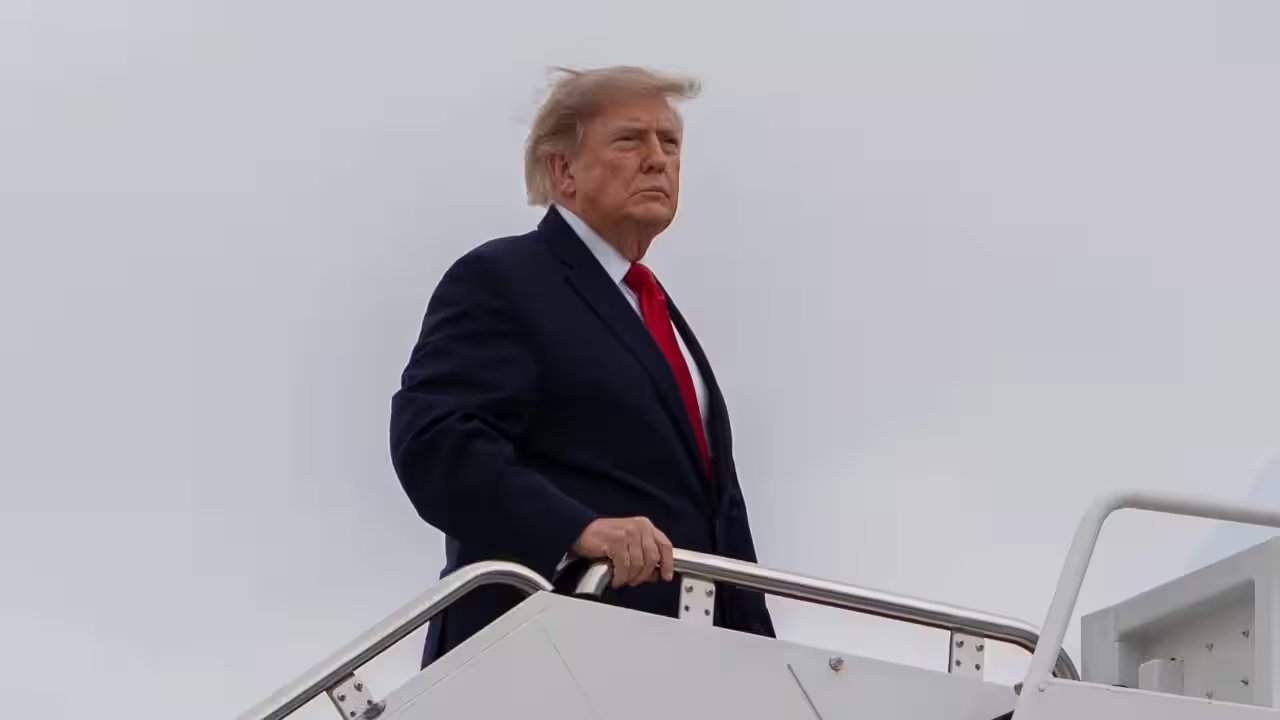
Donald Trump announced on Monday a potash procurement deal with Belarus, a country closely tied to Moscow, promising U.S. farmers prices markedly below those paid to Canada, which supplies 85 percent of the nation’s potash needs.
The announcement follows the president’s recent signing of a bill that would penalise India for purchasing Russian energy, a move that has already sparked diplomatic ire. Former administration official and South‑Asia analyst Evan Feigenbaum warned that the juxtaposition of these actions casts the U.S. as a double‑standard partner, potentially eroding trust among allies.
Belarus, landlocked and hampered by European sanctions, has publicly stated it lacks the spare potash to meet Western demand. President Alexander Lukashenko told reporters that even if the country wanted to supply more markets, “we simply don’t have the volume.” The country’s production is already contractually bound to other buyers.
Potash is a critical nutrient for crops, comparable to nitrogen and phosphorus, and global supply is dominated by Canada, Russia and Belarus. Canada alone accounts for roughly one‑third of world output and is the U.S.’s main supplier. The new Belarusian contract would force the U.S. to navigate complex logistics, likely relying on Russian transit routes that the president is simultaneously trying to pressure.
India, the world’s third‑largest potash importer, pulls 4‑5 million tonnes annually from a mix of Canada, Russia, Israel and Jordan. A shift in U.S. supply could ripple through the supply chain, driving up prices for Indian farmers.
The next step is a feasibility review by U.S. trade officials, who will assess whether Belarusian potash can be shipped through Russian infrastructure before farmers can benefit from the new deal. The outcome will set a precedent for how the U.S. balances strategic trade with geopolitical pressures.