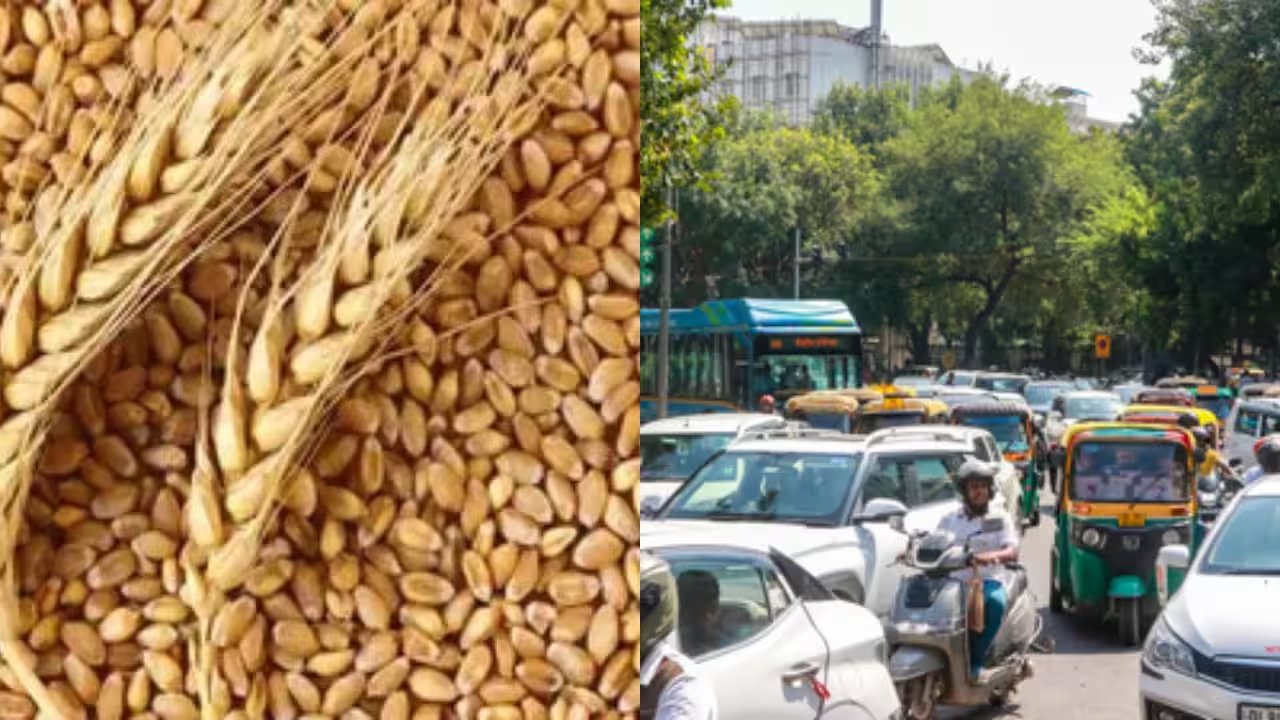
The Cabinet Committee on Economic Affairs, chaired by Finance Minister Nirmala Sitharaman, lifted the Minimum Support Price of wheat by ₹25 per quintal to ₹2,610, while safflower received the largest increase of ₹675 to ₹7,215. Rapeseed and mustard rose by ₹413 to ₹6,613, lentil by ₹390 to ₹7,390, gram by ₹83 to ₹5,958, and barley by ₹136 to ₹2,286. The move, announced on Wednesday, 22 October, aims to secure a 50% margin over production costs for safflower farmers and a 106% margin for wheat.
The Green Energy Corridor Phase‑III will cost ₹1.86 lakh crore, with ₹1.36 lakh crore earmarked for intra‑state transmission upgrades and ₹50 billion for 50 GWh of battery storage. The Centre will contribute ₹54 082 crore, while the remainder comes from state allocations and competitive bidding. The corridor, slated for completion by FY2033, will enable the evacuation of 135 GW of renewable power across states, bolstering the national target of 900 GW of non‑fossil capacity by 2035.
Delhi’s new Intelligent Traffic Management System, costing ₹1.789 billion, will cover 42 corridors and 2,121 control points, including 1,092 adaptive signals and 1,029 enforcement locations. Implemented in three phases over 24 months, the system will use real‑time data to adjust signal timings, prioritise ambulances, and enforce red‑light and speeding violations. The project, led by Minister Ashwini Vaishnaw, promises to cut congestion for an urban fleet of 71 lakh vehicles.
For farmers in Punjab’s Patiala district, the higher safflower MSP means a potential ₹4,500 profit per hectare compared to the previous ₹6,735, a boost that could fund a new irrigation pump. In Delhi, commuters like 28‑year‑old Anjali Mehta said the adaptive signals could halve her daily commute through the Karol Bagh corridor. The cabinet’s decisions will roll out over the next four years, with implementation milestones set for 2024 and 2025.