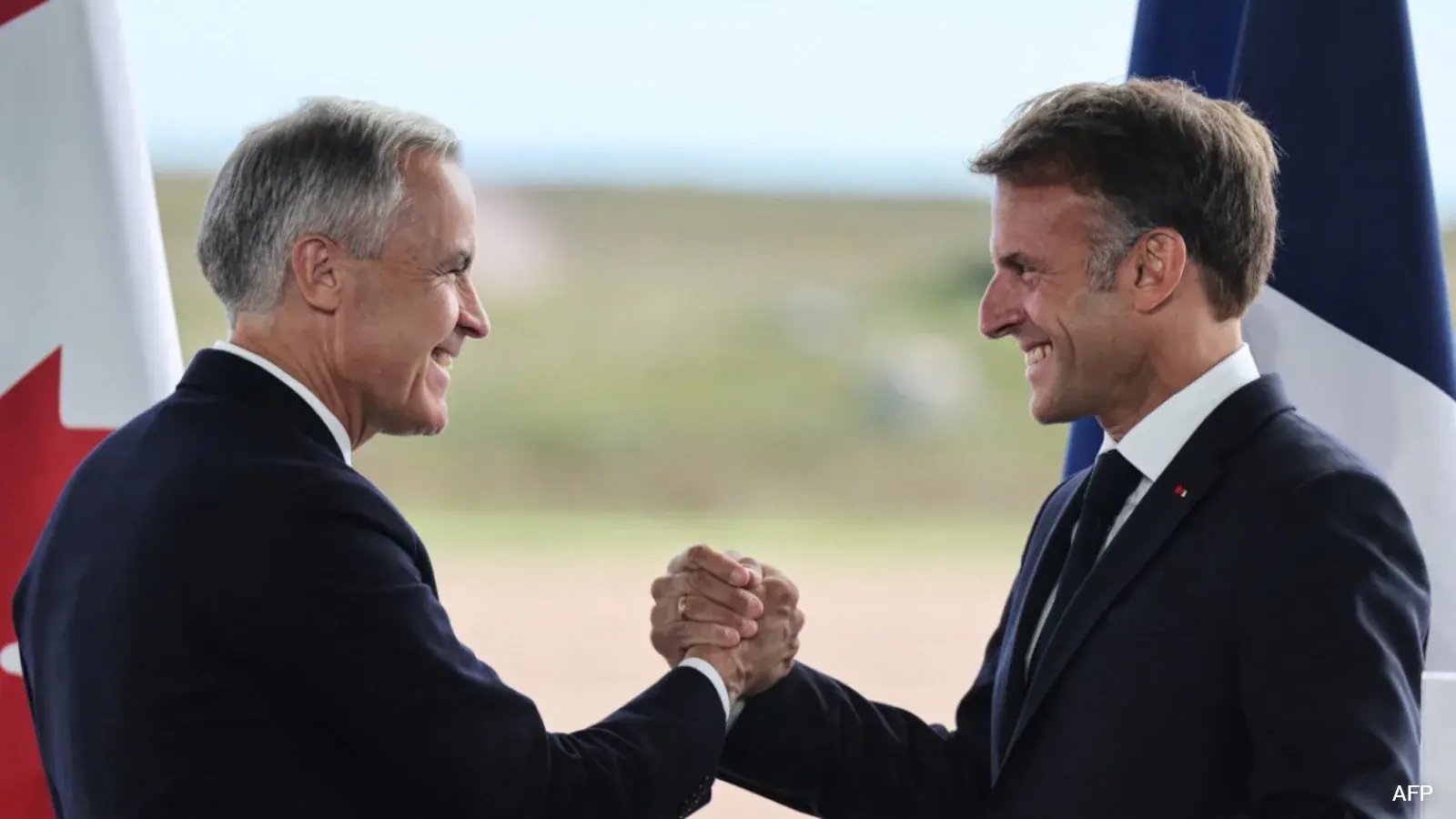
At the airport of Saint‑Pierre‑et‑Miquelon, a French island of 5,800 residents, Macron and Carney exchanged a brief handshake before launching talks that would tie Canada’s defence and energy sectors to the EU.
Carney confirmed that Canada will task its space agency with the European Space Agency and its defence ministry with NATO‑aligned projects, while both sides pledged to share launch facilities and ground‑based reception systems.
This move follows days after Ursula von der Leyen’s proposal to grant Canada associate membership, a status that would give Ottawa a formal foothold in EU policy circles and a platform to secure liquefied natural gas supplies for Europe.
Carney warned that deeper ties would reduce Canada’s economic vulnerability to U.S. coercion amid President Trump’s tariffs and the recent push to integrate Canada into a 51‑state model.
In a subsequent press conference with Norwegian Prime Minister Jonas Gahr Støre, Carney dismissed claims that the partnership would antagonise the United States, emphasising Canada’s independent resilience instead.
Meanwhile, Macron welcomed the U.S.‑led Greenland deal that expands American military presence while maintaining Danish sovereignty, underscoring his preference for diplomatic solutions that ease Arctic tensions.