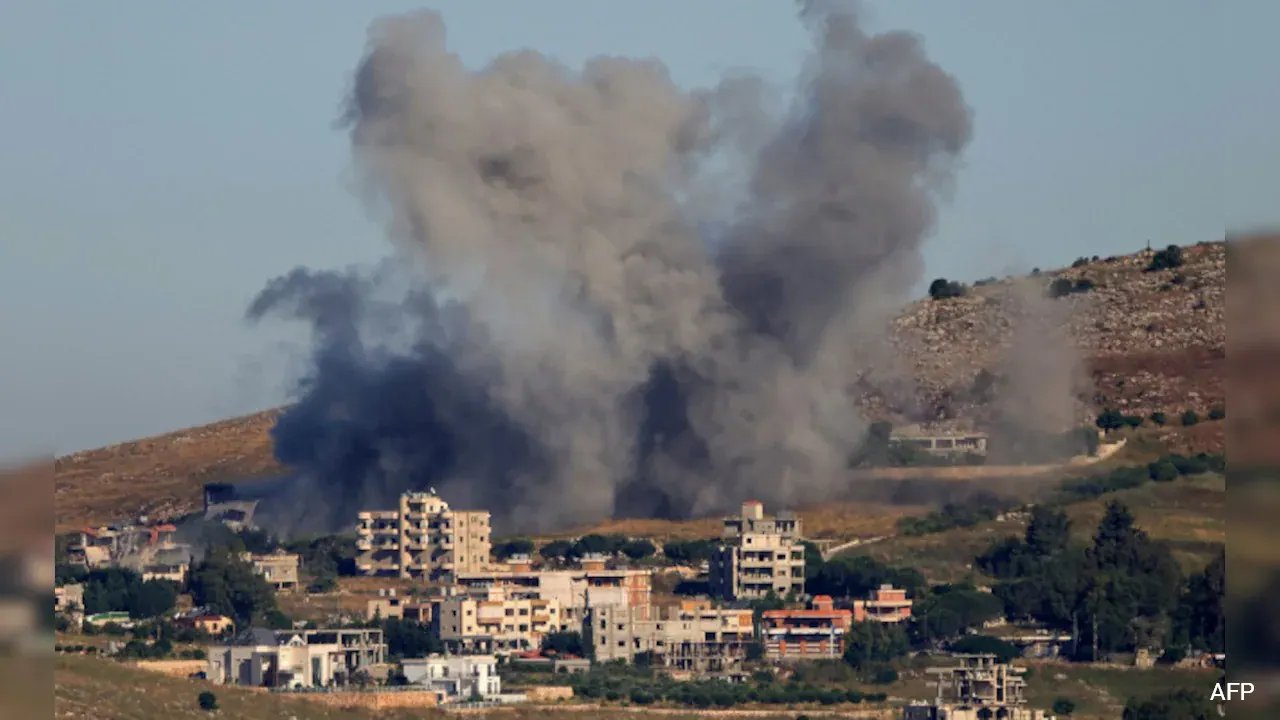
MANAMA — American air defense batteries shot down two Iranian one-way attack drones targeting Bahrain on Friday, flatly rejecting claims by Tehran that its forces wiped out a critical United States early-warning radar on the Gulf island.
CENTCOM confirmed the midair intercepts hours after the Islamic Revolutionary Guard Corps declared its Aerospace Force had leveled the American radar post. The Pentagon reported zero casualties and no structural damage across its installations on the island.
No radar was lost.
The Revolutionary Guards framed the Friday strike as direct retaliation for an American attack on an Iranian telecommunications tower in Sirik, positioned on the vulnerable shoreline of the Strait of Hormuz. Tehran warned of wider reprisals against naval traffic and airborne surveillance.
A few hours ago, IRGC Aerospace Force fighters targeted and destroyed the US aggressors' early-warning radar on the island of Bahrain. This is a serious warning to the aggressor enemy to stop its aerial provocations and oil smuggling in the Strait of Hormuz.
Islamic Revolutionary Guard Corps
CENTCOM officials countered that the strike failed entirely, with both loitering munitions brought down before reaching their target coordinates. The salvo underscores how Bahrain—home to the forward command elements of the US Navy—remains square in Tehran's crosshairs. Earlier waves of Iranian drone and missile volleys battered American logistics installations on the island so severely that US naval commanders were forced to divert key support functions to rear bases thousands of miles away.
| Military Operation Parameter | Official Finding / IRGC Claim | CENTCOM Assessment |
|---|---|---|
| Weaponry Deployed | IRGC Aerospace Force attack drones | 2 one-way attack drones |
| Primary Target Claimed | US early-warning radar system | Target not struck; intercepted mid-flight |
| Reported Casualties | None confirmed | Zero casualties |
| Facility Damage | Total radar destruction claimed | No damage reported |
The drone assault highlights the unresolved friction choking the Persian Gulf since the United States and Israel launched coordinated surprise attacks across Iran on February 28.
Tehran retaliated by clamping down on commercial transit through Hormuz—the arterial choke point for global crude—and launching retaliatory barrages at airports, seaports, energy hubs, and Western military outposts across the region. Washington responded in August by rolling out an "economic asphyxiation" doctrine designed to freeze Iranian financial channels and strangle its coastal trade.
Yet oil continues to flow under naval escort. CENTCOM stated last month that coalition forces had shielded tankers carrying 1.5 billion barrels of regional crude through the Strait of Hormuz since summer, thwarting Iranian threats to choke off global supply.
Pentagon and Gulf coalition forces maintain high alert across Bahraini airspace as CENTCOM monitors launch corridors along the southern Iranian coast for follow-on drone salvos.