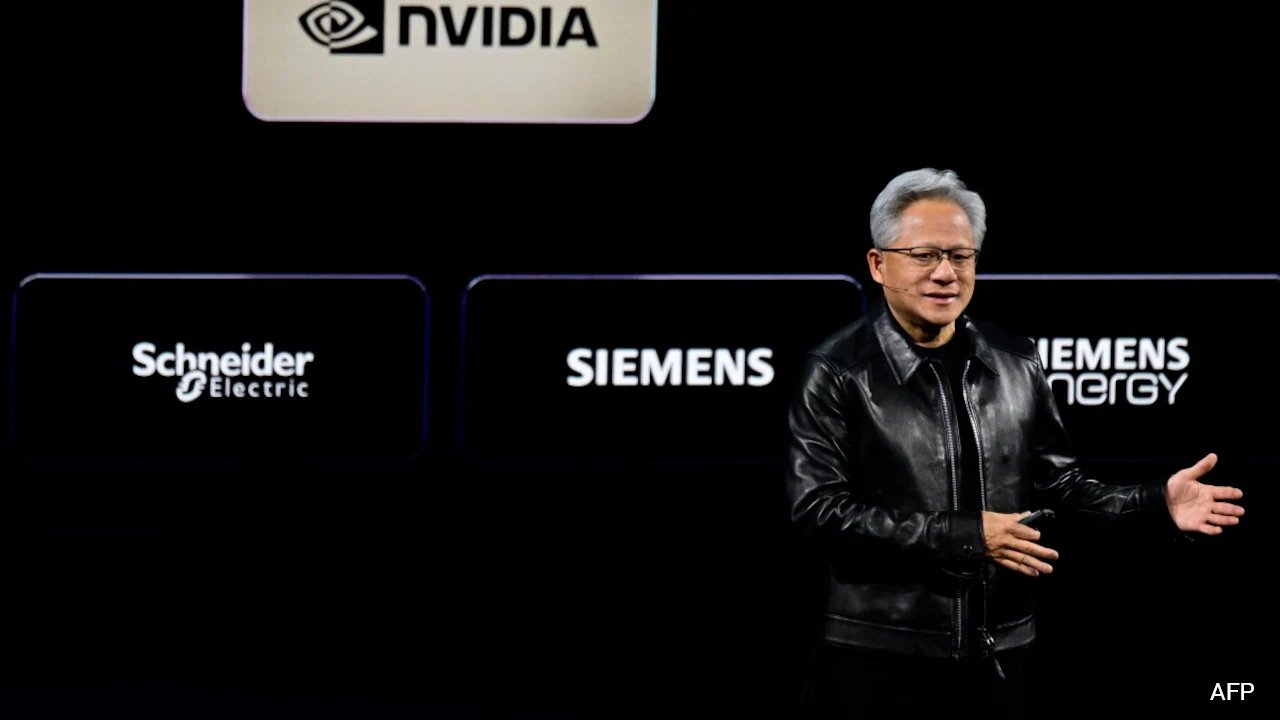
Espionage agencies do not always breach firewalls with software. Sometimes, they send an invitation to dinner.
Allegations linking Nvidia Chief Executive Jensen Huang to a woman suspected by United States intelligence of ties to Chinese state operations have thrust one of statecraft's oldest weapons back into corporate boardrooms. Huang has acknowledged marital infidelity. But the claim that foreign handlers engineered the relationship to penetrate the world's most valuable artificial intelligence company remains unproven. Beijing dismissed the accusations outright. Nvidia declared that no proprietary secrets or national security data left its servers. Yet the episode exposed how personal vulnerability remains a primary vector into strategic technology corridors.
The trap is simple. Seduction disarms suspicion, builds intimacy, and harvests leverage. The technique predates microchips, smartphones, and the modern internet by centuries, weaponizing human affection long before cold war dossiers codified it into doctrine.
The idiom itself evolved over generations. The word 'honeypot' described a vessel of nectar before acquiring figurative status as an irresistible lure. British author John le Carré later cemented the espionage term 'honeytrap' in his 1974 novel Tinker Tailor Soldier Spy. Long before le Carré wrote fiction, military tribunals were already executing operatives caught orchestrating the maneuver.
Few figures defined the archetype more sharply than Margaretha Geertruida Zelle—known across Europe as Mata Hari. Born in the Dutch East Indies, she rose to fame as an exotic dancer in Paris during the lead-up to World War I, moving freely among cabinet ministers, diplomats, and senior military officers. When the continent fractured into trench warfare, French counterintelligence accused her of passing classified defense plans to German handlers through her romantic network. A military court convicted her, and a French firing squad executed Zelle in October 1917.
By the outbreak of World War II, intelligence bureaus transformed seduction from improvised liaisons into disciplined military operations.
British intelligence deployed American-born operative Amy Elizabeth Thorpe, operating under the alias Betty Pack, to cultivate high-ranking diplomatic assets across occupied Europe. Thorpe leveraged access within Vichy regime circles to seize French naval codebooks, delivering cryptographic material to Allied commanders ahead of the 1942 invasion of North Africa. Intimacy unlocked what naval bombardment could not.
During the Cold War, East Germany turned personal affection into an industrial assembly line. Markus Wolf, chief of the foreign intelligence division (HVA) inside East Germany's Ministry for State Security—the Stasi—instituted the 'Romeo spy' program during the 1950s. Wolf exploited postwar West Germany's acute demographic imbalance, deploying trained male operatives to court, manipulate, and extract files from female secretaries and civil servants working inside West German ministries, intelligence agencies, and defense bureaus.
The target profile has shifted from government ministries to commercial tech corridors. Corporate executives, aerospace engineers, and chip designers now control intellectual property far more valuable to foreign capitals than conventional diplomatic cables.
| Historical Case / Target | Primary Operative / Handler | Operating Period | Strategic Objective | Official Outcome |
|---|---|---|---|---|
| French High Command | Margaretha Geertruida Zelle (Mata Hari) | 1914–1917 | German intelligence gathering | Convicted; executed by firing squad in October 1917 |
| Vichy French Naval Command | Amy Elizabeth Thorpe ('Betty Pack') | 1941–1942 | Allied acquisition of naval codes | Codes seized prior to 1942 North Africa invasion |
| West German Federal Ministries | Stasi HVA ('Romeo Spies') under Markus Wolf |
Personal relationships can become a route into the closely guarded world of technology and national security.
AirNews Intelligence Dossier Review
Western counterintelligence agencies are now expanding defensive briefings for chief executives across the defense-industrial base, requiring rigorous disclosure of personal and commercial relationships to prevent executive suites from falling into modern variants of the century-old trap.
| 1950s–1980s |
| Systematic penetration of Bonn civil service |
| Dozens of high-level ministerial secretaries compromised |
| Silicon Valley Semiconductor Sector | Suspected Chinese Intelligence Assets | Modern Era | Strategic technology and executive influence | Nvidia confirms no proprietary files or data breached |