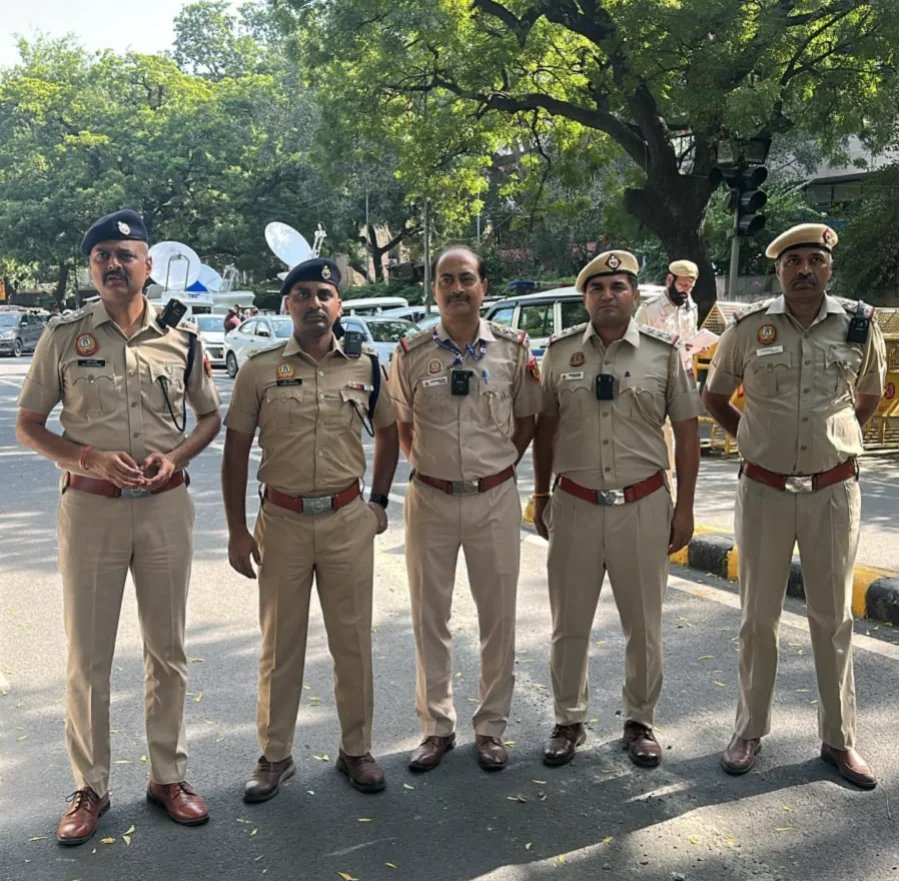
The Delhi High Court, on Wednesday, directed the Centre to consider a petition that demands mandatory use of body‑worn cameras by Delhi Police and Rapid Action Force during crowd‑control operations. The directive, issued by a bench headed by Acting Chief Justice Nitin Sambhre, mandates that a Standard Operating Procedure be drafted within six months.
The petition, filed by civil‑rights activist Chahat Raghav, cites July protests at Jantar Mantar—where the Cockroach Janata Party clashed with police and climate activist Sonam Wangchuk—highlighting allegations of excessive force and a lack of reliable footage. Raghav argues that most evidence comes from bystanders’ mobile phones rather than an authenticated police recording system.
Senior Advocate Akhil Sibal, representing the petitioner, argued that body‑cams would enhance transparency and accountability. In contrast, Additional Solicitor General Chetan Sharma contended that existing videography protocols already exist and that the court’s PIL rules require a prior representation to the concerned authorities.
The bench noted that the Supreme Court, in a separate case, had directed authorities to frame an SOP for protests. It therefore ruled that the court would record the petition as a representation and instruct the respondents to communicate their decision on the SOP within six months. The court also warned that if the petitioner remains aggrieved, he may approach the court afresh.
The ruling comes amid growing pressure for police reforms, and Delhi Police officials say they will comply once the SOP is finalized. The court’s order is expected to prompt the Ministry of Home Affairs to draft the required guidelines and submit them to the High Court before the six‑month deadline.