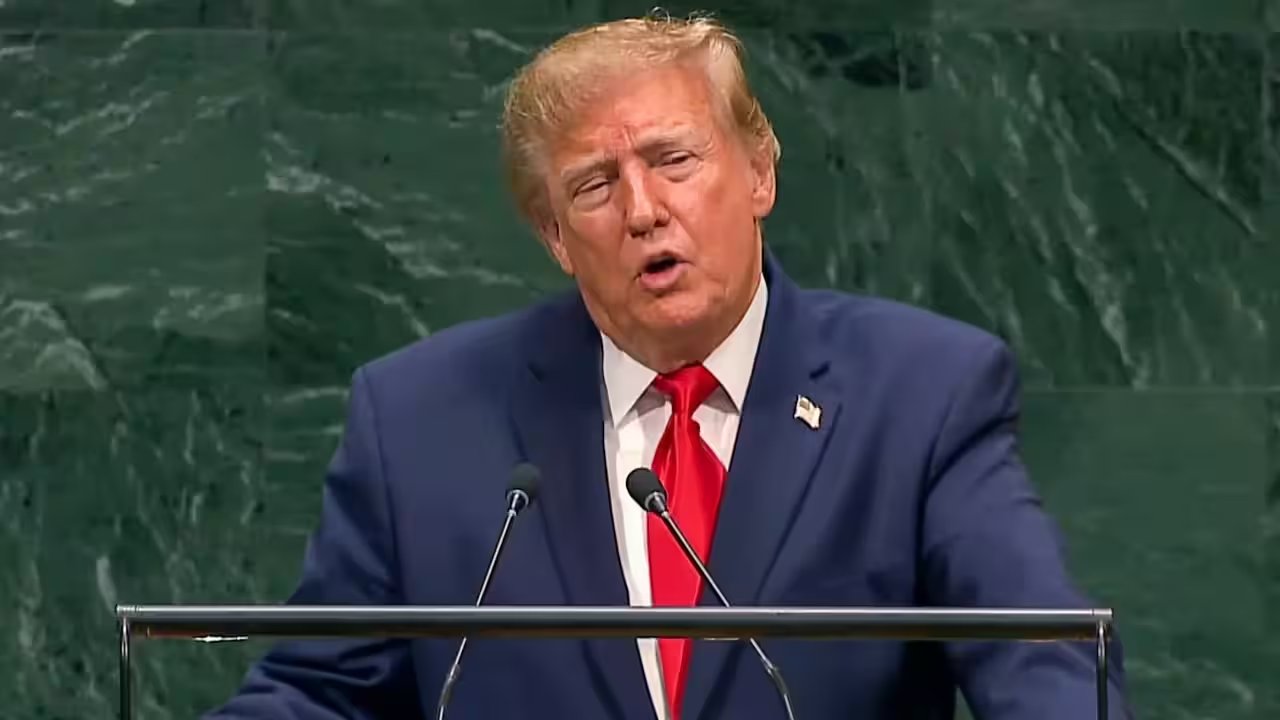
US President Donald Trump declared the United States has secured the "largest oil deal in history" with Venezuela, an agreement covering 65 billion barrels that he claims will slash global energy prices. Speaking at the UN General Assembly on Tuesday, Trump stated that major global oil companies are already entering the country to revive its struggling industry. "The numbers are absolutely incredible," he said, asserting that the two nations together hold more than 60% of the world's oil.
The deal structures a 100-year joint venture with an unnamed private operator, granting the US a 55% effective output stake. Venezuela’s interim President, Delcy Rodriguez, confirmed the agreement targets 17 oil fields with a proven potential of 65 billion barrels. The plan aims to boost Venezuelan production to 1.5 million barrels per day, potentially injecting $100 billion in investment and generating over $209 billion in taxes for Caracas. Oil purchased by the US under this arrangement is designated for strategic reserves and military use.
Skepticism persists regarding the timeline. Venezuela’s infrastructure is in dire condition, requiring billions in repairs before any significant output increase becomes possible. Amy Myers Jaffe of New York University noted that while the deal could be helpful long-term, it will not immediately change retail gasoline prices. Kevin Book of ClearView Energy Partners added that the scale of investment required means production bumps would take many years to materialize.
Trump also linked the agreement to the US military operation in January that led to the arrest of former President Nicolás Maduro, claiming hundreds of political prisoners have since been freed. "Our actions in Venezuela are proof that the United States will no longer permit threats to America to gain a foothold anywhere in the Western Hemisphere," he stated. The deal has drawn sharp criticism within Venezuela, with Harvard professor and former planning minister Ricardo Hausmann labeling it a "shameful deal" and questioning its legitimacy.
In a separate remark, Trump suggested a deal with Iran is imminent, predicting it would follow the November 3 midterm elections. "I believe we'll make a deal right after the election because it doesn't make sense for them not to," Trump said, adding that he faces a "big decision" between an agreement or military action. The next phase of the Venezuela deal hinges on the entry of major oil firms and the initial capital deployment for infrastructure repair.