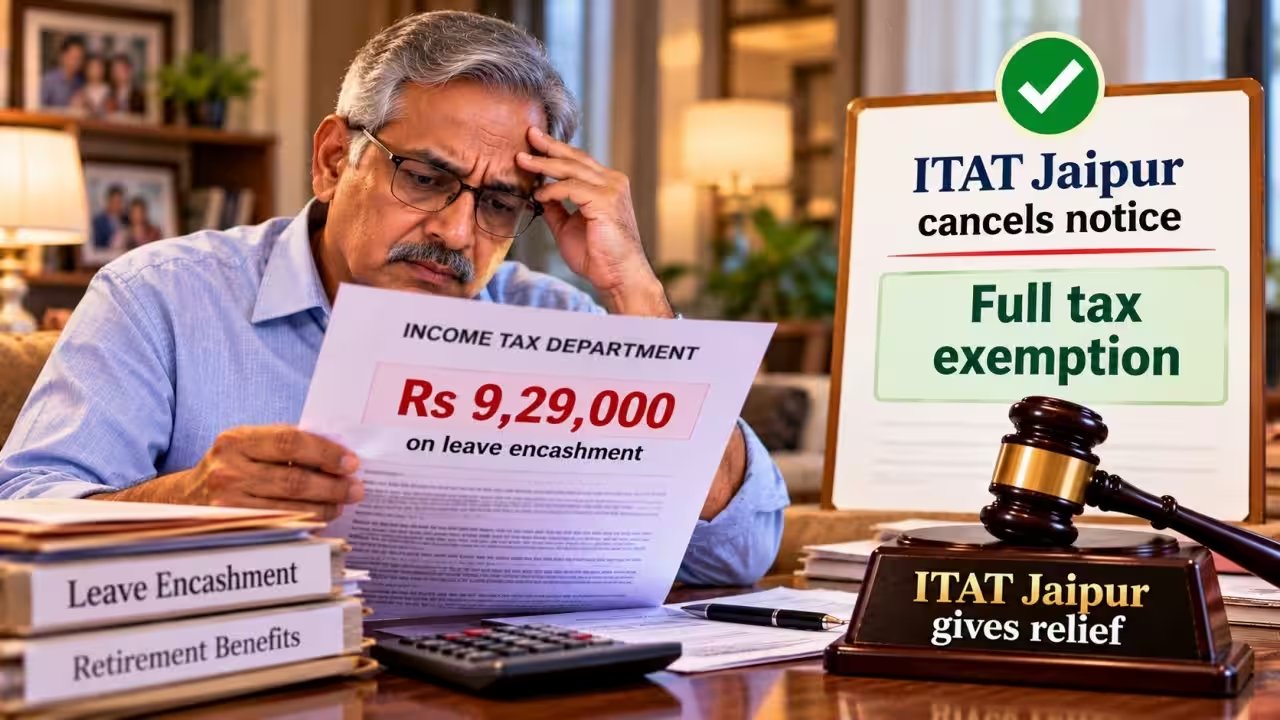
A State Bank of India retiree in Jaipur was handed a lump‑sum of Rs 9.29 lakh as leave encashment in 2020, a figure that exceeded the then‑applicable non‑government limit of Rs 3 lakh. The employee, unaware that his pension and leave payout fell under the non‑government bracket, filed an income tax return claiming the full amount as exempt under Section 10(10AA). The assessing officer, however, capped the exemption at Rs 3 lakh, adding the surplus ₹6.29 lakh to his taxable income and pushing his total to ₹13.05 lakh — a decision upheld by the Commissioner of Income Tax (Appeals) with reference to the Delhi High Court’s 2020 ruling in Kamal Kumar Kalia v. Union of India.
The complainant challenged the assessment before the Income Tax Appellate Tribunal, Jaipur, which on 22 September 2026 reversed the earlier judgment. The tribunal, noting that the 2023 notification raising the leave‑encashment ceiling to ₹25 lakh was remedial, ruled that employees of public sector undertakings and nationalised banks are not treated as “government employees” under the clause, and that the new ceiling applied retroactively to the 2020 assessment year.
Chartered accountant Suresh Surana told the Economic Times that the ITAT’s decision was consistent with its past Coordinate Bench rulings, such as Dashrath Kumar Sen v. ACIT and Govind Chhatwani v. CIT (Appeals). He added, “The amount of Rs 9,29,033 received by him is well within the limit of Rs 25,00,000, and no other limit prescribed by the sub‑clause has been applied against him.”
The tribunal directed the assessing officer to delete the ₹6.29 lakh addition, grant the full exemption, and update the tax records accordingly. As a result, the retiree’s net pension income for the 2020‑21 assessment year will reflect the full Rs 9.29 lakh exemption, and the Income Tax Department must adjust its filings and refund any over‑collected tax.