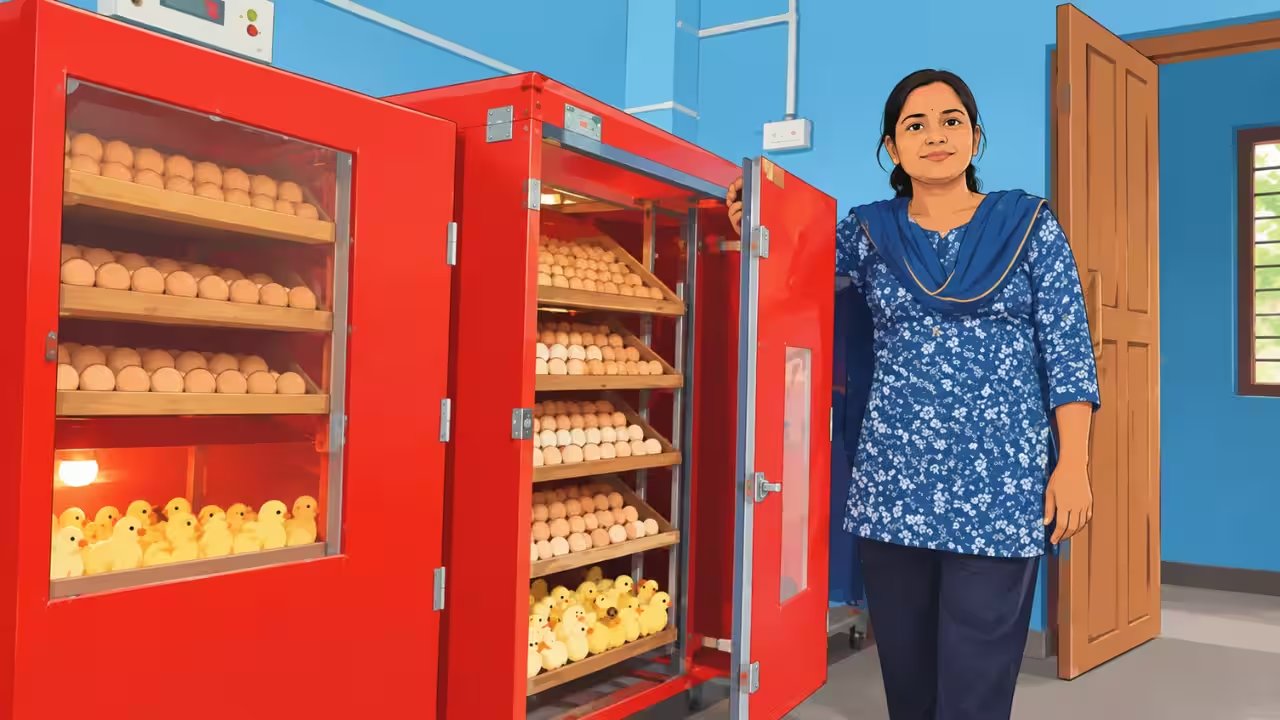
It’s easy to dismiss backyard poultry as a hobby, but Rajeshwari, 38, from Wandoor village in South Andaman, proved otherwise. She started with just five indigenous birds in 2023, keeping them mostly for home consumption. Today, that modest beginning has morphed into an organised enterprise churning out 2,000 chicks monthly. The secret? She didn’t just buy more birds; she bought knowledge. By enrolling in the ICAR-CIARI skill development programme, she learned the precise mechanics of flock management, turning a casual interest into a viable business model.
The numbers are surprisingly specific, which is what makes this case study so actionable. She runs a semi-intensive unit with a mini-incubator capable of holding 2,500 eggs. Her breeder flock lays about 3,600 eggs a month, but she only uses 2,500 for hatching. With a hatchability rate of nearly 80%, she generates those 2,000 chicks. It’s a tight, efficient loop. She keeps 550 birds as parental stock and rears another 1,200 specifically for meat. This dual-track approach means she’s not betting everything on one product; she’s selling chicks, meat, and table eggs simultaneously.
Financially, the model holds up under scrutiny. ICAR-CIARI reports an estimated monthly net profit of ₹1.91 lakh. That translates to a benefit-cost ratio of 2.02, meaning for every rupee invested, she gets back two rupees and two paise. She markets roughly 600 kg of live poultry meat, 600 chicks, and 1,100 table eggs every month. It’s not a passive income stream; it’s active, daily management. But the payoff is a steady, reliable cash flow that doesn’t rely on seasonal crops or unpredictable market rates for a single commodity.
What makes Rajeshwari’s story replicable for other rural entrepreneurs is the structure of the support she received. It wasn’t just a one-time workshop. ICAR-CIARI provided continuous technical guidance, from vaccination schedules to feed formulation. They taught her how to manage brooders, growers, and breeders as distinct but connected parts of a system. If you’re looking to start a poultry venture, don’t just buy the birds. Invest in the training first. The infrastructure is secondary to the operational knowledge. You can’t scale what you don’t understand.
So, if you’re considering poultry farming as a side hustle or primary income, start small but think big on the technical side. Look into local agricultural research institutes for skill development programmes. Focus on improving your hatchability rate and managing your flock’s health proactively. Rajeshwari’s journey shows that even in remote locations like the Andamans, scientific management can turn five backyard birds into a six-figure monthly business. The opportunity is there; you just need the right roadmap.