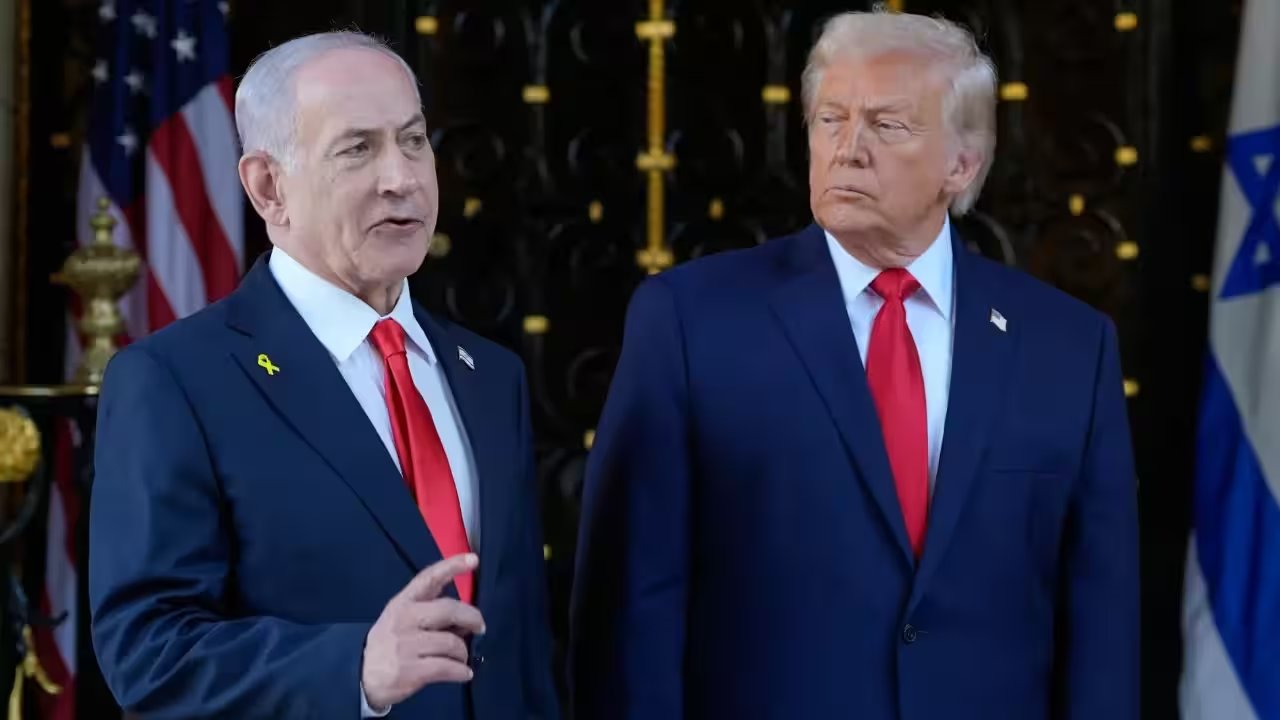
WASHINGTON — Mossad chief Roman Gofman landed in Washington on Friday for high-stakes intelligence consultations with top Trump administration officials, pressing the White House to authorize renewed military strikes against Iran.
Gofman, a key confidant of Israeli Prime Minister Benjamin Netanyahu, held talks with CIA Director John Ratcliffe before scheduling travel to Miami for direct discussions with White House special envoy Steve Witkoff. The mission lays bare a deepening operational rift between Washington and Jerusalem. Netanyahu wants bombs falling on Tehran again. US President Donald Trump has refused.
Instead, the White House has held firm on a strategy combining crushing economic sanctions with a strict naval blockade, preserving room for negotiated terms. Trump spoke directly with Netanyahu during a November 5 telephone call to reiterate that restraint. Washington has formally aligned its stance with key Gulf partners—Saudi Arabia, Qatar, and the United Arab Emirates—who favor tightening economic nooses around Tehran over igniting regional war.
"I could end the conflict immediately," Trump stated on Thursday, noting that he chose to maintain the current operational baseline at the direct request of regional partners. Gulf leadership, he made clear, prefers coordinated containment over unilateral tactical strikes as internal pressures mount on the Iranian leadership.
Diplomatic alignments across the Persian Gulf have hardened around non-kinetic economic asphyxiation. The White House calculates that an unchecked military reprisal risks unraveling fragile regional stabilization pacts.
| Strategic Parameter | Washington-Gulf Coalition Track | Jerusalem Tactical Track |
|---|---|---|
| Primary Mechanism | Naval blockade & economic sanctions | Direct offensive airstrikes |
| Regional Alignment | United States, Saudi Arabia, Qatar, UAE | Outgoing Israeli Security Cabinet |
| Diplomatic Objective | Sustained leverage for negotiations | Immediate destruction of Iranian targets |
| Military Posture | Active deterrence and maritime interdiction | Resumption of full-scale war |
Yet Netanyahu faces a collapsing political perimeter at home. He lost his parliamentary majority in the October 27 national election. Opposition leader Gadi Eisenkot now holds the official mandate to assemble a ruling coalition, leaving Netanyahu's political survival hanging by a thread.
Opposition figures inside the Knesset have openly warned that an embattled Netanyahu might deliberately order strikes on Iran—or intentionally bait a retaliatory missile salvo from Tehran—to torpedo Eisenkot's coalition negotiations and extend his grip on the prime minister's office.
The two political adversaries confronted the issue face-to-face on Thursday. Netanyahu and his military secretary briefed Eisenkot for two hours on classified Iranian operational developments. Following the closed-door briefing, sources close to the incoming mandate-holder confirmed that Eisenkot saw no operational intelligence justifying immediate kinetic strikes against Tehran.
By Friday morning, Eisenkot moved to box in the caretaker administration publicly.
Israel's security takes precedence over every other consideration and must never be used as a means of political capital.
Gadi Eisenkot, Israeli Opposition Leader and Mandate — Holder
Eisenkot warned that his transition team will enforce rigorous parliamentary oversight over every major military order issued by the outgoing cabinet.
Gofman is scheduled to conclude his Miami consultations with Witkoff over the weekend, while Eisenkot continues formal coalition-building negotiations in Jerusalem ahead of his statutory deadline to present a governing majority.