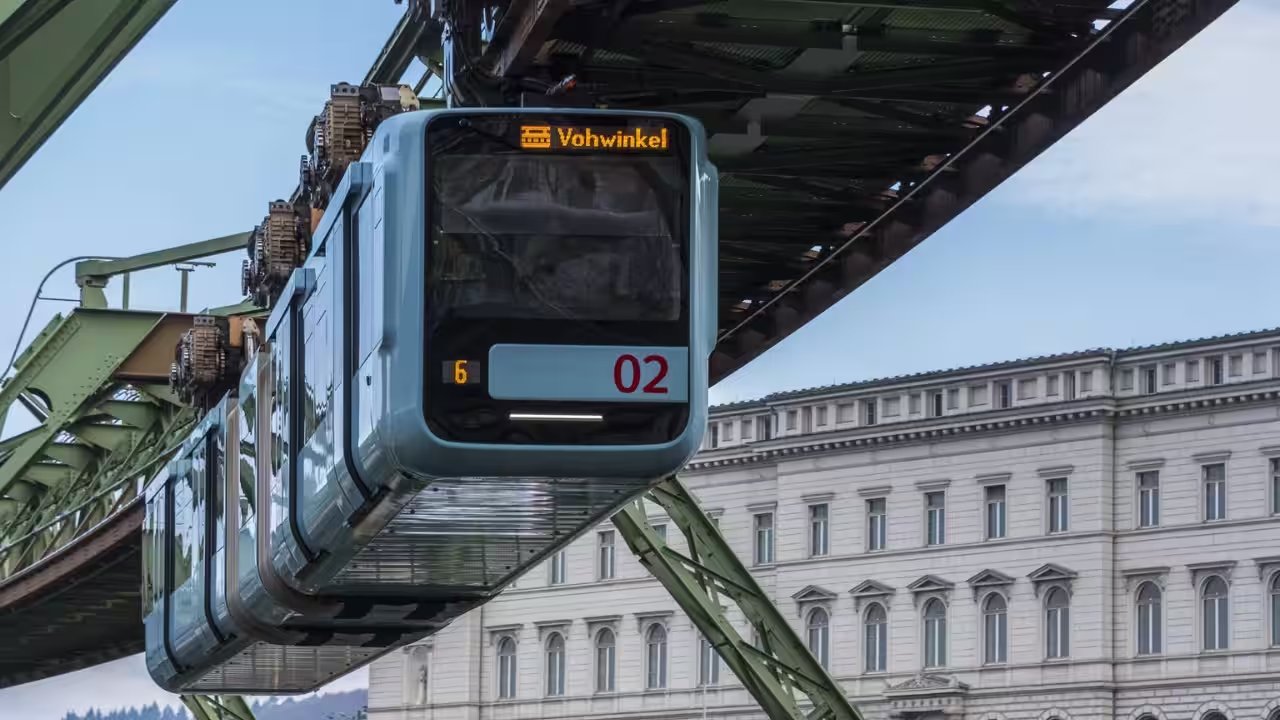
Wuppertal’s iconic suspension railway, which first glided over the Wupper River on 1 March 1901, has now crossed the valley for 125 years, ferrying more than 80,000 commuters every day. Mayor Miriam Scherff, standing on the historic Oberbarmen platform, underscored the line’s role as a fast, low‑emission link that would otherwise be impossible to manage in the 13‑kilometre stretch of narrow valley.
WSW, the city’s public utilities company, kicked off the anniversary programme on 8 January with a special GTW 72 car painted in the classic orange‑blue livery of 1972. The car will remain in regular service for the rest of the year, while WSW invites residents to submit personal stories through an online portal that will culminate in a public festival late summer 2026.
To commemorate the milestone, Deutsche Post has issued a special stamp in its “Time Travel Germany” series featuring a photograph of the 1901 and present‑day Robert‑Daum‑Platz station. A first‑day cover accompanies the stamp, adding a tangible keepsake for collectors.
Sabine Schnake, Managing Director of WSW mobil, stressed that the railway remains a symbol of progress. WSW plans to invest further in technology and infrastructure to keep the line fit for the coming decades, positioning it as a sustainable mobility solution for Wuppertal.
The anniversary celebrations carry a personal touch: Scherff recalled riding the line with her daughter for the first time from Oberbarmen, a memory she shares with residents today. The festival will showcase such stories, highlighting how the flying train has shaped everyday life for generations.
WSW’s broader portfolio—encompassing energy supply, water, waste and public transport—employs roughly 3,500 people, making it one of Wuppertal’s largest employers. The city’s 125‑year‑old railway, now a living monument, will continue to glide above the Wupper, linking communities and reminding all that innovation can endure.