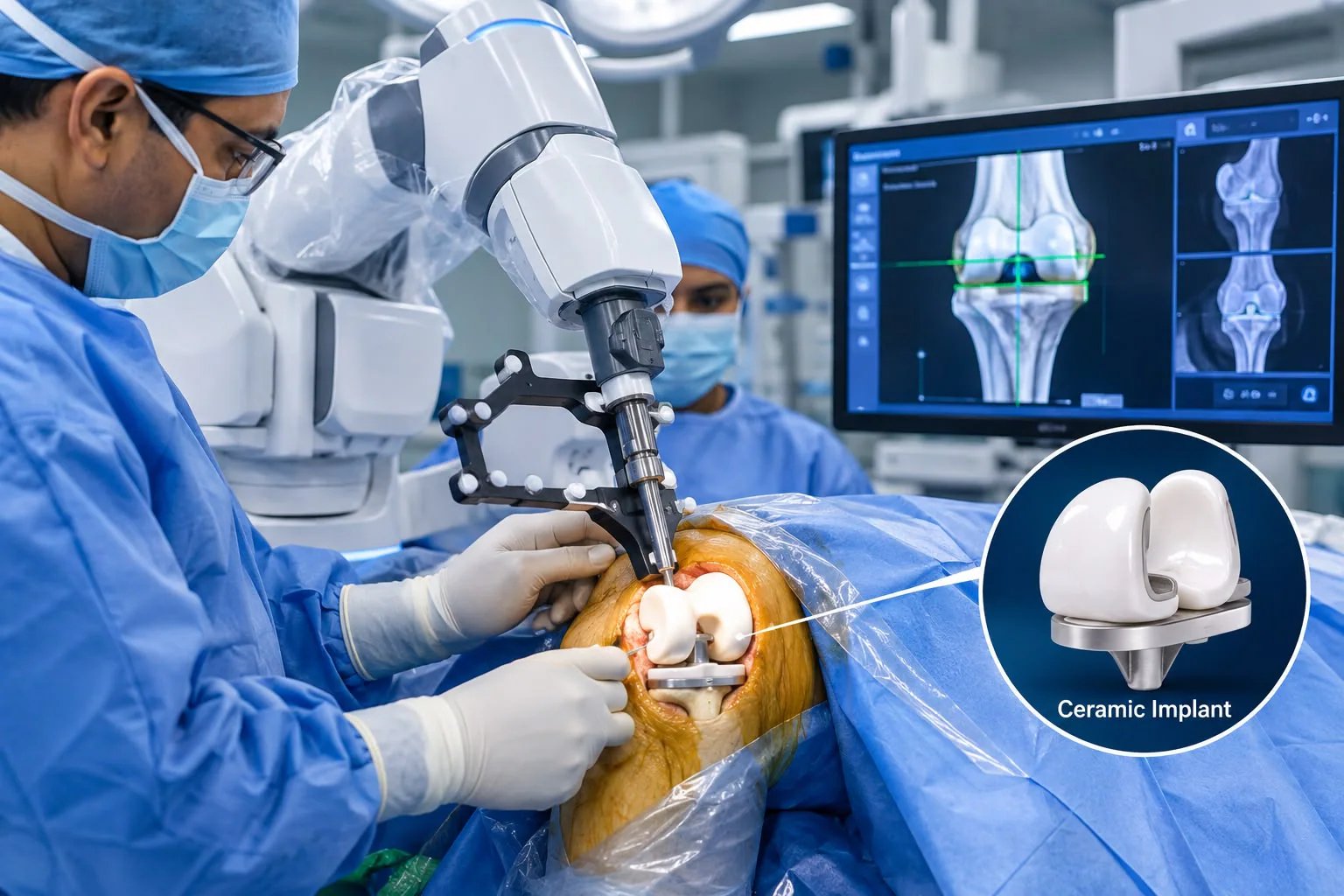
NewPARA The first robot‑assisted ceramic knee replacement was performed in Delhi, marking a historic moment for joint surgery. Dr Sujoy Bhattacharjee, chief of the Max Institute of Robotic Joint Replacement, announced the milestone at a press conference.
NewPARA Ceramic implants differ from the usual metal components by being non‑metallic and biocompatible, potentially reducing metal‑related complications. Bhattacharjee explained that ceramic offers a smoother surface that may translate into less wear over time.
NewPARA The active robotic system used in the surgery provides sub‑millimetre precision during bone cutting and implant positioning. This level of accuracy could help surgeons avoid gaps or misalignments that often lead to implant loosening.
NewPARA For patients, the combination of a ceramic implant and robotic precision could mean a lower risk of metal hypersensitivity and a more natural knee feel. The smoother joint surface may also reduce noise and improve longevity.
NewPARA The surgeons noted that advances in implant materials must go hand‑in‑hand with surgical precision. They see this convergence as the next step toward next‑generation joint replacement procedures that are safer and more durable.
NewPARA While the procedure is still in its infancy, patients interested in cutting‑edge options should consult an orthopedic specialist. More clinical data will be needed to confirm the long‑term benefits before routine use.