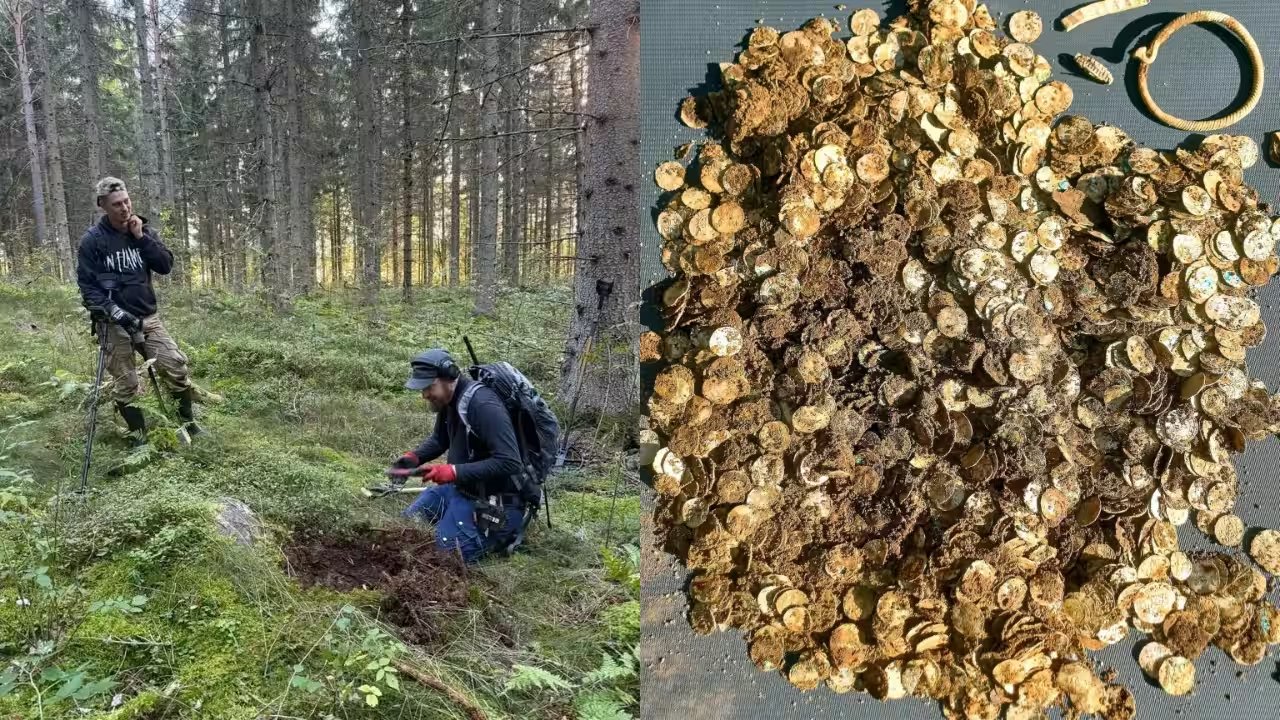
Kalle Lappinen was scanning the soil near the village centre of Sysmä on September 3, 2026, when his metal detector screamed. He had found something massive. Specifically, a cache of silver so large it instantly eclipsed every previous Late Iron Age discovery in Finland. Archaeologists from Lahti Museums arrived the next morning to begin the delicate work of extraction.
The treasure was not hoarded in one place. Lappinen’s find revealed a bizarre split: two separate deposits buried roughly 39 feet apart. Both were sealed in birch-bark containers and packed among stones, sitting about 45 centimetres below the surface. Frida Ehrnsten, keeper of numismatic collections at the National Museum of Finland, labelled it a "double hoard." Why the owner divided the wealth remains a mystery.
The scale is staggering. The recovered material weighs 4.5 kilograms—nearly 10 pounds of dense, ancient silver. Esko Tikkala, the archaeologist leading the recovery, noted that this dwarfs the previous record holder in Nouvala, which contained only about 1,700 coins. This Sysmä find holds thousands. Alongside the coins, the team pulled out hack silver, a bracelet, a mount, and a single bead.
The coins tell a story of global travel. Designs and inscriptions place their origins in modern-day Sweden, Britain, Germany, and even further east in Turkey and Iran. It wasn't just local currency. These were Islamic dirhams and European silver, flowing through a complex web of trade routes. This proves Sysmä wasn't a remote backwater. It was a critical node in a 1,000-year-old economic network.
Researchers are now cleaning each piece to pin down exact dates, though the hoard likely dates to AD 1000–1050. Tikkala suggests a merchant may have buried the silver for safekeeping during a time of conflict, intending to return for it. He never did. The next step is a full conservation analysis, which will take weeks. Until then, the silver sits in a climate-controlled room, waiting to tell the rest of its story.