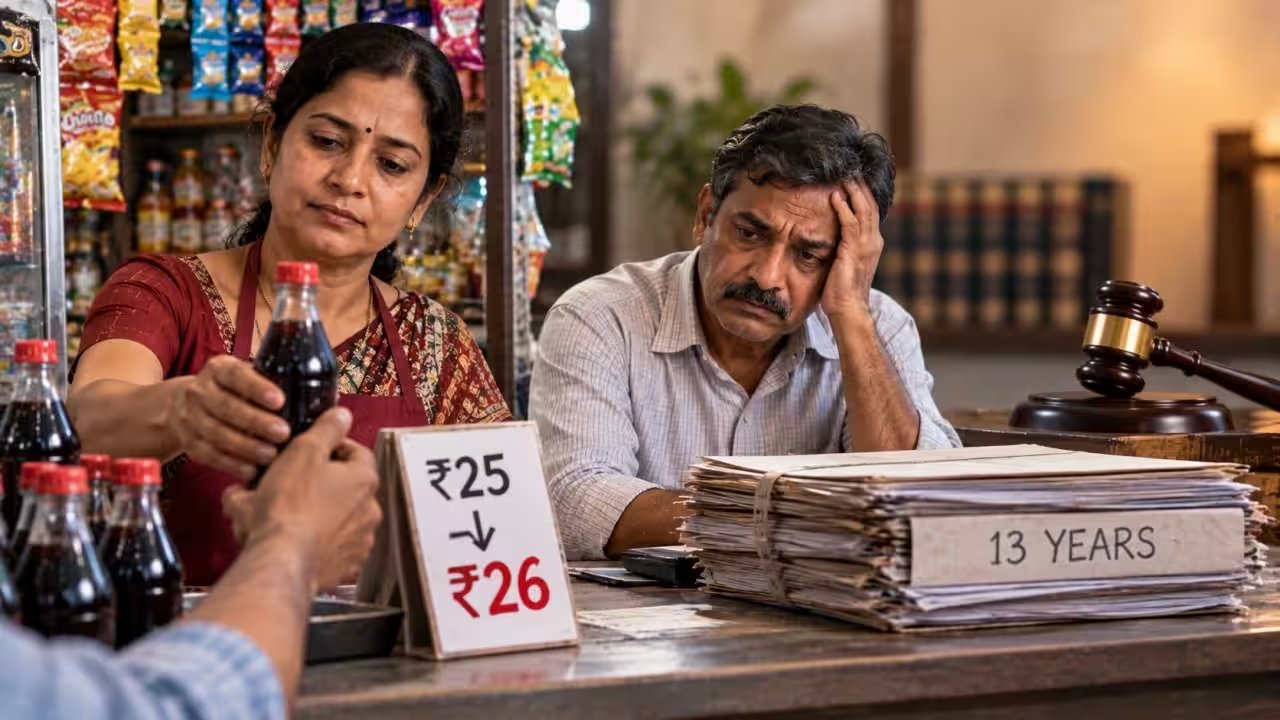
On March 29, 2013, an inspector visited a flour mill and its adjoining shop in Mumbai, buying a 600‑ml bottle of cold drink marked MRP ₹25 but billed ₹26. The inspector’s report, filed on July 15, 2013, alleged the shop worker had overcharged by ₹1 and forwarded the complaint to the Assistant Controller.
The government filed criminal charges on July 24, 2013, naming the worker under Rule 18(2) of the Legal Metrology Rules. Years of appeals followed, with the Ratnagiri Sessions Court dismissing the worker’s revision on September 18, 2014, leaving the case open.
The worker claimed the inspector demanded a ₹5,000 bribe and that he had signed an authority letter under duress; the High Court later dismissed these allegations as unsubstantiated.
On June 29, 2026, the Bombay High Court quashed the prosecution, citing that the sale was conducted by the shop’s owner and the worker had merely prepared the invoice. The court also noted the bill’s date was altered from March to June, further undermining the evidence.
Legal experts say the ruling does not permit overcharging but clarifies liability must attach to the actual seller, not a related employee. The shop owner, never named in the case, may now face no legal consequences, while the worker can finally move on.