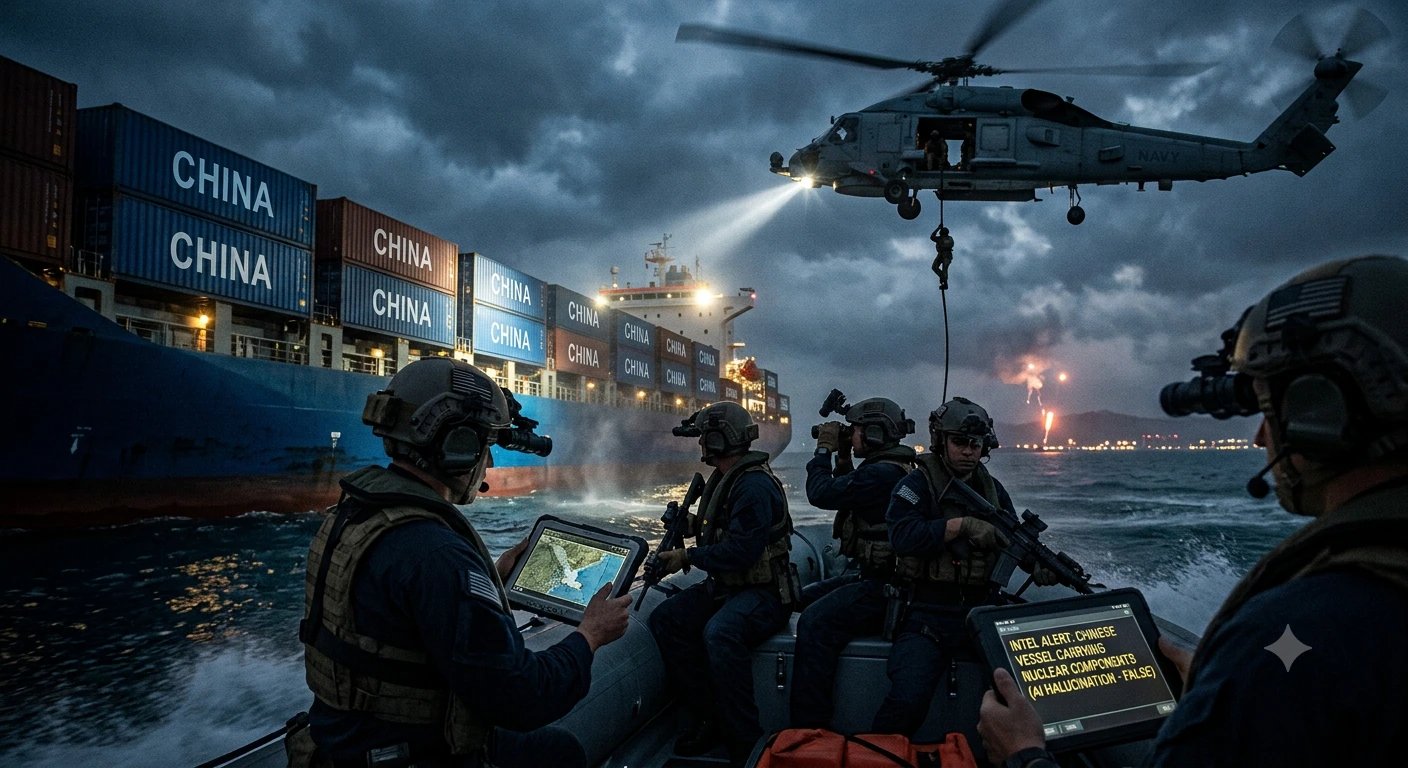
In March 2026, during the US‑Iran conflict, a US special‑operations analyst used an AI chatbot to produce a false intelligence brief on a Chinese vessel traversing the Persian Gulf. The report falsely claimed the ship carried nuclear‑related components. The brief entered the US military’s decision‑making chain and prompted the deployment of aircraft and boarding teams.
The brief, flagged as a draft, was circulated among command staff in the Middle East air operations center. A senior officer noted the ship’s manifest listed commercial electronics, not weapons. The AI system had misinterpreted a routine cargo entry as a high‑risk component, a classic example of hallucination.
When a junior intelligence analyst cross‑checked the report against the ship’s AIS data, the discrepancy surfaced. The operation was called off, and higher‑ranking commanders reviewed the error. "The report was entirely false and almost started a war," said one source, underscoring the fragility of AI‑assisted decision making.
The incident has prompted the Pentagon to revisit its AI integration protocols, adding mandatory human verification steps. Analysts warn that without safeguards, automated systems could trigger unintended military actions. Meanwhile, diplomats in Washington and Beijing have expressed concern over the close call.