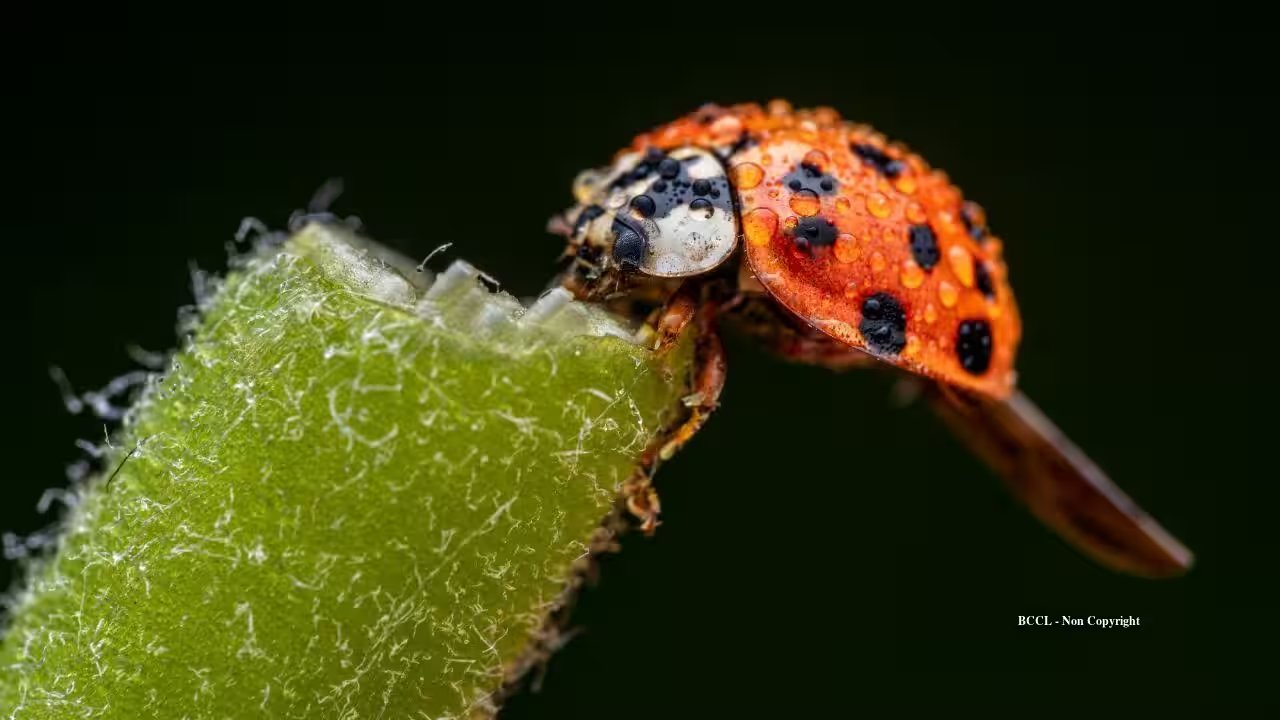
In 1916, the U.S. Department of Agriculture, led by the Bureau of Entomology, released thousands of Asian lady beetles, Harmonia axyridis, into several test sites across the Midwest and the South, hoping a voracious aphid predator would slash crop damage without chemicals.
The first confirmed wild population emerged in 1988, not at a release site but near the port of New Orleans, Louisiana. Researchers suspect that nursery stock shipped through Delaware and South Carolina ports carried the beetles, sparking debate over accidental versus intentional introduction.
Since that foothold, the beetle’s rapid expansion has been nothing short of a biological invasion. With a generation time of just 15–25 days and the ability to thrive in orchards, forests, and even city backyards, Harmonia axyridis now occupies every state, outcompeting native ladybirds for food and breeding sites.
Farmers in Oklahoma have seen a dramatic drop in aphid numbers, but a local resident in New York swears the beetles swarm into his attic every spring, turning a once‑beneficial insect into a household nuisance. Ecologists warn that the beetle’s dominance threatens native biodiversity, as it consumes the same prey as indigenous ladybirds and outmatches them in size and mobility.
The USDA’s Agricultural Research Service has issued a set of nationwide monitoring protocols and provides farmers with guidelines to manage the invasive species. In the coming months, the agency will roll out a grant program for research into alternative control methods and will convene a panel of entomologists to reassess the beetle’s impact on U.S. ecosystems.