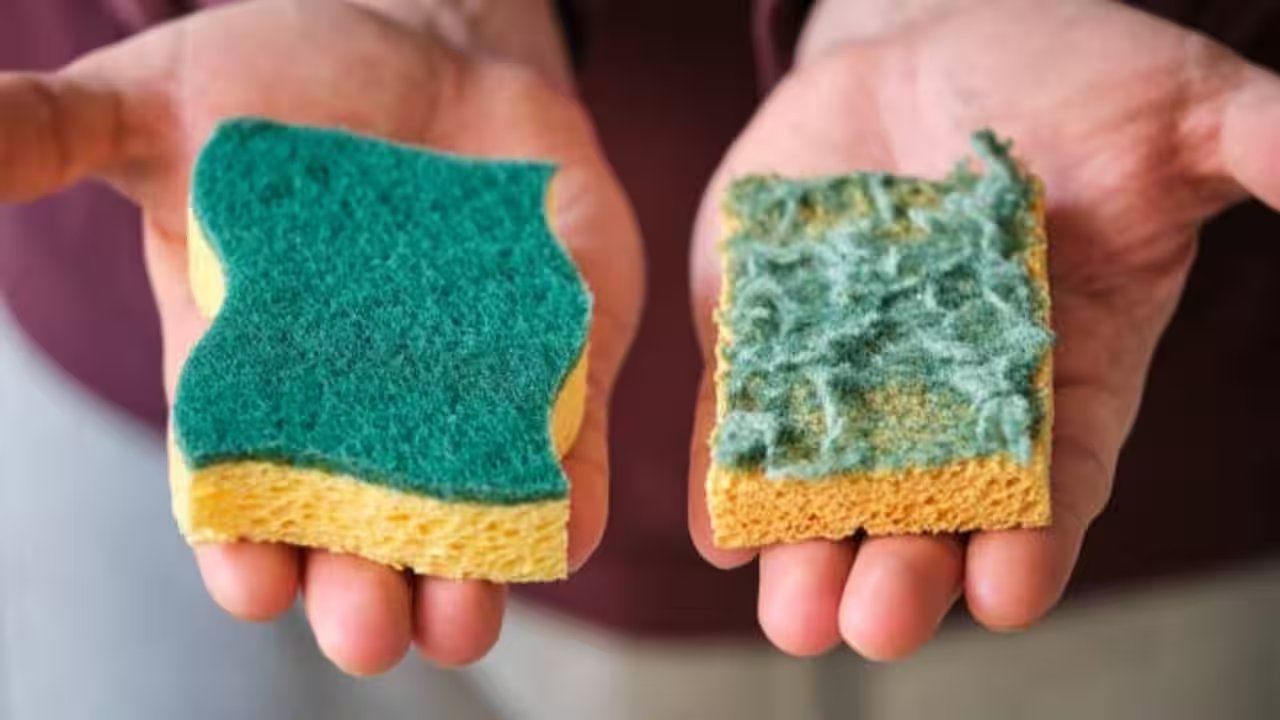
Dunk your kitchen sponge in water, pop it into the microwave for exactly 60 seconds on high, and let steam obliterate the bacteria trapped inside. It is the fastest way to sanitize the dirtiest tool in your kitchen. That tiny block of foam sits by the sink all day, drinking up grease, sauce splatters, and food scraps. Left damp in a puddle, it turns into a breeding ground for microbes. When you drag that soggy block across your countertops, you are not cleaning surfaces—you are smearing grime everywhere.
A quick rinse under the tap will not save it. While running water flushes loose crumbs down the drain, grease and moisture cling to the dense cellular core. Squeeze it hard after every single dishwashing session, shake off the trapped liquid, and set it upright in a slotted, raised drying caddy. Airflow is your first defense. Bacteria thrive in dark moisture, but they choke in dry air.
To strip out deep contamination, turn to thermal sanitizing. Take a thoroughly wet sponge—it must be soaking damp to avoid scorch marks—and run it in the microwave for one minute. The water trapped in the pores flashes into scalding steam. Let it sit inside the microwave to cool down completely before touching it, because trapped moisture holds searing heat. Never microwave a dry sponge, and keep any scrubbers with metallic threads far away from the oven cavity to prevent fire risks.
Got a dishwasher? Skip the microwave entirely. Place the sponge securely on the top rack whenever you run a load. Choose a hot wash cycle paired with a high-heat dry setting. The combination of concentrated dish detergent and sustained heat flushes the foam core cleaner than manual handwashing ever could.
If you prefer soaking, mix three-quarters of a cup of household bleach into one litre of clean water. Submerge the sponge for five minutes, pull it out, rinse it under running water until the chemical smell clears, and let it dry. For lighter day-to-day freshening, soak the sponge in equal parts white vinegar and water for five minutes. Vinegar cuts through greasy films and neutralizes stale odours. Yet caution matters: never mix bleach with vinegar or household cleaners, because combining them releases toxic chlorine fumes.
No sponge lasts indefinitely. Set strict boundaries around how you handle food prep zones. Designate one scrubber exclusively for eating utensils, and reserve a separate cloth or sponge for kitchen countertops. Never wipe spilled juices from raw meat with a general cleaning sponge and then run it over cutting boards.
Toss it out. If your sponge turns slimy, develops a sour stench, shreds at the corners, or hits the two-week mark, pitch it directly into the bin. Fresh sponges cost pennies, but wiping your family’s dinner plates with an ancient, contaminated sponge carries a steep cost to your household health.