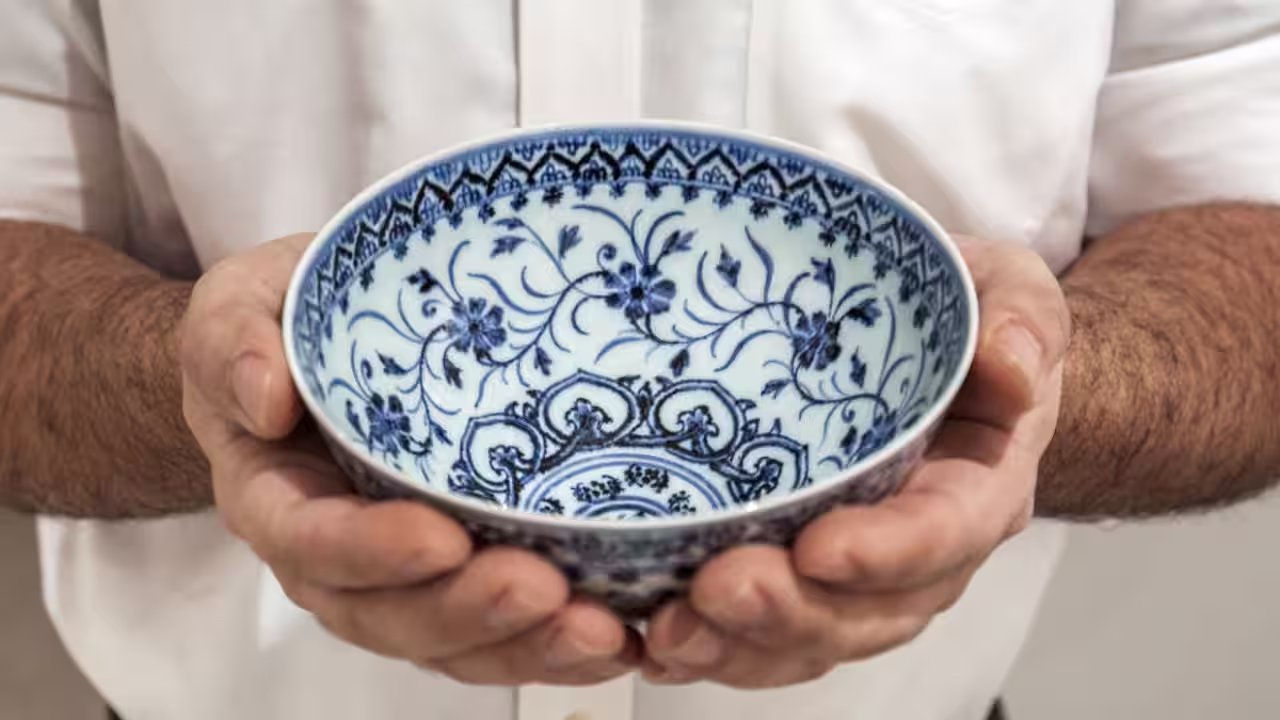
An unnamed antiques enthusiast in Connecticut spotted a small blue‑and‑white bowl at a yard sale near New Haven in 2020 and paid the asking price of $35 without a second thought. Sotheby’s specialists—Angela McAteer, head of Chinese works, and Hang Yin—examined the piece after the buyer sent photographs and confirmed it was a 15th‑century Yongle‑period bowl, a style prized for its cobalt‑blue glaze and lotus‑bud shape.
The bowl, measuring about 6¼ inches in diameter, bears a central medallion and intricate floral motifs that echo the imperial kilns of Jingdezhen. Only six other comparable bowls are known to exist worldwide, housed in the National Palace Museum, the National Museum of Iran, and several major European institutions, making this Connecticut find the seventh in the world.
Sotheby’s listed the bowl for its Important Chinese Art sale in New York, setting a reserve range of $300,000 to $500,000. The auction, held on March 17, 2021, attracted 15 bids—starting at $200,000—before the hammer closed at $580,000, a figure that surpassed the house’s upper estimate. After the standard auction fee, the final price reached $721,800.
The sale underscores how rare artifacts can surface in the most unlikely places. Sotheby’s suggests the bowl may have passed through several hands before reaching the yard sale, a journey that remains unclear. The auction’s result demonstrates the immense hidden value that collectors and institutions can uncover when a casual buyer recognizes potential and seeks expert appraisal.
The buyer remains anonymous, but the story has sparked interest among collectors and historians alike, prompting a renewed focus on provenance research for everyday objects that may hide significant cultural heritage.