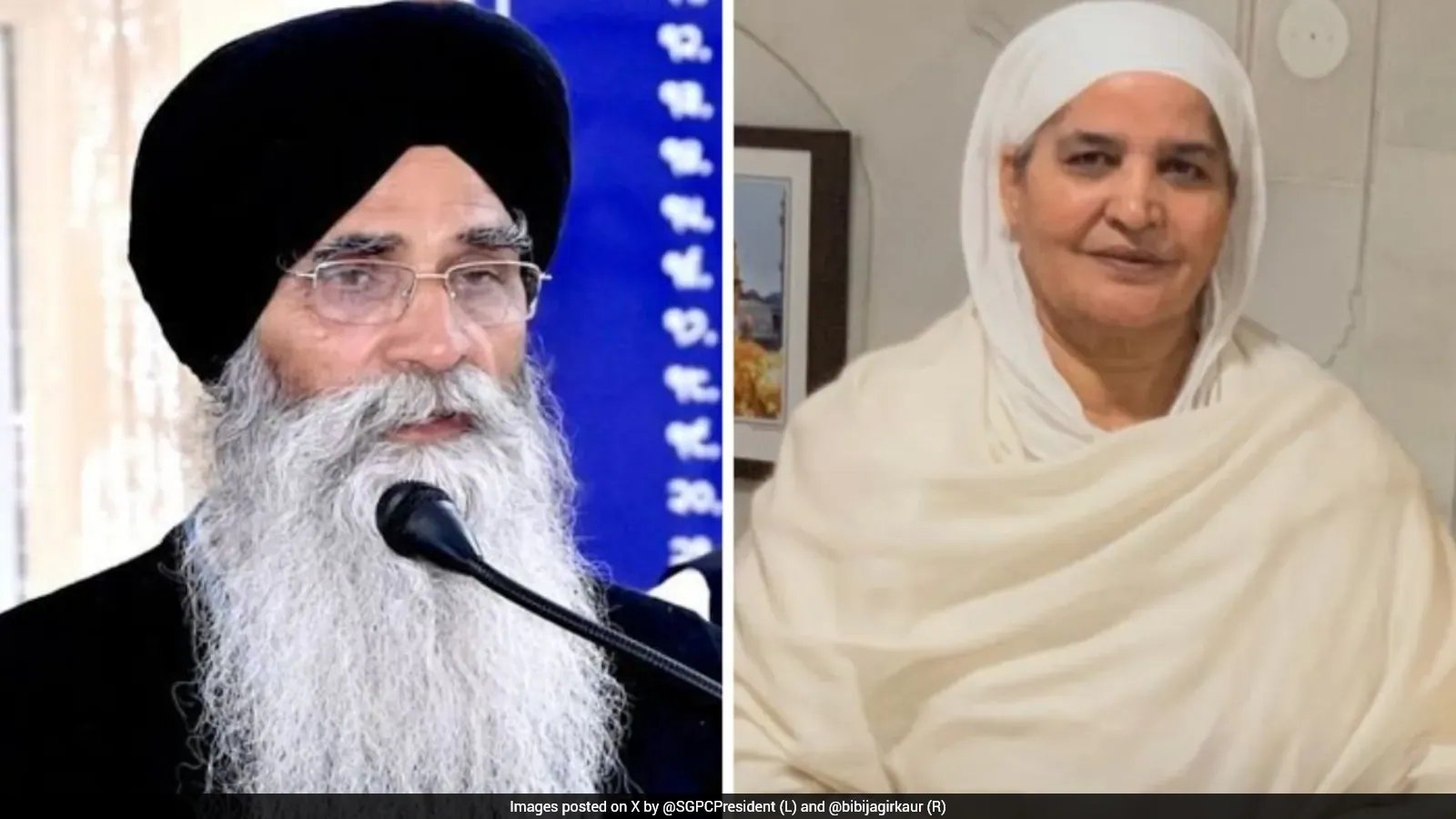
Sukhbir Singh Badal will travel to Begowal on November 13 to personally welcome former Shiromani Gurdwara Parbandhak Committee president Bibi Jagir Kaur back into the Shiromani Akali Dal fold, detonating an internal power struggle exactly one week before the apex gurdwara body elects its next chief. The stakes extend far beyond the sanctum of the Golden Temple complex. The November 20 annual leadership vote will measure whether the Badal family retains absolute command over the Sikh community's premier religious institution—or whether fractured factions have hollowed out that authority ahead of Punjab’s 2027 state elections.
Power inside the house is shifting. Harjinder Singh Dhami swept his fifth consecutive term in November 2025, securing 117 of the 136 votes cast in the general house. Yet murmurs of weariness have spread through the ranks, accompanied by unconfirmed internal speculation that Dhami may step aside. Kaur, who helmed the SGPC during three separate tenures—1999-2000, 2004-05, and 2020-21—broke away following fierce disputes with the Badal leadership, joining the rebel SAD (Punar Surjit) faction led by Giani Harpreet Singh. She insists she never abandoned core Akali principles. "I was expelled from the party, but I never left its ideological roots," Kaur declared, demanding root-and-branch administrative overhauls inside the gurdwara management board to arrest declining rural outreach.
Sukhbir Badal’s personal pilgrimage to Begowal exposes raw political necessity. The party needs its old guard back. While the Badal faction commands an apparent majority in the present house, that dominance faces sharp tests from within. The general house consists of 170 elected seats, 15 co-opted seats, and six non-voting ex-officio members, including the five takht jathedars and the head granthi of Sri Darbar Sahib.
| SGPC General House Seat Category | Statutory Strength | Voting Status in Presidential Poll |
|---|---|---|
| Elected Constituency Members | 170 | Active Voters |
| Co-opted Regional Members | 15 | Active Voters |
| Ex-Officio (5 Jathedars & Head Granthi) | 6 | Non-Voting Dignitaries |
| Total House Strength | 191 | 185 Eligible Ballots (When Fully Constituted) |
Only 136 members cast ballots in the last presidential election because deaths and disqualifications have carved multiple vacancies into the roster. The math is tightening. If Kaur launches an open presidential bid on the floor, she threatens to split the loyalist bloc down the middle. If she instead throws her weight behind Badal's chosen nominee, the reconciliation provides an armor of unity for an embattled party desperate for traction.
Yet the entire November 20 contest rests on an aging electoral foundation. Established on November 15, 1920, during the Gurdwara Reform Movement and codified under the Sikh Gurdwaras Act of 1925, the SGPC wields massive statutory authority and billions in gurdwara revenue. But its voters have had no say for 15 years. The last direct public election for the general house took place in 2011. Litigation over voter eligibility froze the body until 2016, and the five-year term expired in 2021—leaving the current house functioning without a renewed public mandate from the Sikh electorate.
So the drama moves first to the fields of Begowal on November 13, where Badal and Kaur will seal their public pact before thousands of rural cadres. Seven days later, inside Teja Singh Samundri Hall in Amritsar, the ballot box will deliver the real verdict. Either the Akali establishment reasserts discipline, or the road to 2027 slips entirely out of its grasp.