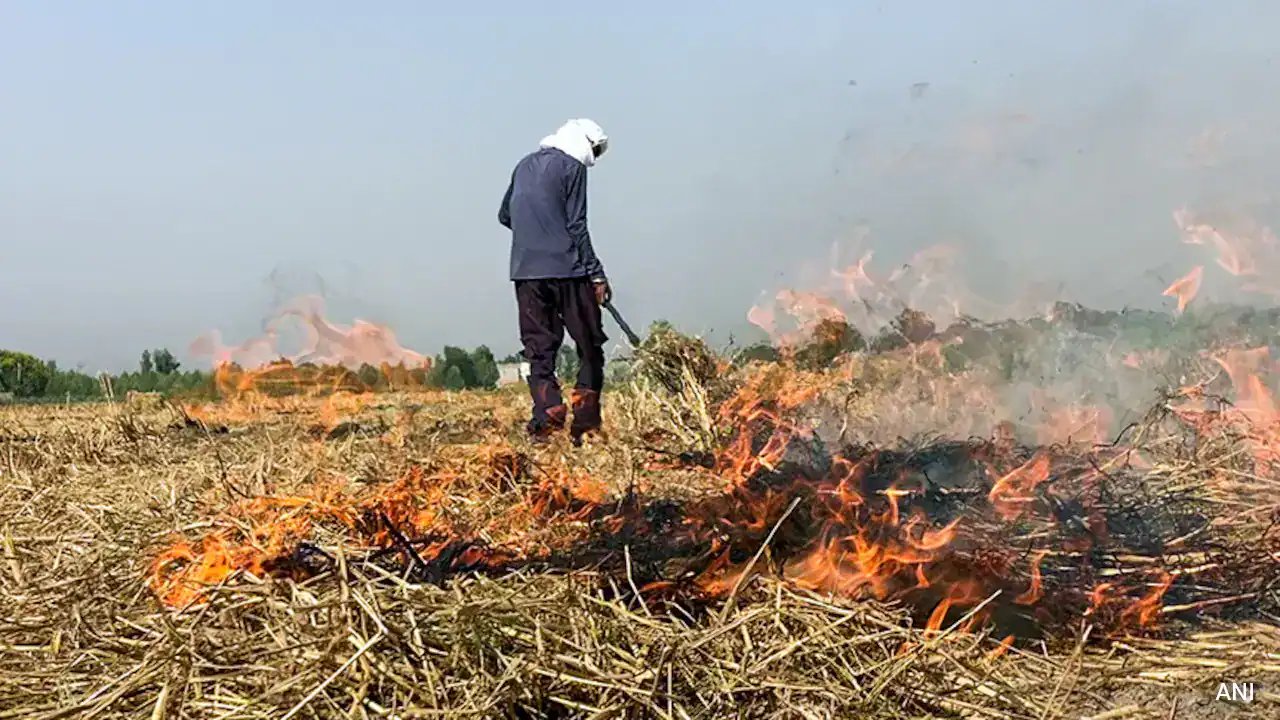
A narrow 25-day countdown against the winter calendar is driving Punjab farmers back to the matchstick. Despite state enforcement drives that slapped 884 First Information Reports on growers and marked over 1,000 red entries in land revenue registers, Punjab has recorded 4,459 stubble-burning incidents this harvesting season. The fires peaked on Diwali day with 1,152 blazes in a single 24-hour surge.
The ground reality refuses to budge.
State enforcement squads have concentrated crackdowns across three primary hotbeds—Tarn Taran, Ferozepur, and Sangrur—imposing environmental compensation penalties topping ₹62 lakh. Yet growers insist the agronomic clock forces their hand. Paddy comes off the fields in late October, and wheat seeds must enter moist soil by mid-November. Delaying sowing by even a single week cuts seed germination, slashes final crop yields, and shrinks family income. Manual labour to clear dense stubble remains far too expensive for smallholders, while diesel-guzzling tractors and specialised machinery rentals eat away operational budgets before seed touches dirt.
Official state agriculture data presents a stark contrast to the smoke hanging over the Malwa and Majha plains. State records claim that out of approximately 20 million metric tonnes of paddy straw generated every year, roughly 19.25 million tonnes are successfully diverted from open burning through combined management channels.
| Residue Management Pathway | Annual Volume Handled | Key Methods & Off-Takers |
|---|---|---|
| In-Situ Field Management | 11.4 million metric tonnes | Super Seeders, Happy Seeders, Mulchers |
| Ex-Situ Industrial Off-Take | 7.85 million metric tonnes | Biomass plants, Biogas units, Brick kilns |
| Total Diverted Straw | 19.25 million metric tonnes | Scientific residue handling protocols |
The math looks sound on paper. On the ground, it unravels quickly.
Ex-situ collection networks require heavy baling equipment, localized collection depots, and industrial buyers who pay promptly—a logistical chain that remains fragmented across rural districts. Bulky straw bales sit stranded along unpaved field boundaries. At the same time, operating an in-situ Super Seeder requires a high-horsepower tractor that burns through expensive fuel. With input costs climbing across deep-bore irrigation, chemical fertilisers, and land-lease agreements, small cultivators face depleted margins that leave zero room for out-of-pocket machinery rentals.
The agrarian squeeze prompted farm unions to demand direct compensation of at least ₹100 per acre to clear straw mechanically rather than incinerating it. Stepping into the dispute, the Punjab government pushed a joint financial relief package of ₹2,500 per acre, requesting the Union government to fund ₹1,500 of that outlay while the state treasury covered the remaining ₹1,000.
The Centre rejected the proposal outright.
Union officials argued that substantial funds had already been channeled into machinery subsidies and pointed to Haryana, where the state administration disburses a direct incentive of ₹1,000 per acre to growers who refrain from setting fields ablaze. Punjab farmers remain without comparable cash relief.
With the mid-November wheat-sowing deadline closing fast, cultivators face an immediate choice between revenue penalties and missing the crop cycle. District monitoring teams continue tracking satellite fire alerts across Punjab's farm belt, but field operations will not slow down until the winter wheat crop is fully sown.