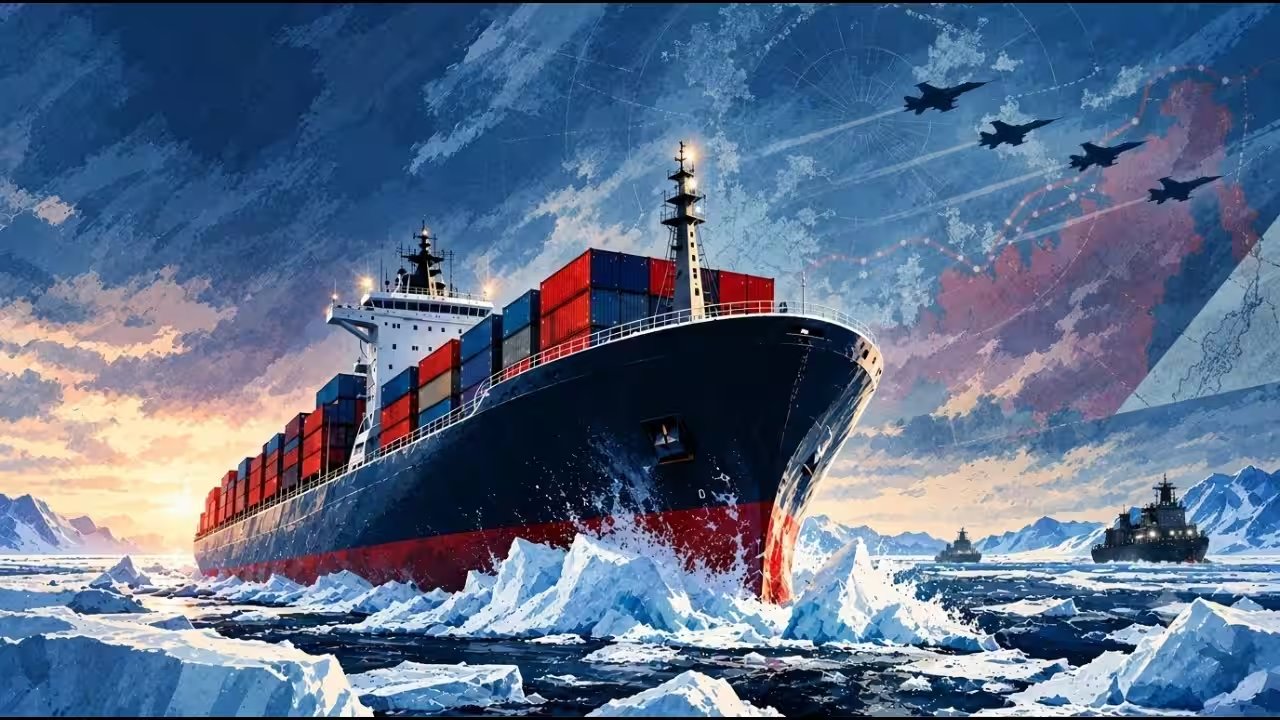
Russia has reactivated more than 50 Soviet‑era outposts across the Arctic and added a fleet of 42 icebreakers, positioning itself to exploit new shipping lanes that could be ice‑free by 2030. The U.S. Department of Defense’s 2024 Arctic strategy underscores this rapid transformation, noting that the Arctic is warming over three times faster than the rest of the planet.
The first commercially viable summer of the Northern Sea Route, with over 100 voyages carrying more than three million metric tons of cargo in 2025, marks the highest throughput on record. Yet the melting ice also threatens infrastructure and ecosystems, creating a dual reality for Russia: opportunity and risk.
Russia’s military footprint has expanded beyond outposts. The Kola Peninsula hosts two‑thirds of the country’s second‑strike nuclear assets and six of its twelve nuclear‑armed submarines, according to IISS Military Balance 2025. Recent deployments of S‑400 surface‑to‑air missile systems to Franz Josef Land and Novaya Zemlya have amplified its anti‑access capabilities.
In response, NATO launched the Arctic Sentry initiative in February 2026, a multi‑domain deterrence program that includes a third Combined Air Operations Centre in Bodø, Norway, and Forward Land Forces in Finland. These moves, announced by NATO Secretary‑General Jens Stoltenberg, aim to counterbalance Russia’s growing presence.
The trilateral security agreement signed on 22 September 2026 by the United States, Denmark, and Greenland at the UN General Assembly permits the U.S. to expand operations at Pituffik Space Base and install the “Golden Dome” missile‑defence system. The agreement, brokered by Danish Defence Minister Mette Frederiksen, signals a new pivot in Arctic geopolitics.
For the people who live there, the changes are tangible. A fisherman from the Barents Sea, Ole Jensen, reports that his crew now navigates through the same waters that once were ice‑bound, worrying about both increased traffic and the loss of traditional hunting grounds.
tags: ["Arctic", "Russia", "NATO", "Climate Change", "Geopolitics"]