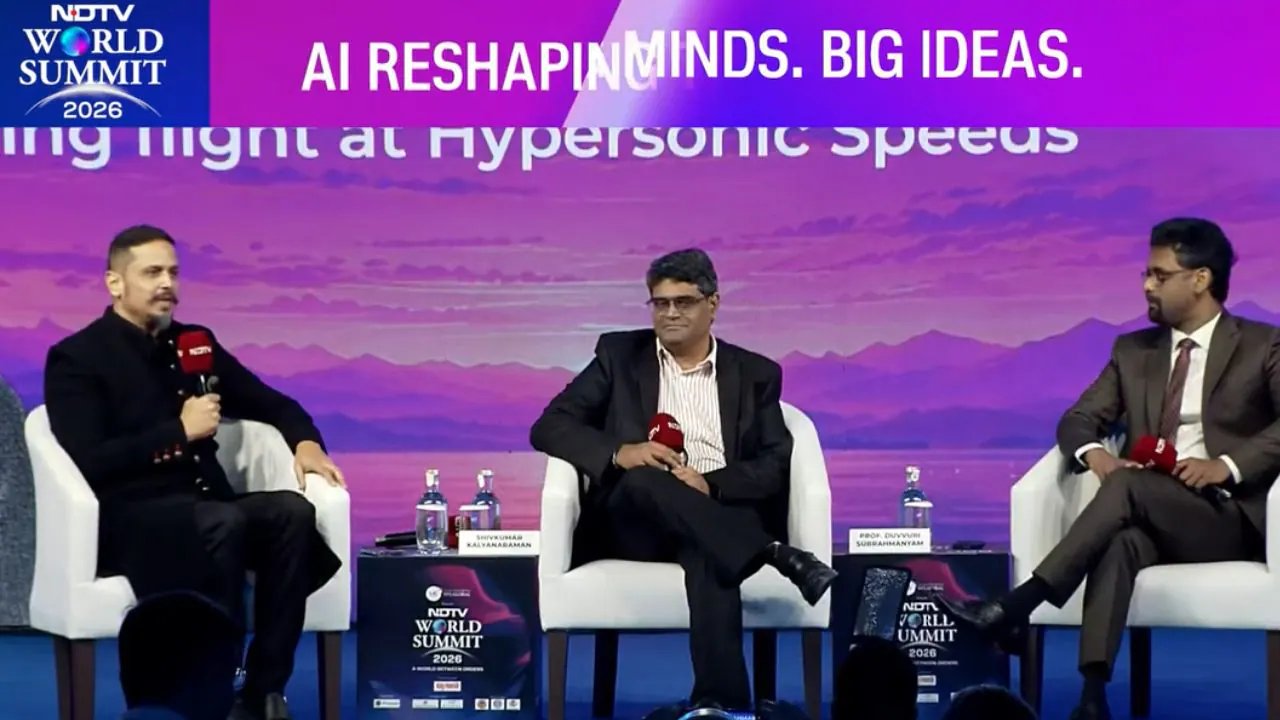
Kalyanaraman opened the session titled “India And The Making Of A Research Superpower” by declaring that India’s talent stock is vast, citing the phrase “hum kisi se kam nahi” from a Shah Rukh Khan film. He warned that the country must translate that talent into world‑class outputs or risk falling behind competitors.
When questioned about the country’s reliance on imported aircraft engines, Kalyanaraman said the Modi administration has set up a multi‑agency task force, with NITI Aayog curating a list of critical technologies for targeted investment. The strategy is part of the broader Atmanirbhar Bharat agenda to reduce dependence on foreign tech.
ANRF’s portfolio now covers drone systems, raw‑material extraction, and societal innovation programmes. The foundation’s mission is to pinpoint gaps where focused research can accelerate indigenous development, and it currently backs a network of hundreds of projects across academia and industry.
Under the Research, Development and Innovation (RDI) umbrella, the government is earmarking priority fields such as aero‑engines and space propulsion. Kalyanaraman highlighted that the next milestone will be a partnership with IN‑SPACe to unveil the Maha Space Tech research programme, aimed at nurturing an ecosystem for satellite and propulsion technologies.
He reiterated that investment is rising, with the government pledging a significant budget allocation for deep science and AI platforms. The Saral AI initiative, he said, will streamline research dissemination and foster cross‑institution collaboration, positioning India as a hub for advanced technology.
The summit concluded with a pledge that the ANRF will formalize the Maha Space Tech partnership in the coming weeks, marking a tangible step toward a self‑sufficient aerospace sector.