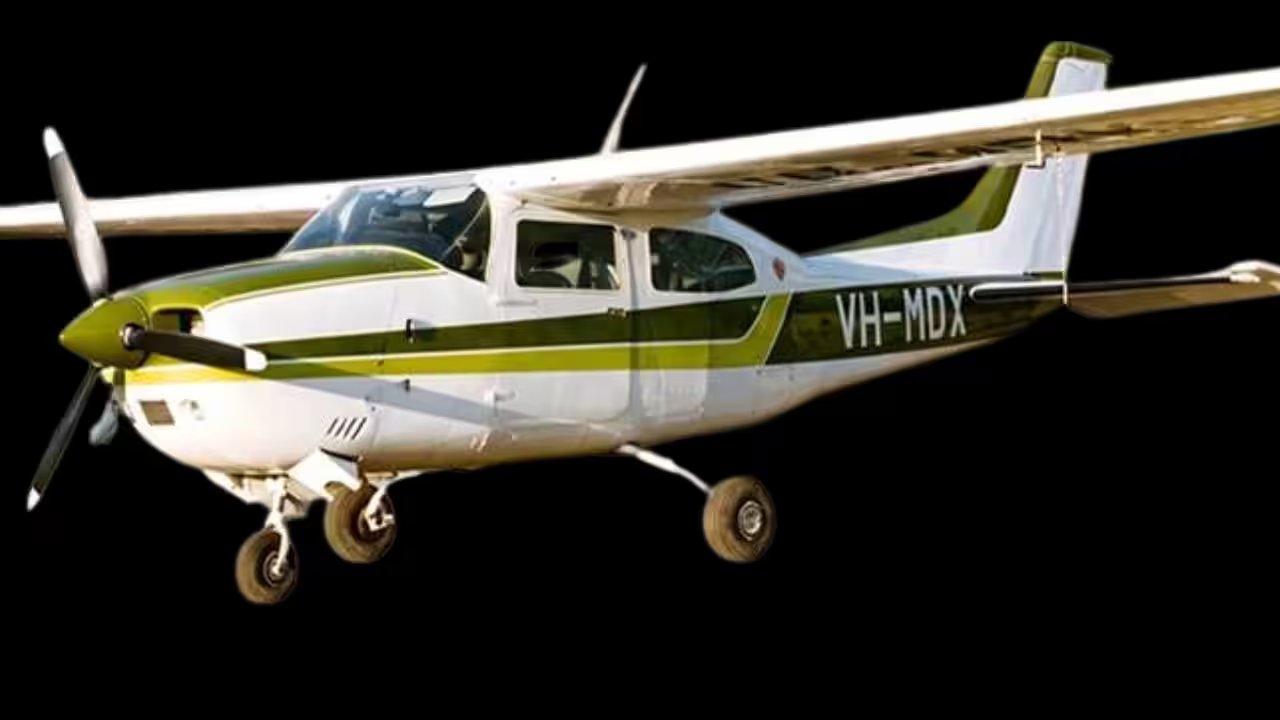
Five men flew into a freezing mountain storm on August 9, 1981, and never came out. At 7:38 pm, fighting severe ice and failing flight gauges above the Barrington Tops range in New South Wales, pilot Michael Hutchins crackled over air traffic radio with a desperate update: "We're losing a hell of a lot … we're down to six and a half." A flight controller warned him that the sector's safe clearance stood at 6,000 feet. Hutchins shouted back a final number: "Five thousand!" Radar contact vanished sixty seconds later. Silence followed. Forty-five years later, the six-seater Cessna 210M—registered as VH-MDX—remains the only civilian aircraft to crash on mainland Australia without yielding a single bolt, wing spar, or human remains.
The return flight had begun under clear skies in Queensland. Passengers Ken Price, 54, Rhett Bosler, 33, Noel Wildash, 40, and Philip Pembroke, 43, were heading home to Sydney after sailing a yacht northward to the Whitsundays for a friend. Hutchins, 52, touched down at Coolangatta to refuel the tanks before charting a southward track toward Bankstown Airport. Then came the detour. To skirt restricted military airspace ringing the Williamtown Air Force base near Newcastle, Hutchins swung inland. That turn pushed the single-engine aircraft directly into the Barrington Tops—a jagged, 125,000-hectare wall of subalpine peaks notorious for savage downdrafts.
Instruments quit one after another. At 7:18 pm, Hutchins radioed controllers to report severe turbulence. Within six minutes, thick storm clouds swallowed the Cessna. At 7:24 pm, the cockpit artificial horizon tumbled, followed immediately by the gyroscopic direction indicator. A third navigation tool died moments later. The plane was flying blind. Radar sweeps at 7:28 pm picked up the Cessna veering wildly off course as Hutchins fought to climb above the weather deck. Freezing moisture sealed the wings. By 7:34 pm, the pilot warned that accumulated rime ice was stripping the aircraft of aerodynamic lift. Less than a minute later, Hutchins reported smoke and a suspected cockpit fire before reporting the blaze contained. The engine could not carry the weight. The plane plummeted.
The federal air safety investigation determined that extreme turbulence, structural icing, and total primary instrument failure doomed the flight. Investigators confirmed the aircraft held no rating or equipment to operate in freezing conditions. Police, forestry trackers, and military teams launched an immediate nine-day search across treacherous ridgelines, flying a dozen reconnaissance sorties daily while ground units scrambled through vertical gullies and rain-slicked scree. Searchers spotted several historical bush wrecks. They found no trace of VH-MDX.
State police halted the active search on August 18, 1981, citing winter squalls and treacherous terrain. Dense, multi-canopy rainforest across the Barrington plateau easily swallows aluminum airframes, masking debris from aerial cameras and ground patrols alike. Subsequent independent search expeditions across four decades have turned up empty, leaving aviation authorities and five families without a wreckage site, a flight recorder, or a final resting place.