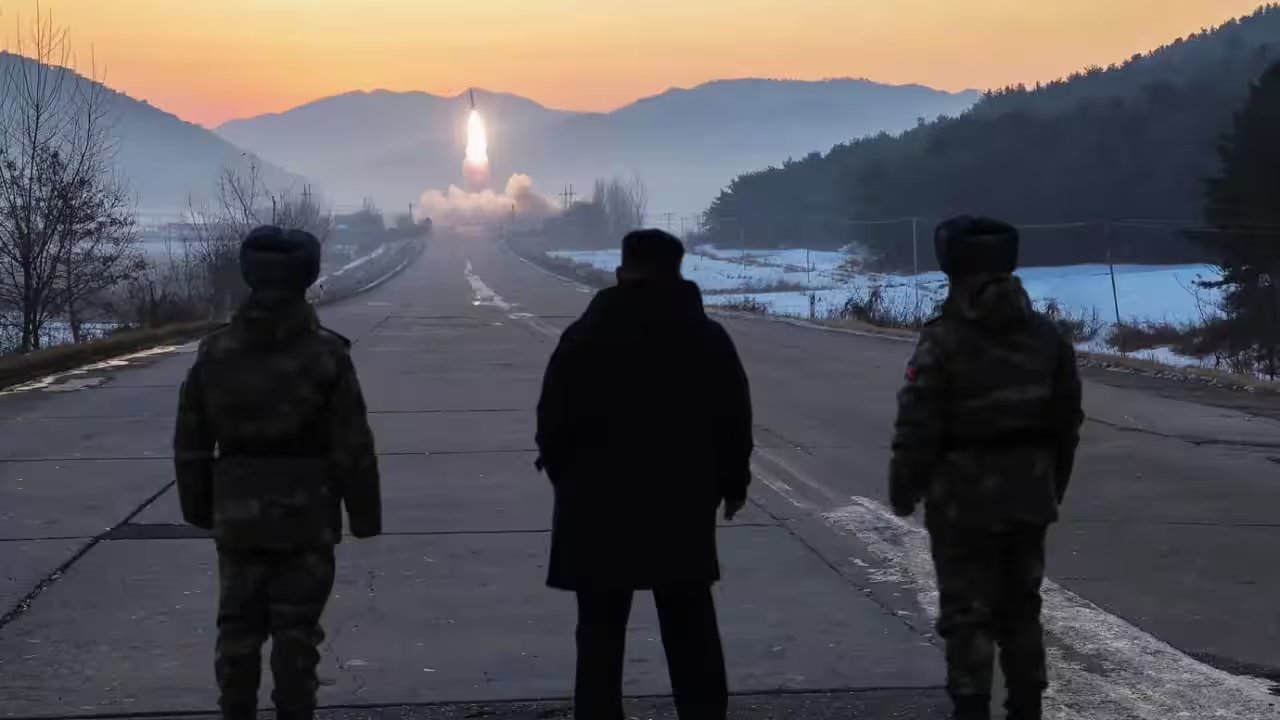
The Missile Administration confirmed on Saturday that its newest tactical ballistic missile warhead, designated Standard Type 2, successfully turned a 12 to 13-hectare target area into "ashes." This isn't just a technical drill; the regime’s general director explicitly stated that four categorized variants of these cluster bombs will be ready for frontline units to select based on specific operational aims by the end of this year.
South Korea’s Joint Chiefs of Staff tracked the launch from the Chongju area in the northwest, noting the missile headed toward the Yellow Sea. Seoul declared it maintained a "readiness posture" while sharing real-time data with Washington. Shin Jong-woo, secretary-general of the Korea Defense and Security Forum, identified the vehicle as likely belonging to the Hwasong-11 Ra series, a system already equipped with cluster munitions.
This test mirrors an April exercise where Kim Jong-un and his daughter Ju-ae watched a similar Hwasong-11 Ra launch. The strategic implication is stark: cluster bombs scatter submunitions over wide zones, multiplying damage potential. As the US, South Korea, and Japan just renewed their push for denuclearization in Atlanta, Pyongyang is simultaneously hardening its offensive capabilities.
Diplomacy and deployment are moving in opposite directions. US Secretary of State Marco Rubio said Saturday that President Trump remains open to meeting Kim Jong-un, provided Pyongyang engages on security concerns. But no meeting is currently scheduled. The next critical moment is the end of the year, when those four warhead variants are officially fielded, forcing allies to reassess their defensive postures against a more versatile ballistic threat.