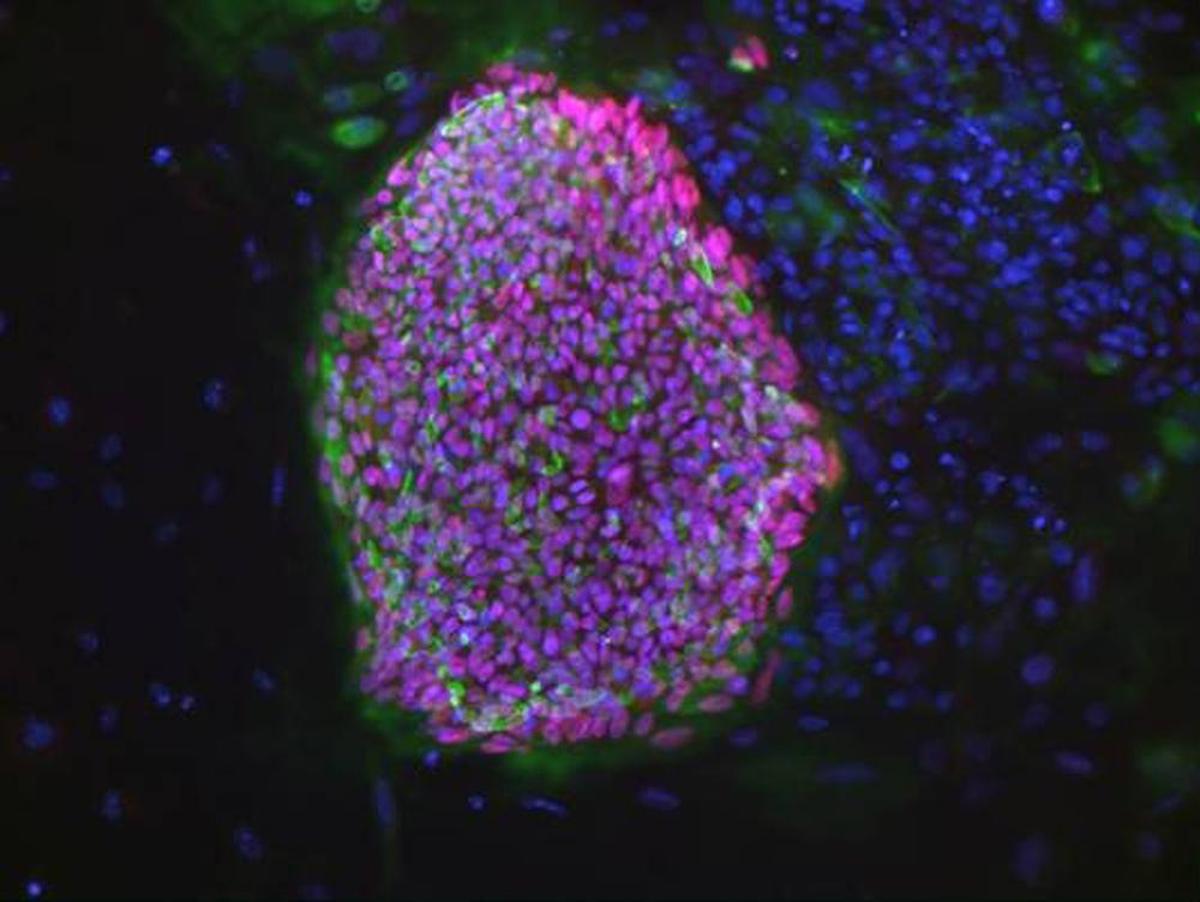
Pancreatic immune cells do not merely wage a slow war of attrition against insulin production. They can silence it in minutes.
In a laboratory breakthrough published in the Journal of Clinical Investigation, researchers at the Indian Institute of Technology Kanpur (IIT Kanpur) pinpointed a direct molecular circuit that shuts down insulin release on demand. Immune cells residing inside the pancreas—known as macrophages—actively signal neighboring beta cells to stop secreting insulin almost immediately. The finding upends decades of conventional medical thinking, which assumed obesity-linked beta cell failure stems exclusively from prolonged inflammatory wear and tear over months or years.
Co-first authors Simran Singh and Ashish Kumar spearheaded the experimental work under the guidance of Sai Prasad Pydi, an assistant professor in IIT Kanpur’s Department of Biological Sciences and Bioengineering.
We discovered that immune cells that are present next to beta cells can switch off insulin release within minutes.
— Sai Prasad Pydi, Assistant Professor, Department of Biological Sciences and Bioengineering, IIT Kanpur
For decades, clinicians tied obesity-related diabetes to systemic inflammatory proteins that gradually degrade pancreatic tissue. The IIT Kanpur team uncovered an entirely different chemical trigger: sphingolipids, a distinct family of specialized fat molecules.
The cascade begins on the macrophage surface at a receptor protein designated GPR18. When activated, GPR18 instructs the macrophage to discharge sphingolipids directly into the intercellular space. Neighboring beta cells—the body's sole source of insulin—take up these lipids through a dedicated surface transporter. Once inside, the sphingolipids jam the internal machinery responsible for packaging and releasing insulin into the bloodstream.
| Biological Element | Exact Functional Role in Pancreas |
|---|---|
| Macrophage | Pancreatic immune cell hosting the GPR18 receptor switch |
| GPR18 Receptor | Molecular gateway that triggers immediate lipid secretion |
| Sphingolipids | Specialized fats released to block insulin output |
| Beta Cell Transporter | Surface channel that ingests the inhibitory sphingolipids |
| Pancreatic Beta Cell | Endocrine cell whose insulin-releasing engine stalls |
Using precision genetic tools, the investigators tested the pathway in laboratory mouse models. Switching the pathway on sparked an immediate drop in insulin output. Turning it off—or chemically blocking GPR18 and intermediate steps along the transmission chain—restored full insulin secretion.
Laboratory rodent models do not always replicate human clinical pathology. To verify whether the switch operates inside human biology, the IIT Kanpur team partnered with the Indiana Biosciences Research Institute in the United States.
Tests on donated human pancreatic tissue delivered identical results. When scientists activated the GPR18-sphingolipid pathway in human tissue, the human beta cells suppressed insulin release on cue. This confirms that the biological apparatus functions actively in human physiology, rather than existing as an isolated quirk of rodent biology.
The discovery does not constitute an immediate clinical cure or an over-the-counter treatment. Developing and screening therapeutic compounds that safely block GPR18 without disturbing broader immune health requires extensive medicinal chemistry, toxicology evaluations, and multi-phase clinical trials. However, by locating the exact physical switch that turns off insulin, IIT Kanpur and its collaborative partners have provided drug developers with a verified blueprint to preserve natural endocrine function in individuals confronting obesity and Type-2 diabetes.