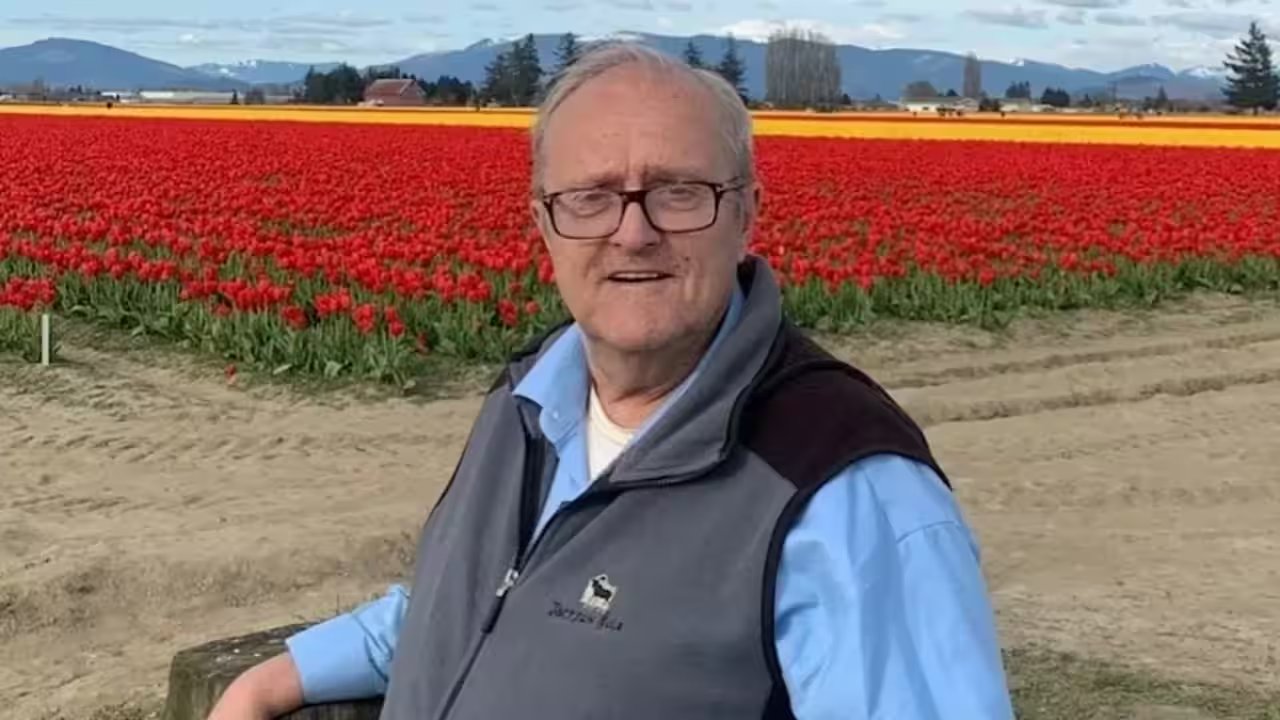
Arnold Swanberg chose a rare, enduring path to fight brain disease.
Before he died in October 2024, the Montana-born aviation photographer directed his estate to turn 480 acres of prairie soil into a permanent engine for medical discovery. He bequeathed two agricultural parcels valued at an estimated $1 million directly to the Weissman Hood Institute in Great Falls. The land will not be sold off, cleared, or paved over. Instead, local farmers will continue to cultivate the crops, funneling lease revenues straight into cutting-edge laboratory work on Alzheimer's and Parkinson's disease.
The gift stands as one of the largest private contributions in the institute's history. It also brings crucial financial muscle to an underserved frontier in American clinical science: rural neurodegenerative medicine.
Swanberg did not want sterile campus expansions. His will mandated that the institute retain the land as an active agricultural endowment, generating recurring annual returns to shield vital scientific projects from volatile grant cycles.
The two parcels sit in distinct farming corridors: one lies south of the Great Falls International Airport in Cascade County, while the second spans fertile ground north of Benton Lake in Teton County. Though Swanberg spent decades working out of Seattle, he never broke ties with the ground. He leased the acreage out to working Montana farm hands, making biannual trips each spring and autumn to inspect the fields and visit the families running them.
His motivation sprang from direct personal loss.
He had seen the toll of these diseases up close," said former Great Falls mayor Randy Gray, a longtime confidant who helped Swanberg map out his estate planning. "His family had lived through neurodegenerative illness, and Arnold made it clear he wanted his Montana holdings to stand behind his home state over the long haul.
| Endowment Metric | Specification |
|---|---|
| Total Land Area | 480 acres across two parcels |
| Asset Valuation | $1,000,000 (estimated) |
| Primary Beneficiary | Weissman Hood Institute (CIB-RHR) |
| Property Locations | Cascade County & Teton County, Montana |
| Operational Model | Perpetual agricultural lease revenue |
| Primary Research Focus | Alzheimer’s, Parkinson’s, age-related vision loss |
Swanberg carved out an unorthodox life. He was raised in Great Falls, the son and grandson of a family that produced three successive generations of local attorneys. But he bypassed the courtroom.
After earning a history degree from the University of Montana in 1970, Swanberg enlisted in the Montana Air National Guard. That military hitch ignited a lifelong obsession with tactical aircraft. Relocating to Seattle, he launched a sprawling documentation initiative, traveling across the globe with his cameras to log and catalog aircraft tail numbers from every active branch of the United States military.
He also ran his family's private real estate portfolio and launched Flight Line, an international print journal that chronicled military aviation. Over time, curators integrated his expansive photo archive into the Museum of Flight in Seattle, while Swanberg funded a recurring military history lecture series at his alma mater in Missoula. Yet his land in Cascade and Teton counties stayed tethered to his family name—until he reassigned it to the fight against cognitive decay.
Revenue from the 480-acre endowment will flow directly to the Center for Integrated Biomedical and Rural Health Research (CIB-RHR). The collaborative hub brings together the Weissman Hood Institute, Touro College of Osteopathic Medicine-Montana, and Benefis Health System.
Backed by the National Institutes of Health, the center tackles diseases that hit aging, isolated populations hardest. Teams there investigate Alzheimer’s disease, Parkinson’s, chronic wasting disease in wildlife, and age-related vision loss.
Local operators will seed and harvest Swanberg's acreage through the coming growing seasons, transforming Montana wheat and barley crops into perpetual funding for the next breakthrough against memory loss.