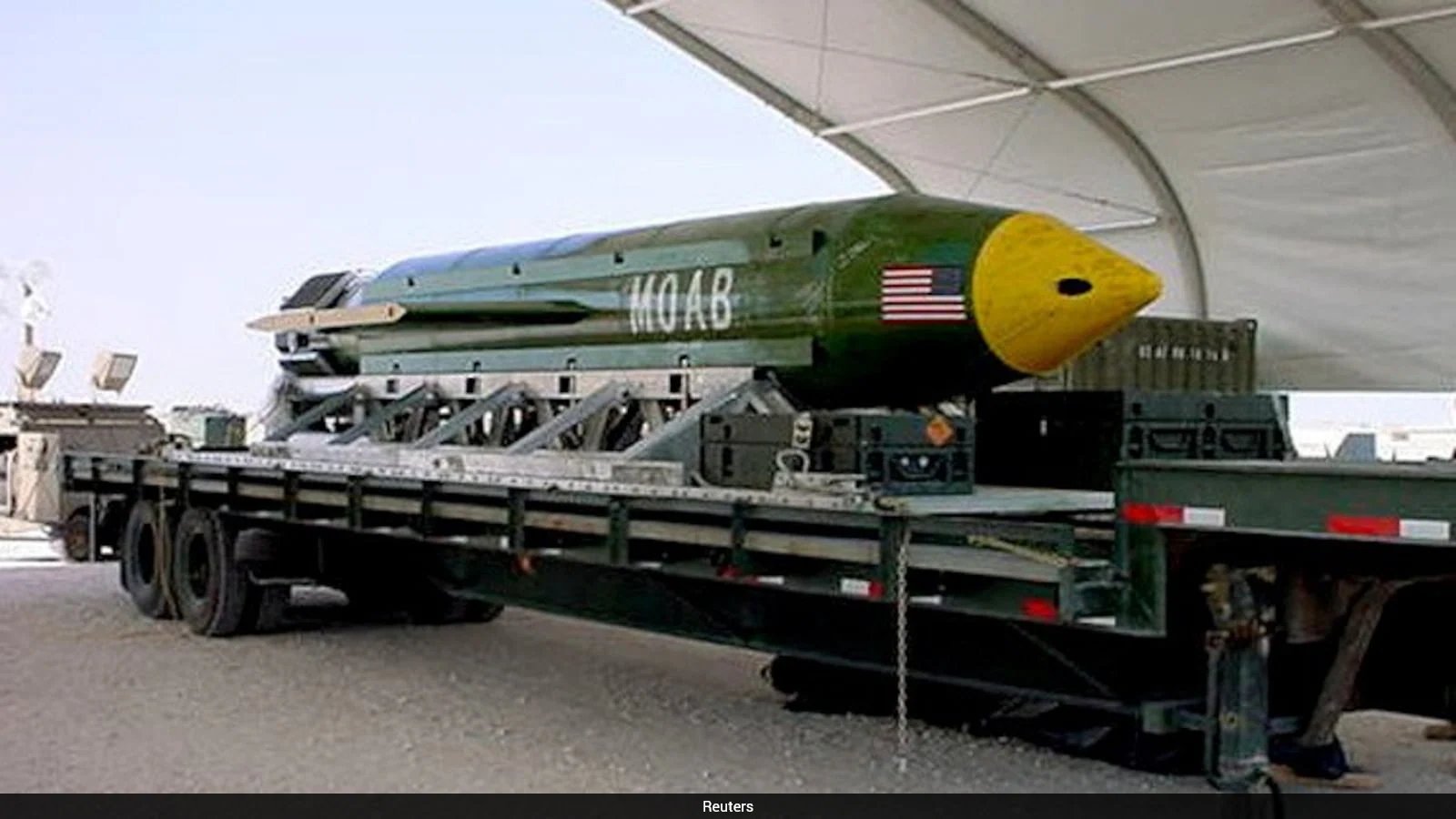
The GBU-43/B Massive Ordnance Air Blast (MOAB) is a GPS-guided conventional bomb developed by the US Air Force Research Laboratory. Weighing approximately 9,800 kilograms and measuring 9.1 metres in length, the weapon carries 8,480 kilograms of explosives. It produces an explosion equivalent to 11 tonnes of TNT. Unlike nuclear weapons, the MOAB uses only conventional explosives and leaves no radioactive fallout behind.
The bomb's official designation gives it the acronym MOAB, but its popular nickname—'Mother of All Bombs'—stems from its sheer size and destructive power. The moniker also echoes a phrase used by former Iraqi leader Saddam Hussein, who described the 1991 Gulf War as the 'mother of all battles.' The US Air Force formally acknowledged the nickname in a March 2008 article titled 'Five Years Later, It's Still Known as "Mother of All Bombs".'
The US first deployed the MOAB in combat on April 13, 2017. The target was a tunnel and cave network used by Islamic State militants near the Pakistan border in Afghanistan's Nangarhar province. That strike marked the weapon's first combat use, nearly 14 years after its development and testing concluded in 2003.
Though among the largest conventional bombs ever used in combat, the MOAB remains vastly less powerful than nuclear weapons. Its enormous blast and precision-guided design have made it one of the most widely recognized weapons in the US military arsenal, and its potential deployment in future conflicts continues to draw global attention.