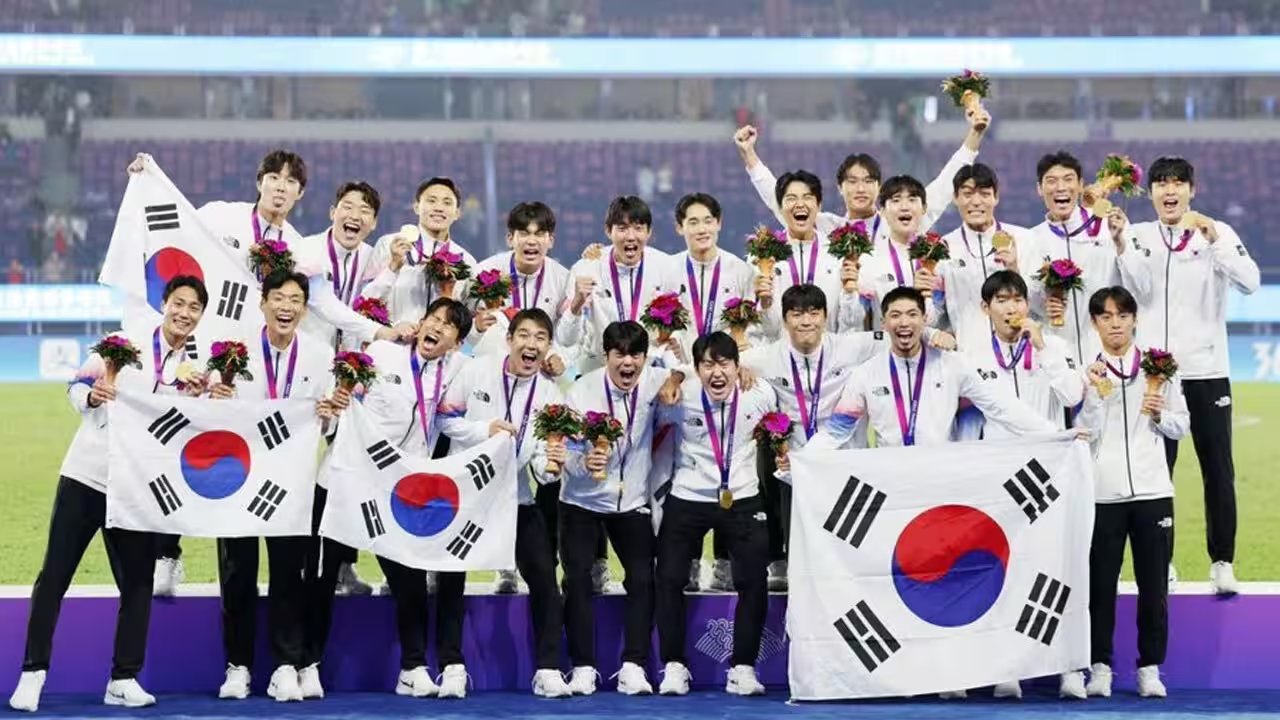
South Korea’s defence ministry is biting the bullet and re‑examining the 544‑hour athlete exemption after the football squad’s 1‑0 victory over Japan at the Aichi‑Nagoya Asian Games.
Lee Gi‑hyuk, the team captain, held up his gold medal and said, “I’m not going to the military,” sparking a firestorm on social media. Yang Min‑hyuk added that the medal was his primary motivation—and Park Seung‑soo posted a photo donning a cap linked to discharged soldiers. All three issued apologies, yet the comments have lit a national debate on fairness.
The exemption allows athletes who win an Olympic medal or an Asian Games gold to swap the 18‑21 month regular service for a 544‑hour community‑service stint over 34 months, after a brief three‑week boot camp. It lets footballers, golfers and baseball stars keep training at peak‑performance years, a huge advantage overseas.
Culture, Sports and Tourism Minister Chae Hwi‑young said the ministry will consult all stakeholders, while Defence Minister Kang Shin‑chul stated the goal is to gradually trim and ultimately abolish the special benefit. The shrinking birth rate means fewer men are available for ordinary duty, adding pressure to rethink the system.
The public reaction is a mix of support for athletes’ careers and anger over perceived privilege. The government will announce a formal review by early next year, setting the stage for a new framework that could redefine the balance between national service and sporting excellence.
The next big test will be the 2026 Asian Games—where 20 of 23 men’s footballers already qualify for the exemption—so the policy shift could be on the cards before the next continental showdown.