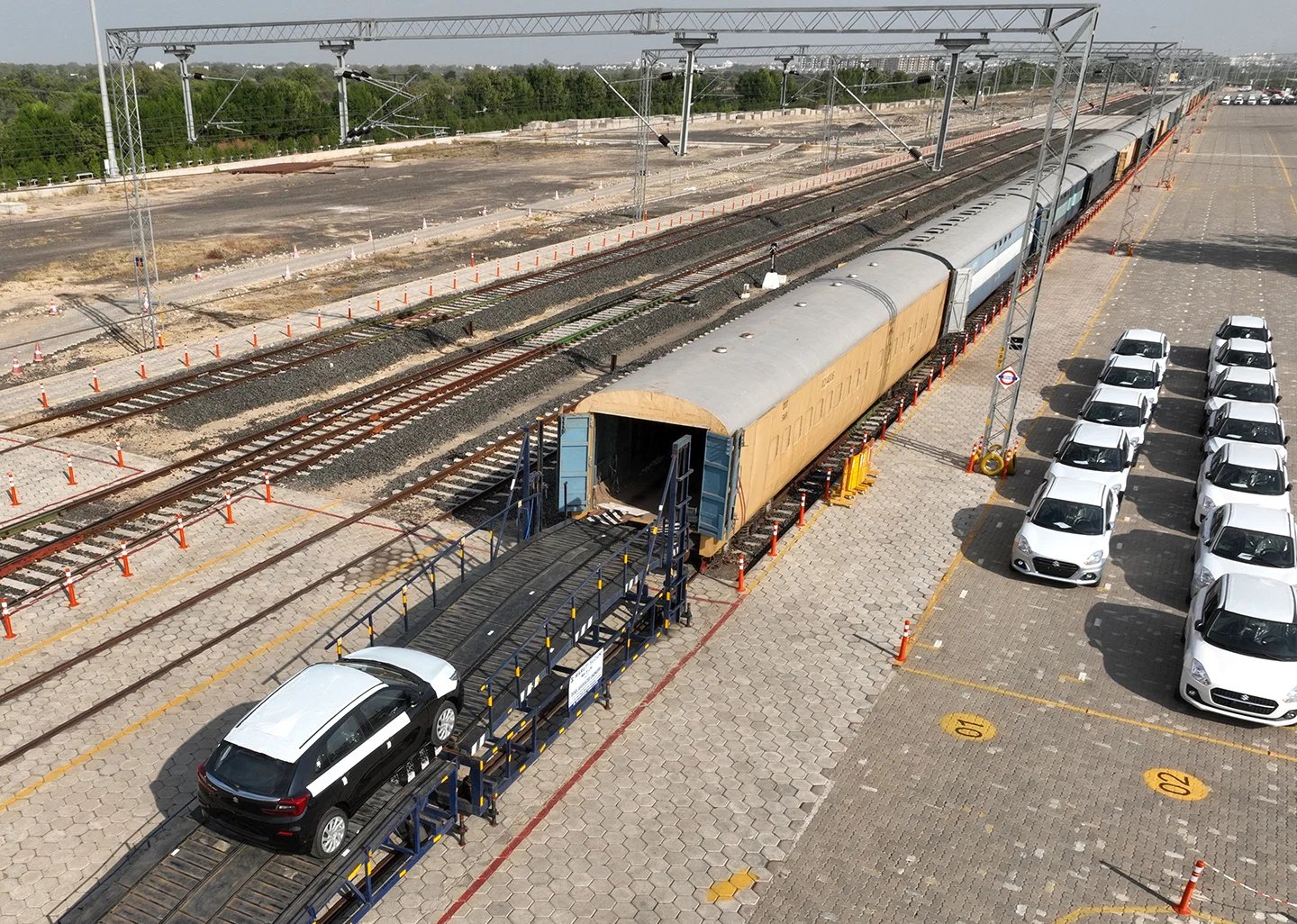
Three years after the Gujarat siding opened in March 2023, the plant has moved one million cars onto rail. Roughly 790,000 of those traveled via Gujarat, with the remaining 210,000 dispatched from Manesar since June 2025. Together, they account for 70 % of Maruti’s rail‑based deliveries in FY2026‑27, a sharp rise from the 5 % share recorded in FY2014‑15.
The move cuts truck traffic, saving fuel and easing congestion along the route to the market. By loading vehicles directly onto trains, Maruti eliminates the need for heavy trucks to haul each car from the assembly line to an external station, slashing emissions and fuel consumption.
Under the PM GatiShakti National Master Plan, the Gujarat siding was registered as a carbon‑credit project in February 2026, underscoring the company’s push toward greener logistics.
While other automakers like Hyundai and Tata use rail to some extent, Maruti’s 1 million‑vehicle milestone is the largest in the country, setting a benchmark for scale and efficiency.
Maruti has set a mid‑term target of raising its rail share to 35 % by FY2031. A new siding at Kharkhoda and further investment in rail infrastructure are slated to fuel that growth.
For the average Indian buyer, the result is a tighter delivery window and a smoother supply chain for models such as the Alto, Swift, and Dzire. With the next wave of deliveries slated for Q2 2027, customers can expect vehicles on the lot sooner and with less exposure to road‑traffic bottlenecks.