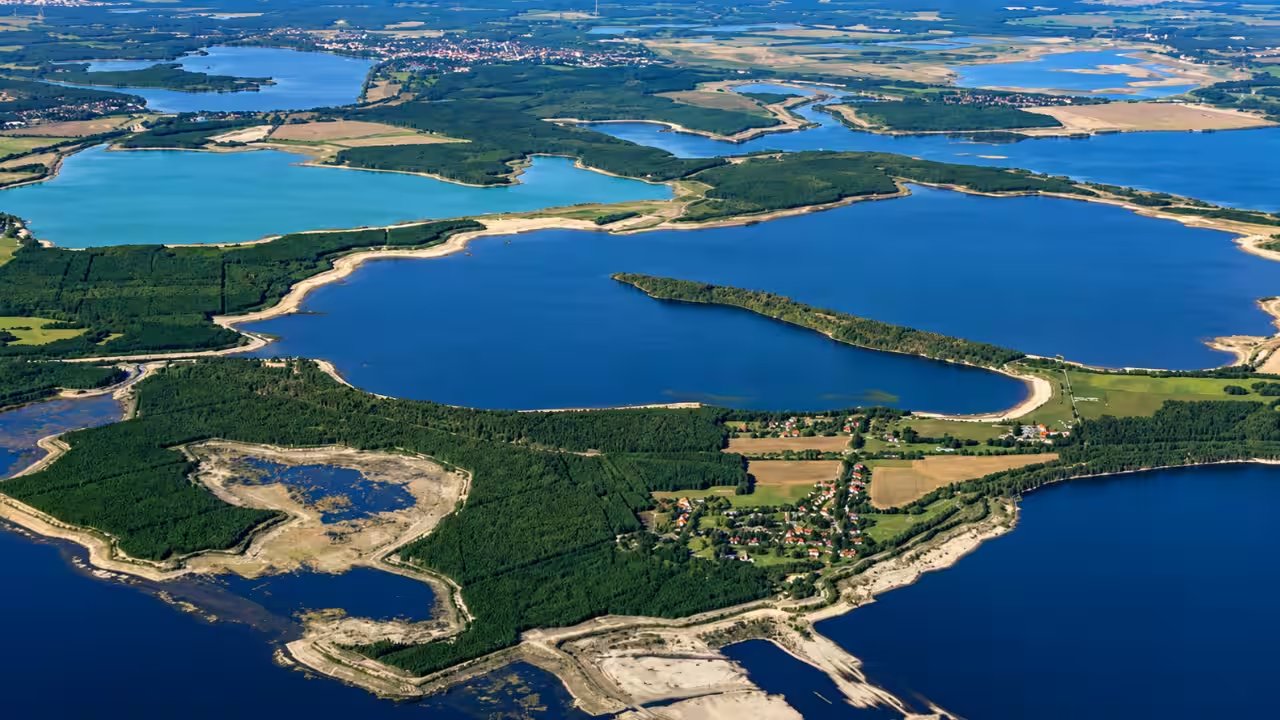
LMBV completed flooding of 23 former coal pits into a 14,000‑hectare lake district between Berlin and Dresden in 2026.
The first lake, Senftenberg, was created in 1967 and opened in 1973. Over the past six decades, successive pits have been filled, turning a coal‑hotbed into Europe’s largest artificial water landscape.
On June 29 2026, five lakes—Senftenberger See, Geierswalder See, Partwitzer See, Sedlitzer See and Großräschener See—were officially linked by newly dug canals, creating a 5,100‑hectare navigable waterway that lets boats glide between former spoil heaps.
The transformation extends beyond water. Stabilised spoil slopes now support young pine groves, while former mine corridors have become wetlands that host kingfishers and otters. Grasslands and reedbeds encroach around the lakes, turning scarred earth into biodiversity hotspots.
For residents, the change is palpable. A three‑generation family from Elsterwerda now spends weekends paddling on Sedlitzer See, trading coal mining heritage for cycling routes and beachside cafés. Local officials say tourism revenue has already surpassed the region’s previous coal‑export earnings.
LMBV plans to complete the remaining nine canals by 2028, turning the Lusatian Lakeland into a fully connected recreational corridor and a model for post‑mining regeneration across Europe.