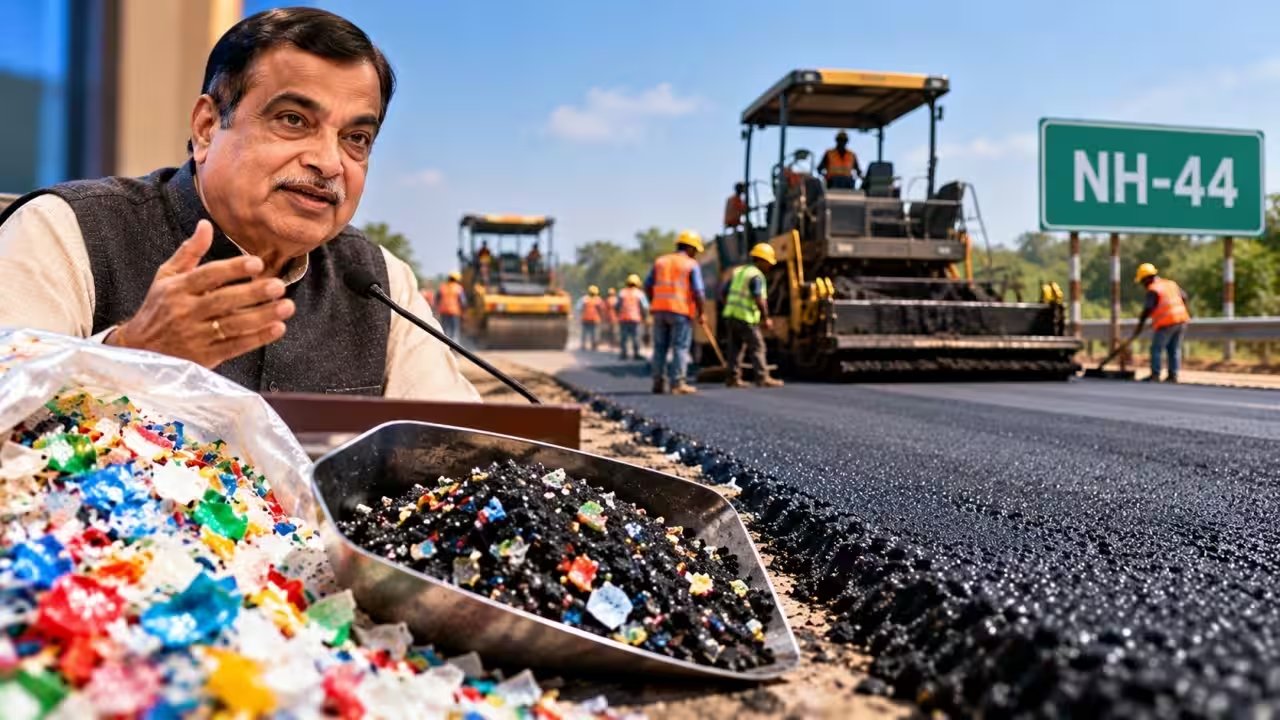
In a first for the road sector, the Ministry of Road Transport, under Nitin Gadkari, laid a 1‑km section of NH‑44 in Jhansi using waste‑plastic‑modified bitumen (W‑PMB 76‑10) on May 28, 2026. The wet‑mix technology, developed by IIT (BHU) Varanasi, blends treated low‑density polyethylene directly with bitumen, eliminating the need for a separate dry‑mix stage.
Officials say the new binder can reduce conventional bitumen consumption by about 4 % and cut material costs by roughly 20 %. With India importing 70 % of its bitumen, the pilot could save the government ₹4,200 crore over a decade and curb the 25,000‑tonne daily plastic waste stream.
IIT (BHU) will monitor the stretch for performance under heavy traffic and high temperatures, evaluating its long‑term durability. The laboratory results show improved moisture resistance and rutting resistance at high temperatures, promising smoother, longer‑lasting roads.
Local recyclers and MSMEs supplied the LDPE from discarded irrigation pipes, file folders and plastic wrappers, linking waste management with infrastructure development. A resident of Jhansi who works for a recycling firm said the project gives his community a new source of income.
The Ministry plans to roll out the technology on other national highways after the pilot’s assessment, with a target of covering 5 % of the national network by 2030. The project aligns with Gadkari’s broader push for ethanol and other alternative fuels to reduce India’s 22‑lakh‑crore‑rupee petroleum imports.