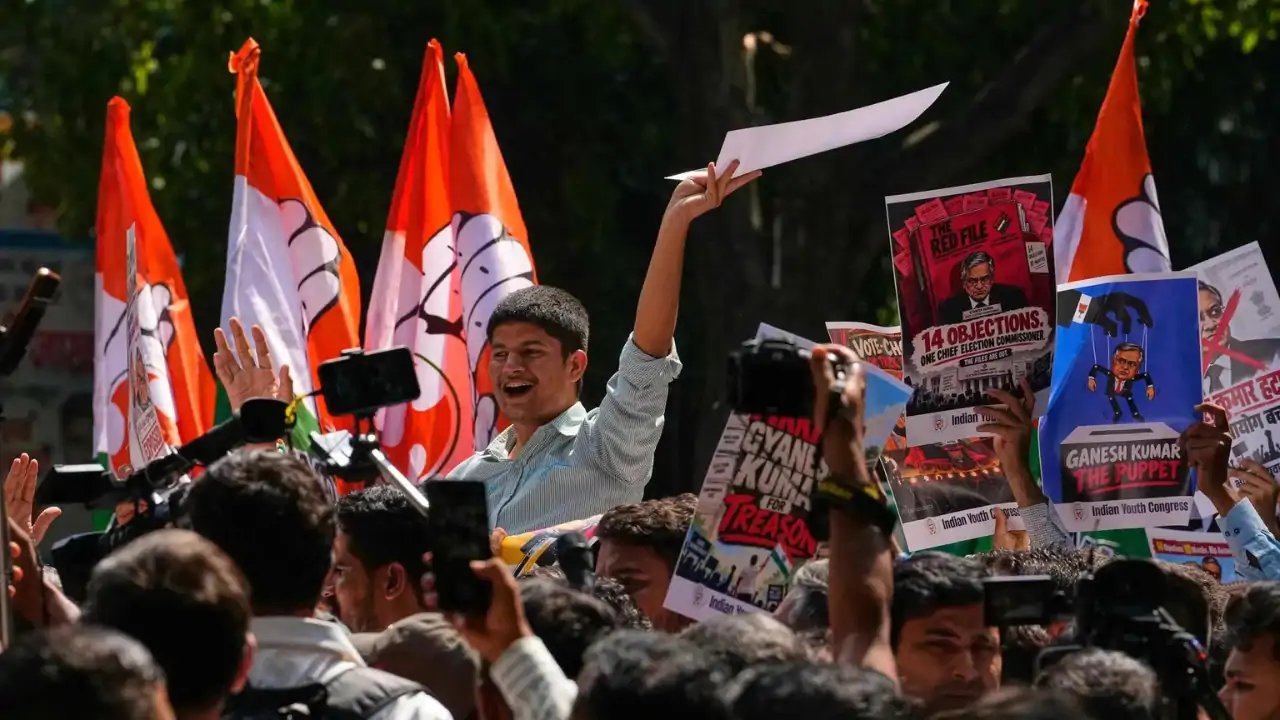
On October 2, the Cockroach Janta Party (CJP) and the INDIA bloc will converge in Delhi, staging coordinated protests that all share the same headline demand: Chief Election Commissioner Gyanesh Kumar must resign. For the first time, two distinct pressure fronts, each with its own mobilization playbook, will march side by side, turning the date into a political battleground rather than a single street demonstration.
Abhijeet Dipke, the CJP’s founder, called the day a ‘Jail Bharo Andolan’ after police denied a permit to occupy Shivaji Park, citing traffic and noise concerns. His agenda stretches beyond resignation—he wants the SIR halted, the 2025 roll restored, an independent inquiry into the Commission’s decision‑making, and a revision of the 2023 laws that govern the appointment of Election Commissioners. The party even threatens to stage a ‘Jantar Mantar 2.0’ if the EC’s chief refuses to step down.
The INDIA bloc, meanwhile, has launched a week‑long ‘Save Democracy’ campaign that will include district‑level marches, an October 6 rally of opposition MPs at the Election Commission, and a planned audience with President Droupadi Murmu in the second week of October. Their demands echo CJP’s: Kumar’s resignation, rollback of the SIR exercise, greater transparency, and a faster Supreme Court hearing on SIR‑related cases; they even floated a return to paper ballots as a safeguard against digital glitches.
That convergence is no accident; the CJP’s earlier nationwide agitation over the NEET exam irregularities culminated in the resignation of Union Education Minister Dharmendra Pradhan on July 25, a victory the party has used to fuel its current campaign. The party’s narrative frames the SIR controversy as part of a larger assault on democratic institutions, positioning its protests as a continuation of its march for electoral integrity.
Underlying the protests is a documented row inside the Election Commission, where Commissioners Sukhbir Singh Sandhu and Vivek Joshi lodged 14 formal objections over ten months regarding voter additions, deletions and the new Form 6 digital interface. The Commission dismissed the claims as normal deliberative input, but it has since set up a review committee led by a senior Deputy Election Commissioner and an independent tech expert, extended deadlines in states still in the SIR phase, and withdrawn the additional declaration attached to online Form 6 in finished areas. For families like the Mehta household in Kanpur, the debate over digital rolls feels personal—five‑year‑old Aarav Mehta’s name was recently removed, sparking a frantic call to the Election Commission. The outcome of these reforms could determine whether the protests succeed in forcing a resignation or merely shift the debate to the Supreme Court.