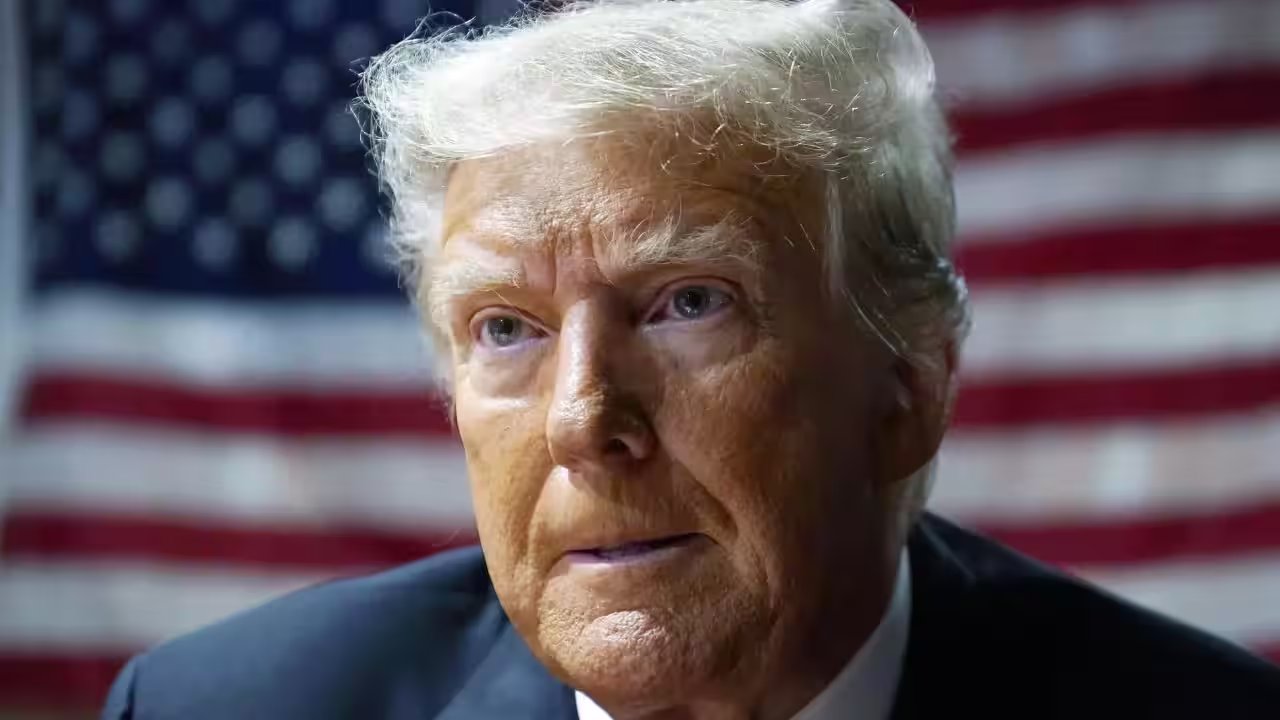
WASHINGTON — US President Donald Trump admitted that the military confrontation with Iran, surging petrol prices, and an aggressive immigration dragnet triggered the Republican Party's stinging defeat in the midterm elections.
Political fallout arrived quickly. In a national broadcast interview released Sunday, Trump conceded that federal deportation operations swept up established workers and rattled communities across the country.
Asked directly about Vice President JD Vance's declaration that the war in Iran cost Republicans their majorities, Trump did not flinch. "I don't disagree with it," Trump said. Yet he stood by his order to strike Tehran, insisting the operation prevented the Iranian government from assembling nuclear arms. He claimed Iranian nuclear stockpiles now lie "buried under thousands of tons of rock," asserted that commercial shipping continues unimpeded through the Strait of Hormuz, and insisted regional allies would eventually reimburse Washington for the campaign's financial toll.
Hispivots on domestic policy cut sharper than his defence of the foreign campaign. While Trump claimed public backing for border security and the expulsion of violent criminals, he acknowledged that uprooting individuals with deep community and employment ties damaged his party at the ballot box.
"I think it might be too tough, yeah," Trump said.
Yet rather than doubling down, he extended an olive branch to Capitol Hill. Trump proposed a legislative compromise to grant legal status to undocumented immigrants who have lived in the United States for years and work in sectors like hospitality and landscaping, while keeping the deportation machinery trained strictly on felons and drug traffickers. Several Democratic lawmakers have already opened back-channel discussions, Trump said, adding he could "very easily" suspend verbal attacks against Democrats for six months to push a bipartisan immigration bill across the line.
Post-election tremors have already rearranged the West Wing. Following the midterm rout, Stephen Miller replaced Susie Wiles as White House Chief of Staff, and Trump confirmed that further personnel changes across his administration remain imminent. He nonetheless offered full backing to Defence Secretary Pete Hegseth, who faces mounting congressional scrutiny over the execution of the Iran conflict.
Turning to Eastern Europe, Trump claimed a settlement to halt the Russia-Ukraine war is near, blaming delays on personal hostility between Russian President Vladimir Putin and Ukrainian President Volodymyr Zelenskyy. Trump stated that Ukraine would emerge from any final peace framework in a "little bit different shape," declaring that his direct diplomatic pressure would force an end to the fighting.
Congressional leaders now await formal legislative terms from the White House, with bipartisan immigration negotiations poised to test Trump's six-month truce when lawmakers return to Washington.