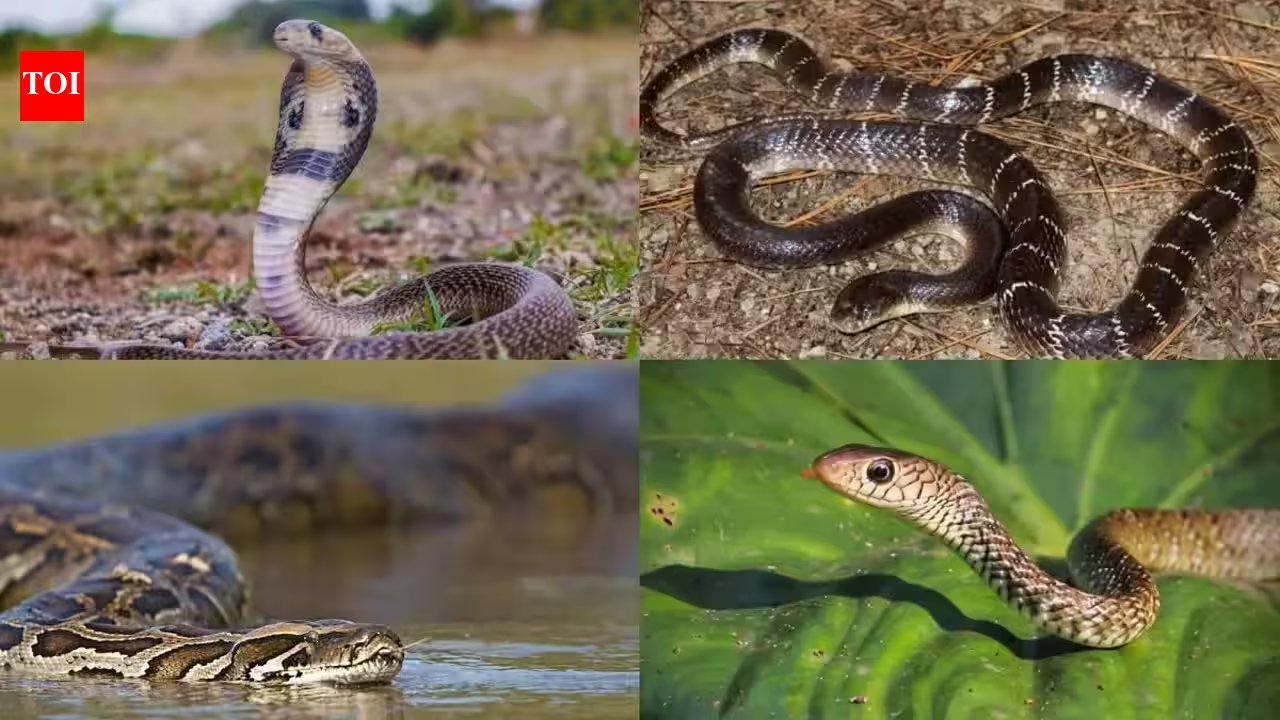
Snakes do not vanish when winter settles over India. They simply slow down and hunt warmth.
Because reptiles cannot generate internal body heat, dropping temperatures force them to abandon open terrain and track down insulated sanctuaries. Those refuges frequently turn out to be domestic woodpiles, storerooms, compost heaps, agricultural stubble, or the quiet borders of suburban gardens. Wildlife officials caution that unheated rural dwellings and cluttered ground-level rooms provide prime thermal cover for seven distinct species during the colder months.
They stay quiet. That silence makes them dangerous.
The Indian cobra ranges across wide swaths of the subcontinent, often retreating into abandoned rodent tunnels, termite mounds, and loose stone walls flanking farmsteads. Cobras generally avoid direct human contact. Yet an individual cornered inside a shed or disturbed under farm debris will stand its ground and strike defensively.
Far more treacherous is the common krait. Small, slender, and strictly nocturnal, this predator represents one of India's deadliest snakes. It slips quietly indoors through unsealed doors, floorboards, and foundation gaps, curling into dark corners of cluttered bedrooms and farm storerooms. Its bite can register as entirely painless. Victims frequently sleep through an envenomation, meaning any suspected contact demands immediate emergency hospital intervention.
Out in the fields, a heavily built, thickset viper species exploits dry crop stubble and rock piles for heat retention. Its rough patterned skin blends flawlessly against withered agricultural chaff. A single careless step into uncleared vegetation can trigger an instantaneous defensive strike.
Dry, rocky scrub hosts another venomous dweller: a small viper that wedges its body beneath loose stones, firewood logs, and yard scrap. When threatened, it rasps its serrated scales together, producing a sharp, grinding hiss that acts as a definitive warning to back away.
| Species | Primary Winter Habitats | Venom Status | Distinct Behavior |
|---|---|---|---|
| Indian Cobra | Termite mounds, rodent burrows, stone piles | Venomous | Avoids humans but strikes if surprised |
| Common Krait | Cluttered rooms, floor gaps, dark corners | Venomous | Nocturnal prowler with a painless bite |
| Crop-Stubble Viper | Grasslands, scrub, farm chaff, rock piles | Venomous | Heavy-bodied with extreme camouflage |
Not every winter guest brings poison. The common rat snake frequents roofs, rafters, barns, and outhouses specifically to flush out rodents. It remains entirely non-venomous and provides vital pest control for rural properties, though its sudden presence in overhead beams frequently triggers panic.
Damp garden plots and outdoor drainage lines host a water-dwelling non-venomous keelback snake that stays active even through cold spells. Gardeners routinely mistake this harmless reptile for venomous marsh species, leading to unnecessary killings.
Deep in wild scrub and thick agricultural hedges, the massive python takes shelter inside hollowed logs and subterranean burrows. Pythons move slowly, carry no venom, and display zero innate aggression toward humans. Wildlife authorities advise property owners who encounter these massive constrictors to cordon off the area and notify local forest rescue squads rather than confronting the animal.
Local wildlife rescue networks and emergency medical facilities across rural and peri-urban districts urge residents to keep emergency helpline numbers on hand throughout the winter season.
| Saw-Scale Viper |
| Sandy soil, flat rocks, timber debris |
| Venomous |
| Produces rasping sound by rubbing scales |
| Rat Snake | Ceilings, roof voids, tree hollows, barns | Non-Venomous | Voracious rodent predator; harmless to humans |
| Keelback Water Snake | Drains, ponds, damp garden compost | Non-Venomous | Cool-weather aquatic hunter; mistaken for venomous |
| Indian Python | Hollow logs, deep burrows, dense brush | Non-Venomous | Heavy, slow-moving; requires wildlife rescue alert |