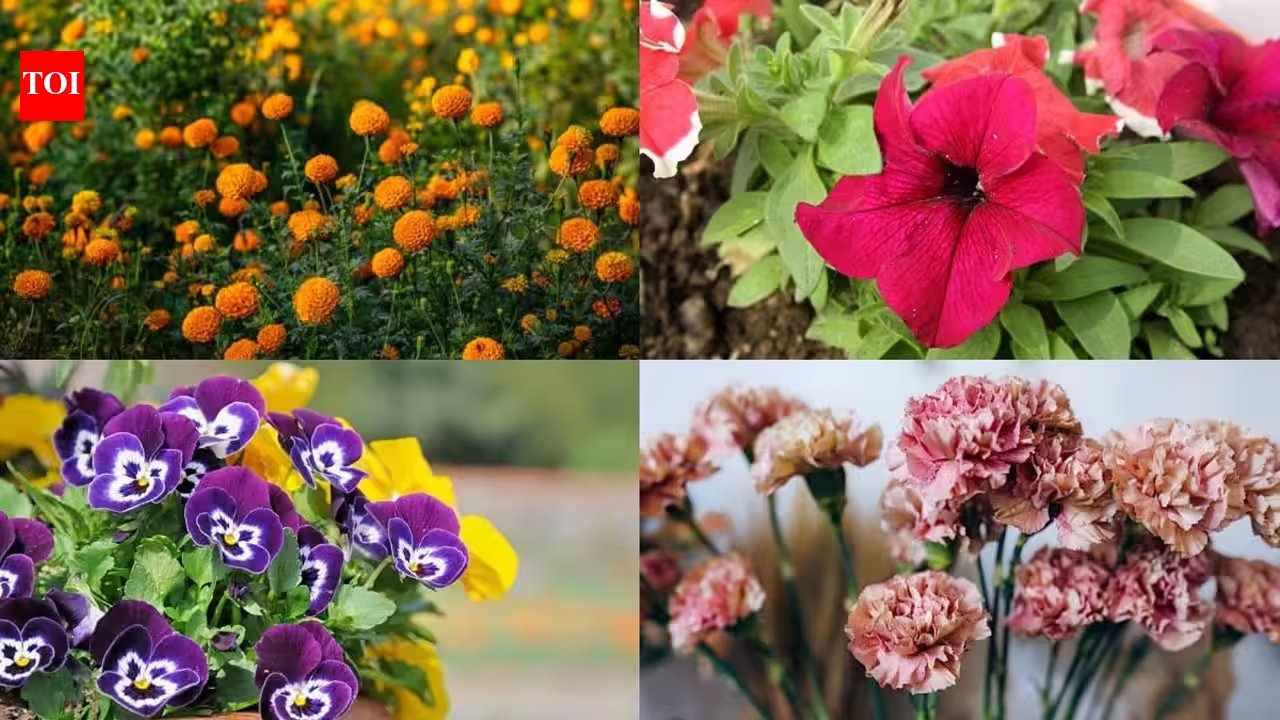
Winter gardens do not need to look barren. Getting five resilient flowering varieties into soil before the chill settles locks in sturdy root systems that push blooms straight through the coldest months.
Timing dictates everything. Sowing seeds or transplanting saplings while the ground retains warmth gives roots room to stretch. Once temperatures drop, these cool-weather lovers hit their stride on open terraces, window ledges, and balcony railings across India.
Marigolds remain the backbone of the winter planting calendar. Their burnt-orange and saffron heads generate striking contrast against dull brickwork, thriving in both tight terracotta pots and open garden soil.
Give them five to six hours of direct sunlight every day. They demand loose, well-draining soil and moderate moisture—soggy roots will rot them out. Pinch away spent flower heads the moment they fade to trigger fresh bud formation. As an added bonus, marigolds release natural root exudates that drive away common garden insects, shielding neighboring herbs and kitchen greens.
For sheer saturation across hanging baskets and balcony planters, petunias dominate. They spill over container rims in vivid purple, crimson, white, and pink.
Set petunias where they catch crisp morning sunlight. Blend light, loamy potting soil with rich compost to fuel heavy flowering cycles. Douse them only when the top layer of earth dries to the touch, and stir a mild liquid organic feed into their water every two weeks. Snipping off wilted trumpets prevents seed formation and keeps petals coming.
Pansies offer cold-hardiness that outlasts most garden staples. Their distinctive multi-toned faces—splashed with ink-blue, canary yellow, and violet—relish sharp drops in temperature.
They stay compact. That makes pansies tailor-made for shallow tabletop bowls and small window boxes. Settle them into fertile, moisture-retentive soil under partial to full sun, and maintain uniform dampness without drowning the roots.
| Plant Variety | Sunlight Requirement | Soil & Watering Strategy | Best Display Setting |
|---|---|---|---|
| Marigold | 5 to 6 hours direct sunlight | Well-drained soil; water moderately | Garden beds, pest-barrier borders |
| Petunia | Strong morning sunlight | Compost-rich loam; water when top dry | Hanging baskets, window ledges |
| Pansy | Partial to full sun | Moist, rich soil; even dampness | Compact pots, balcony tabletops |
Dianthus, traditionally recognized as pinks or miniature carnations, bring fringed petal edges and an unmistakable clove-like perfume. Their dense, dwarf habit hugs low borders and rockery beds.
They abhor standing water. Build beds with coarse grit or perlite to guarantee swift drainage, and blend in a modest scoop of decomposed manure at planting time. Beyond garden appeal, dianthus stems hold up exceptionally well in water, serving as long-lasting cut flowers for bedside vases.
Calendula, often labeled pot marigold, closes out the roster with brilliant daisy-like yellow and amber crowns that snap open at dawn.
They sprout rapidly from seed in ordinary soil. Pick the open blooms every week to force the plant into producing fresh buds. Beyond visual warmth, calendula petals carry a long history in herbal infusions and homemade topical salves—provided growers verify the harvest is untreated and free from chemical sprays.
Garden Care Tip: Always check local frost forecasts before adjusting watering routines. Plants lose moisture far slower during foggy winter stretches, meaning saturated soil can quickly choke root respiration if watering frequencies are not scaled back.
Local nurseries across northern and central plains are now stocking healthy plugs and seasonal seed packs. Pick up nursery stock early, prepare porous soil blends, and set plants out before the deepest cold settles in.
| Dianthus | Full sun exposure | Well-draining soil; light compost | Rock gardens, low borders, vases |
| Calendula | Full winter sunshine | Average garden soil; moderate water | Seedling trays, ornamental patio pots |