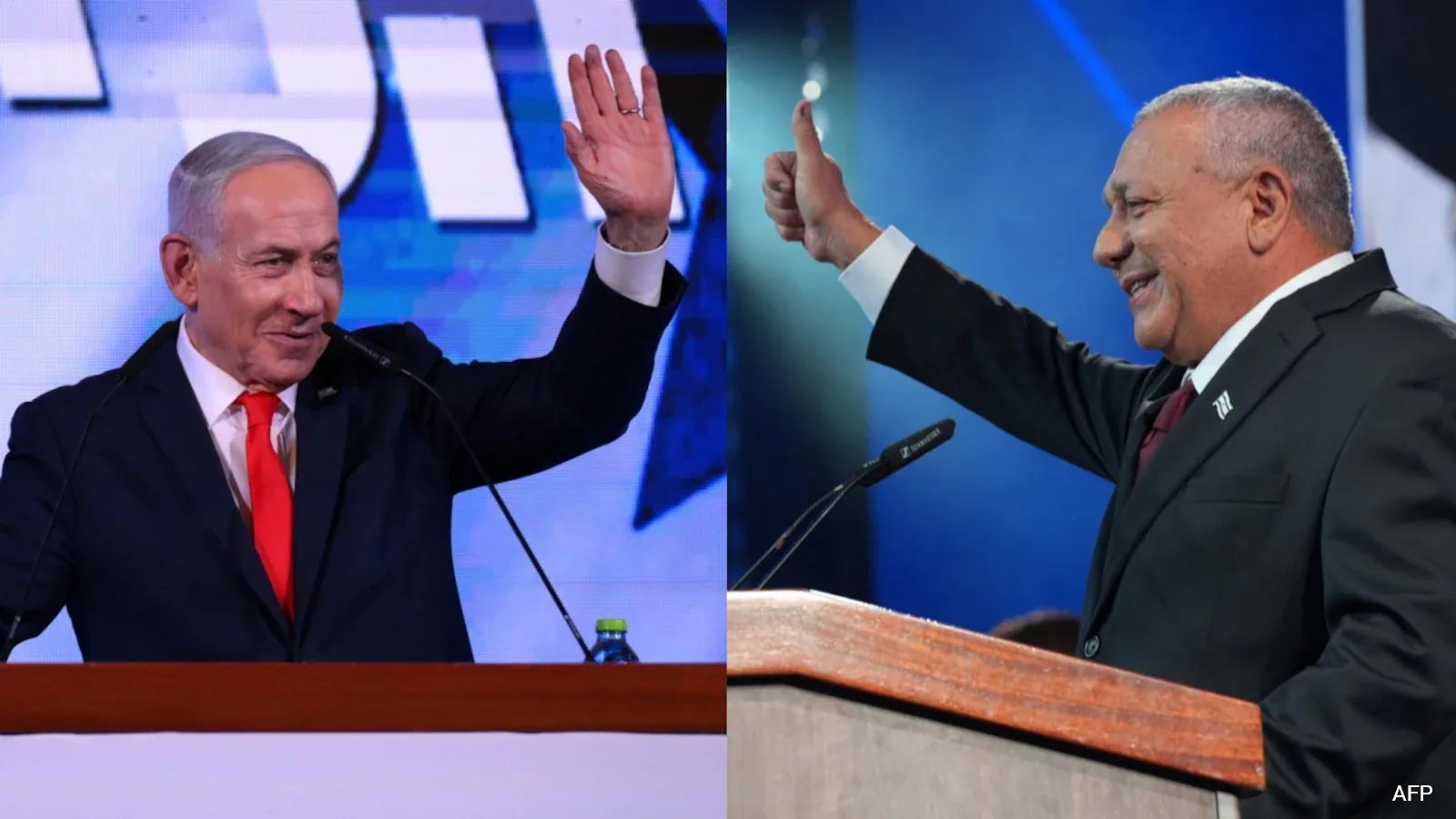
Exit polls taken after Israel’s May 25 parliamentary election show a deadlock between former IDF chief Gadi Eisenkot and incumbent Prime Minister Benjamin Netanyahu, with neither side securing a majority.
Eisenkot, who lost a son in Gaza and now leads a coalition that includes Arab parties, favors economic pressure and limited strikes against Tehran, while Netanyahu pushes for regime change and deeper U.S. ties.
Netanyahu, after posting a graphic of a nuclear bomb destroying Tel Aviv, defended his stance as necessary for Israel’s security, calling the opposition’s coalition a threat to national unity.
A spokesperson for the Prime Minister’s office dismissed a CNN report that Netanyahu sought a joint U.S.-Israel strike on Iran before the polls, labeling the claim ‘fake news’.
The result leaves the newly elected Knesset in limbo, as coalition talks among 17 parties—including 20% Arab representation—could take weeks, with the first parliamentary vote for prime minister slated for June 15.
For voters in Tel Aviv’s Shukhov district, the uncertainty means daily life remains on edge; a 32‑year‑old electrician, Maya D., said, “We’re waiting to see who will keep our city safe.”