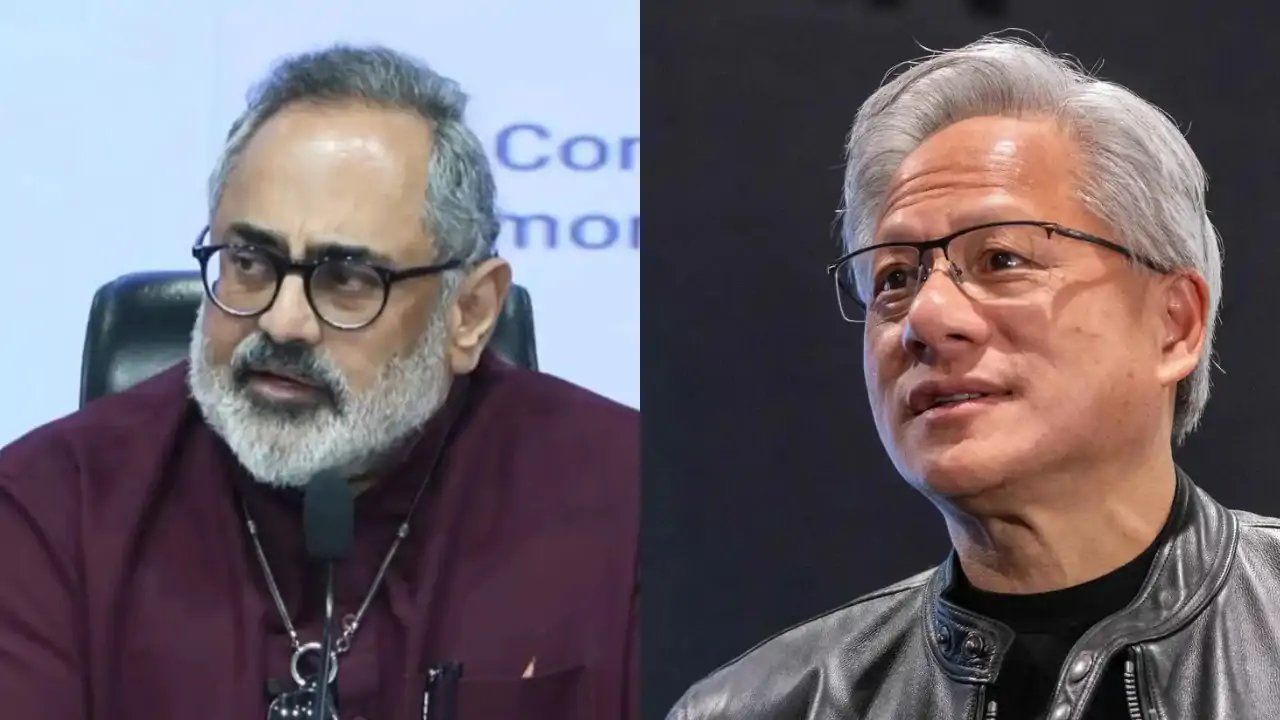
Former Union Minister Rajeev Chandrasekhar launched a blistering attack against Beijing on Monday, accusing China of deploying espionage shortcuts and honeytraps to siphon sensitive Western technology following revelations surrounding Nvidia chief executive Jensen Huang.
The reaction was swift. Nvidia's board ordered an independent internal review after Huang acknowledged a personal relationship with Chinese executive Alice Huang, whom US intelligence officials identified as passing strategic information to Beijing's state apparatus. Yet the company maintained that its proprietary chip designs and national security interests remain uncompromised. China flatly rejected the espionage accusations, calling them baseless.
"Why spend money on R&D when you have an easier, cheaper, faster way to access tech through honeytrapping?" Chandrasekhar wrote on social media platform X. He argued that Beijing has spent decades exploiting the institutional openness of Western democracies to harvest strategic assets rather than building authentic research depth. For China, Chandrasekhar asserted, the ends routinely justify the means, bypassing global norms and commercial trust to accelerate state-backed technical parity.
The dispute cuts straight to the core of the global technology race. Singapore-based data centre firm Megaspeed, where Alice Huang served as an executive, faces heightened scrutiny over the suspected diversion of restricted Nvidia artificial intelligence hardware into mainland China. National security officials warned that proximity to Huang could have yielded strategic insights into evolving Washington policies on advanced computing semiconductors.
Nvidia's independent inquiry is reviewing executive communications and data safeguards, while regulatory authorities evaluate third-party distribution hubs across Southeast Asia to enforce trade curbs on next-generation artificial intelligence silicon.