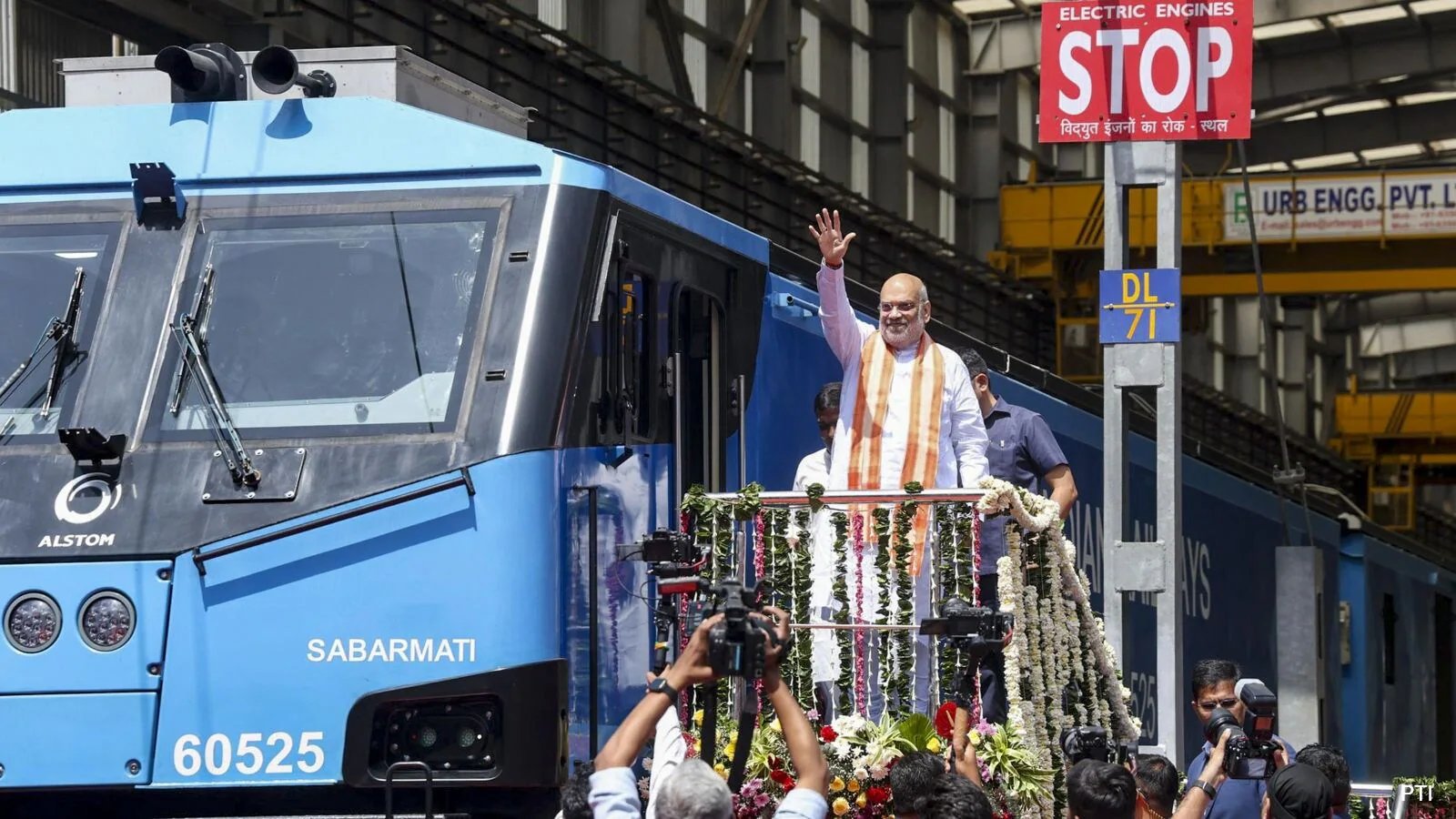
Union Home Minister Amit Shah and Gujarat Chief Minister Bhupendra Patel flagged off India’s first LNG‑powered train at the Sabarmati Integrated Coaching Depot on Sunday, marking a decisive shift toward cleaner rail operations. The launch was part of a broader Rs 1,542‑crore package that also unveiled a WAG‑12 locomotive maintenance shed, an electric locomotive flag‑off, and the indigenous Kavach train‑protection system on two major sections.
The engine is a 1,400‑hp diesel‑plus‑LNG dual‑fuel system that replaces up to 40% of diesel consumption. Two Driving Power Cars (DPCs) have been fitted with 2,200‑litre LNG tanks, each holding roughly 850‑900 kg of usable fuel. A full LNG fill can power the train for about 1,600 km before refuelling is required.
Railways spokesperson Rakesh Kumar said the trials covered more than 2,000 km on the converted DPCs, showing consistent performance and emissions reductions. The trial data indicated annual savings of ₹11.9 lakh per DPC and ₹23.9 lakh per eight‑coach rake, while cutting CO₂, NOₓ and particulate matter.
The dual‑fuel approach lets the engine switch between LNG and diesel depending on availability, providing operational flexibility without sacrificing power. It was designed to retain the diesel engine’s capability while enabling partial substitution with LNG.
At the depot, a 35‑year‑old locomotive fitter, Rajesh Patel, watched the train leave the platform. “Seeing the engine switch from diesel to LNG live was a real eye‑opener,” he said, adding that the move could bring tangible benefits to workers who spend long hours in the diesel‑laden environment.
The Railways will evaluate the technology’s performance over the next 12 months before deciding on network‑wide deployment, with a formal rollout schedule expected in early 2027.