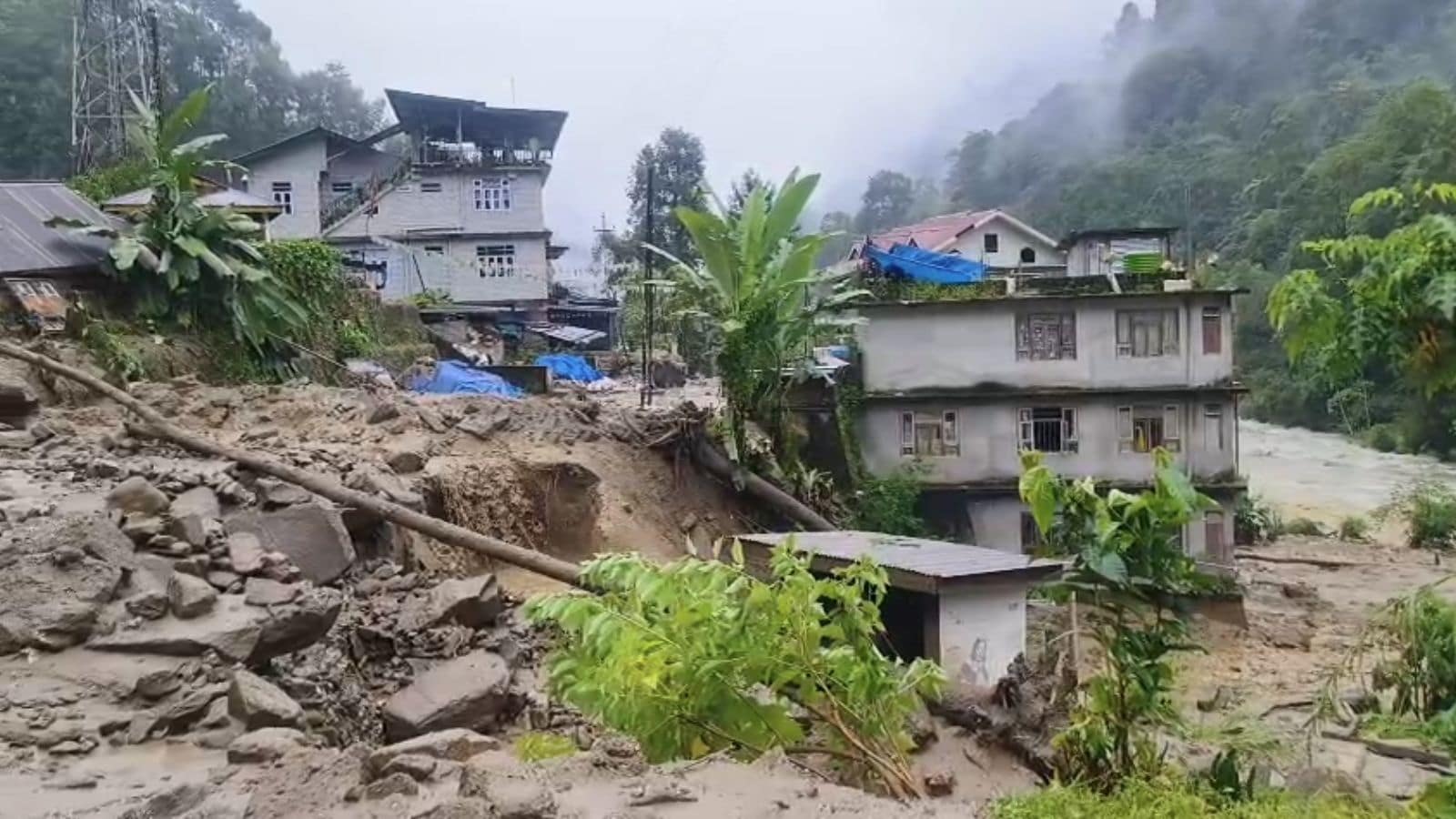
Rimbi village in West Sikkim is on the brink of becoming a ghost town. The state government is actively weighing a declaration that the settlement is no longer safe for humans to live in, a drastic step triggered by relentless earth movement from the Singlitam slopes. This isn't just about wet mud; it’s a structural failure of the hillside itself. Currently, 107 people are crammed into a relief camp at the local Gram Prasasan Kendra, their homes reduced to rubble or buried under tons of debris.
The damage tally is stark: 32 private houses and four government quarters have been hit. The crisis escalated sharply on August 13 when the first cracks appeared, but the real destruction hit the next day when intense rainfall turned the slopes into a river of sludge. Small wooden and semi-pucca structures didn’t stand a chance. Sikkim Disaster Relief Commissioner Rinzing Chewang, who surveyed the wreckage on September 25, noted that even areas near Mit Khola, once considered safe zones, are now threatened by floodwaters carrying massive amounts of mud.
Compensation is coming, but it won’t fix the geology. Families whose homes were totally destroyed will receive ₹1.3 lakh each, while others will get aid based on damage norms. Under the Sikkim Housing Scheme, those who lost their land will get new plots and houses; those who kept their land will get construction support. But for many, the psychological toll is heavier. Residents fear that the steep slopes of Singlitam are still sliding, and with no sign of the rain letting up, another downpour could bury what’s left.
Chief Minister Prem Singh Tamang has placed the region on high alert. In a statement, he emphasized that public safety is the priority over property. Authorities have been ordered to monitor the affected zones closely. The next major step isn’t immediate reconstruction—it’s the post-monsoon geological survey. That report will decide if Rimbi gets a second chance or if its residents will have to start over in an entirely new location.