If you plan to buy a vehicle in India over the next few years, the metal, software, and battery cells heading your way will converge in New Delhi come February 2027.
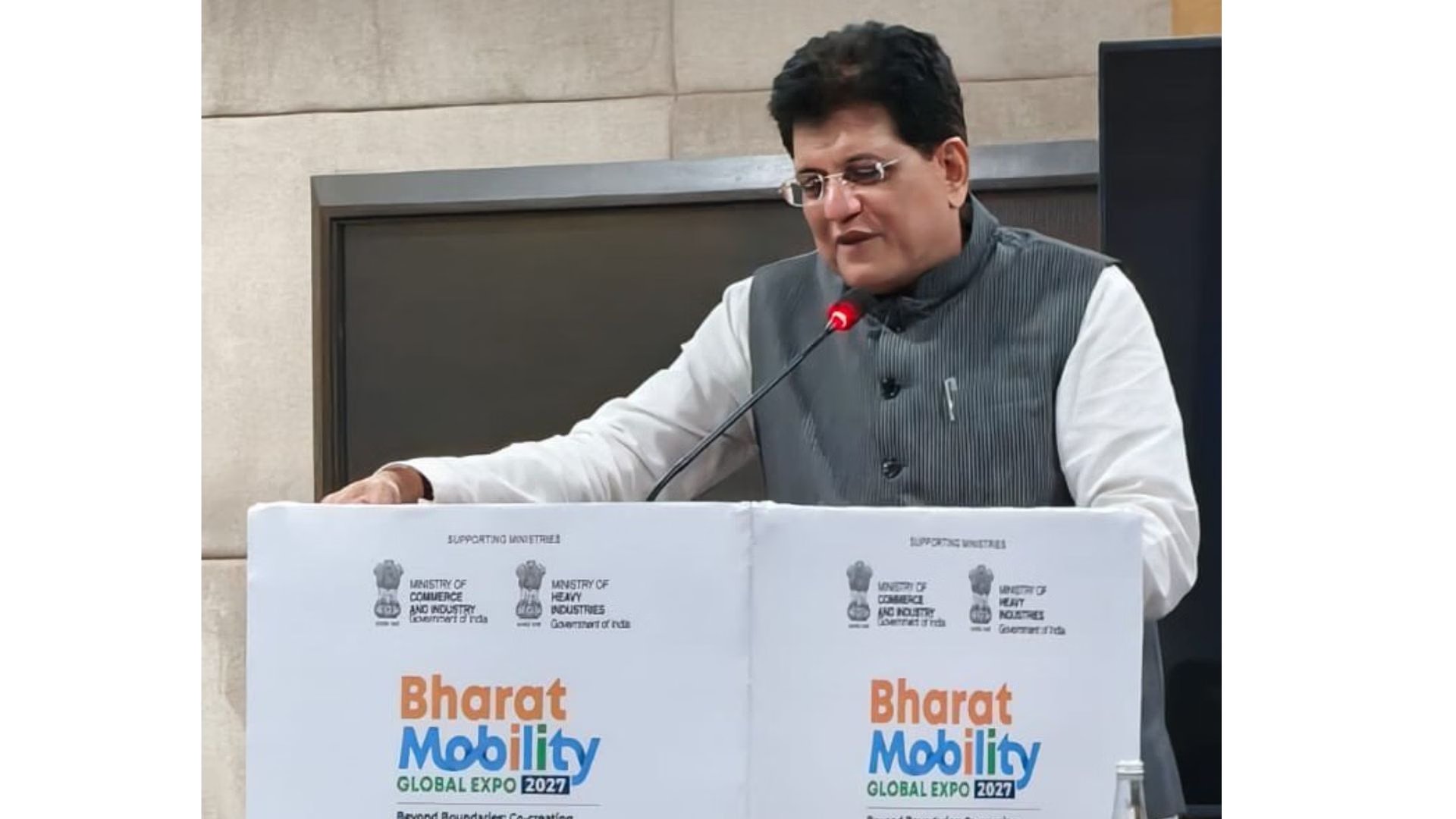
Car buyers and industry watchers saw the blueprint take shape on 10 November as the Ministry of Commerce & Industry and the Ministry of Heavy Industries unveiled the curtain raiser for the third edition of the Bharat Mobility Global Expo 2027. The mega-event will run from 4 to 9 February 2027, splitting its sprawling footprint across two premier venues: Bharat Mandapam in central New Delhi and Yashobhoomi in Dwarka. Set to become the world’s second-largest mobility exhibition, the expo will host more than 1,750 exhibitors from over 50 countries under the central banner "Smarter Mobility for a Better Tomorrow."
Union Minister of Commerce & Industry Piyush Goyal laid down the stakes directly to manufacturers. Indian automakers cannot rely solely on showroom footfalls at home if they want world-beating sticker prices. Economies of scale demand aggressive overseas shipments.
Complementing India’s domestic market with international markets would enable businesses to achieve economies of scale and become globally competitive in pricing," Goyal said during the curtain raiser.
The government expects total attendance to touch 10 lakh visitors, with organizers instructed to bring in at least 25,000 international trade delegates. Goyal pushed organizers to look well beyond original equipment manufacturers (OEMs), demanding that invitations reach tire dealers, local suppliers, component makers, and aftermarket service networks. Exhibition halls are already projected to sell out completely, forcing authorities to weigh temporary hangar setups to manage overflow. By the fourth edition, planners intend to expand display capacity by 1.5 to 2 times the current floor area.
Bharat Mobility brings the entire transportation sector under a unified tent. In past decades, isolated industry groups ran disconnected trade shows across the calendar, forcing buyers, engineers, and foreign delegations to crisscross cities throughout the year. The 2027 edition fuses passenger cars, commercial haulers, two-wheelers, three-wheelers, construction equipment, steel, chemicals, electronics, and tire manufacturing into one consolidated itinerary.
The showcase divides duties geographically between two sprawling convention centers:
| Venue | Assigned Pavilions & Component Expos | Focus Areas |
|---|---|---|
| Bharat Mandapam (Pragati Maidan) | Auto Expo – The Motor Show 2027, India International Tyre Show 2027, Bharat Battery Show 2027, Mobility Tech Pavilion, India Cycle Show 2027, Steel & Advanced Materials Pavilion | Finished vehicles, battery cells, sustainable materials, retail mobility |
| Yashobhoomi (Dwarka) | The Components & Technology Show 2027, Bharat Construction Equipment Expo 2027, Agri Mobility & Technology Expo 2027, Air Mobility Expo 2027, Metro & Urban Mass Transit Expo 2027 | Heavy machinery, tier-1 suppliers, aviation, mass transit, agricultural equipment |
Behind the exhibition spectacle lies a rapidly expanding domestic retail base. Goyal highlighted that Indian showrooms cleared one million cars during the Navratri festival alone, followed by roughly 70,000 passenger vehicles sold over the two days of Dhanteras. Annual domestic two-wheeler sales have hit approximately 25 million units excluding exports. Now, the government wants the domestic passenger vehicle market to scale toward 10 million units annually, with foreign shipments stacked on top.
To absorb that output, trade policy is pivoting sharply. Goyal stated that negotiations with the European Union's 27-nation trading bloc are on track to unlock zero-duty market access for Indian businesses by March or April. Parallel trade pacts are under active negotiation with another seven to eight nations. Once signed, domestic automakers and component houses will hold preferential tariff access to markets representing nearly 75 per cent of global gross domestic product.
Foreign capital is already lining up. Fresh from an official visit to Tokyo, Goyal noted that several Japanese corporations are finalizing partnerships with Indian manufacturing hubs to serve third-party export corridors, with multiple conglomerates reviewing investments valued in the billions of dollars. Supporting schemes—chiefly the Production Linked Incentive (PLI) package for automotive components, the specialty steel PLI, and the Export Promotion Mission—remain the operational anchors intended to drive localized value addition.
India's annual $1 trillion export target tracked $480 billion through the opening six months of the fiscal year based on September figures, hitting 48 per cent of the annual goal. Engineering exports drove significant momentum, posting 22 per cent growth. Official October export metrics will be released by the Commerce Secretary on 15 November, providing the next definitive snapshot of India's manufacturing shipments ahead of the 2027 showcase.