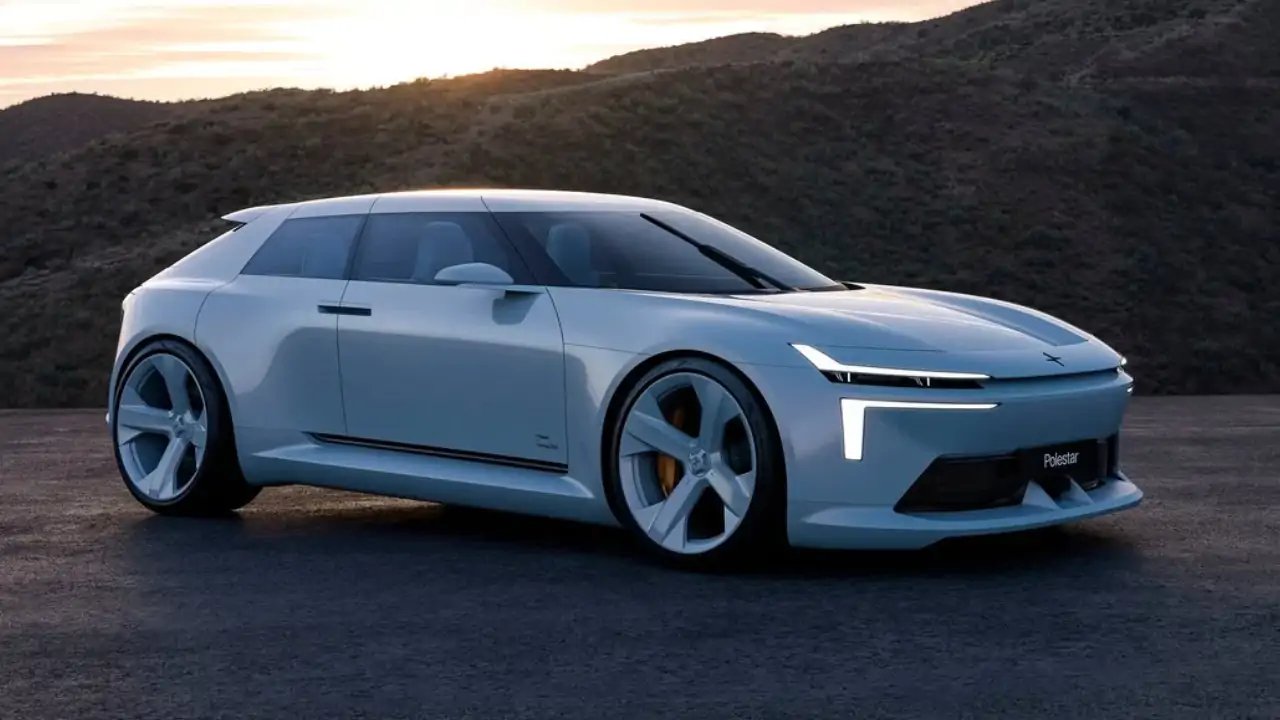
Polestar is showing where its performance metal goes next.
The Swedish electric marque has pulled the sheet off the Polestar Formula 2030, a low-slung, four-door sports concept designed to steer the look and tactile feel of its future showroom fleet. You cannot buy one today. Nor has Polestar attached a battery capacity, motor count, or kilowatt rating to the project. But for drivers tracking how performance cockpits will survive the transition to software-heavy electric travel, this rolling design study offers real technical clues.
It looks aggressive.
The exterior stretches 4,680mm in length and sits squat on the asphalt at just 1,350mm high. Width spans an imposing 2,021mm, anchored by a 2,780mm wheelbase and massive 22-inch four-spoke wheels tucked under muscular rear haunches. Up front, an elongated bonnet feeds into a sweeping wraparound windscreen, flanked by the brand's Dual Blade LED headlight assemblies.
Air management dominates the tail.
Engineers fitted a centrally mounted rear wing and a pronounced underbody diffuser to plant the rear axle at speed, balanced by a continuous Single Blade tail-lamp signature. Crucially, the body panels do not sprout clunky sensor pods. Polestar concealed the car's LiDAR sensor flush beneath the outer skin—preserving clean aero lines while arming the chassis for high-level autonomous driving.
| Specification / Component | Formula 2030 Concept Metric |
|---|---|
| Overall Length | 4,680 mm |
| Overall Width | 2,021 mm |
| Overall Height | 1,350 mm |
| Wheelbase | 2,780 mm |
| Wheel Size | 22-inch (four-spoke) |
| Driver Display | 20-inch curved HyperDIM (column-mounted) |
| Central Infotainment | 12.2-inch touchscreen |
| Physical Controls | 8 customisable toggles |
| Seating Layout |
Inside, the cabin breaks away from sterile glass slabs.
A curved 20-inch HyperDIM instrument display bolts directly to the steering column, tracking the driver's sightline rather than sitting fixed in the dashboard fascia. Secondary vehicle controls route through a standalone 12.2-inch central touchscreen, supported directly below by eight customisable manual switches for instant tactile response.
The seats move on demand.
Four standalone bucket positions use active air chambers and inflatable bolsters that inflate or deflate to grip occupants during hard cornering. Under the skin, software links the cabin geometry to three distinct drive modes: Performance, Normal, and Autonomous. Flick into Autonomous, and the steering wheel retracts, the seat reclines, and the primary HyperDIM screen shifts graphic priority. And when passengers want to adjust cabin parameters without digging through digital menus, Google built-in deploys Gemini AI—enabling continuous, natural voice conversations across the car.
Market Context: Global electric automakers are locked in a design transition. Early EV architecture relied on oversized, upright touchscreens to project futuristic appeal. Polestar is shifting emphasis back toward dedicated driving ergonomics, hiding complex autonomous hardware inside the bodywork while using modular software to reconfigure the cabin when autonomous driving takes over.
Polestar has not revealed commercial production dates or specific country allocations, and officials have confirmed there is no current timeline for an Indian market rollout. Watch for these styling cues—and the integrated column display—to filter into the brand's next wave of road-going performance models.
| 4 individual seats with inflatable bolsters |