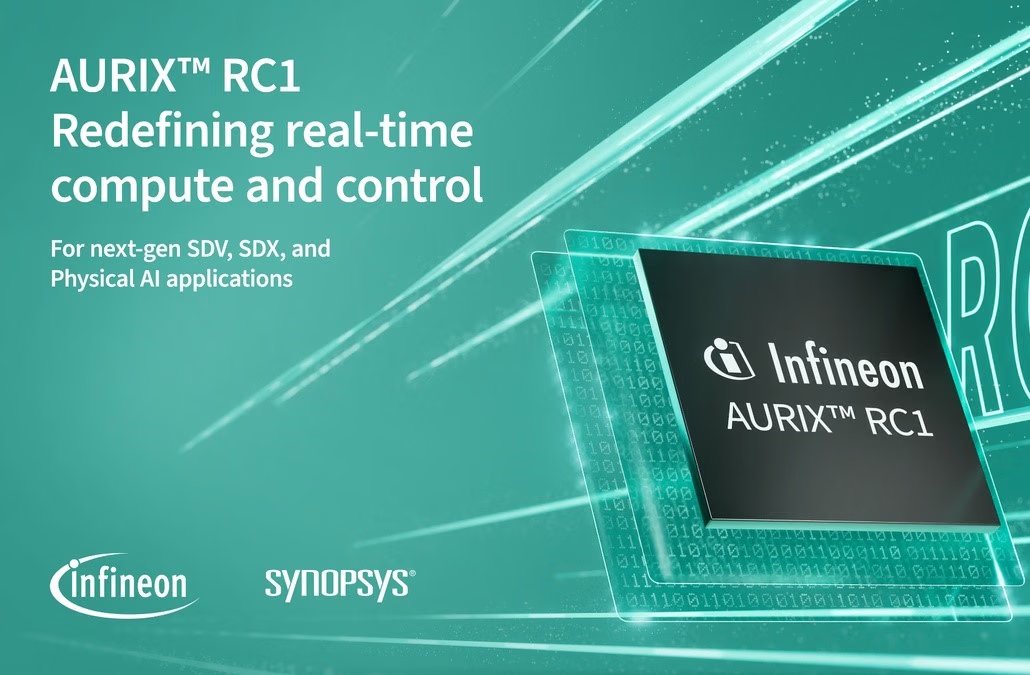
Cars now run on code. Modern passenger vehicles pack more than 600 million lines of programming across dozens of control units, turning software stability into an agonizing multi-crore bottleneck. On November 10, 2026, chip design software giant Synopsys and semiconductor maker Infineon rolled out a Virtualizer Development Kit for Infineon's upcoming AURIX RC1 microcontroller family. The kit provides carmakers and Tier-1 suppliers with a virtual prototype — a functional digital twin — of the silicon months before the physical chip leaves the foundry.
The immediate payoff hits vehicle engineering schedules. By shifting firmware testing into a simulated desktop environment, automotive teams can achieve up to 90% of their software validation ahead of physical hardware delivery. And the fiscal dividend is substantial. Synopsys calculated that virtualizing vehicle electronics across design, integration, and test environments slashes development costs by 20% to 60%. That shields automakers from eleventh-hour software bugs that delay showroom launches and spark embarrassing electronic recalls.
Beneath the surface, Infineon built the AURIX RC1 family on an open-standard RISC-V architecture — a deliberate departure from rigid proprietary setups. The switch hands carmakers room to customize domain controllers, driver-assist systems, and Physical AI workloads without being boxed in by single-vendor constraints.
Schneid pointed to this flexibility as essential for carmakers navigating compressed production schedules. The new architecture enables customers to build on existing investments, simplify migration, and accelerate innovation, said Thomas Schneid, vice president of Software and Ecosystem Management at Infineon.
The kit arrives within Infineon's DRIVECORE software portfolio, granting compiler houses, debugger vendors, AUTOSAR partners, and open-source developers immediate access. Instead of testing an isolated electronic control unit on a physical test bench, engineers can now network multiple virtual ECUs into a complete full-vehicle digital twin. Flaws get caught early. Critical firmware undergoes thousands of simulated stress miles before a real prototype ever fires up its motor.
| Metric / Parameter | Conventional Development | AURIX RC1 Virtualizer Kit |\n| :--- | :--- | :--- |\n| Software Scale | Fragmented across separate suppliers | Cohesive testing across 600M+ code lines |\n| Software Validation Window | Waits for physical chip fab | Up to 90% validated ahead of silicon |\n| Electronics Integration Cost | Heavy physical test-rig overhead | Reduced by 20% to 60% |\n| Microcontroller Core | Proprietary legacy architecture | Open-standard RISC-V platform |
Buyers rarely think about microcontrollers until an electronic module fails, an infotainment display freezes, or a promised vehicle delivery date slips by three months. Synopsys and Infineon have collaborated on virtual prototyping for AURIX chips for over a decade. With this rollout, the two suppliers give car manufacturers the software runway to test advanced driver aids and connected cockpits before the metal is even bent.